
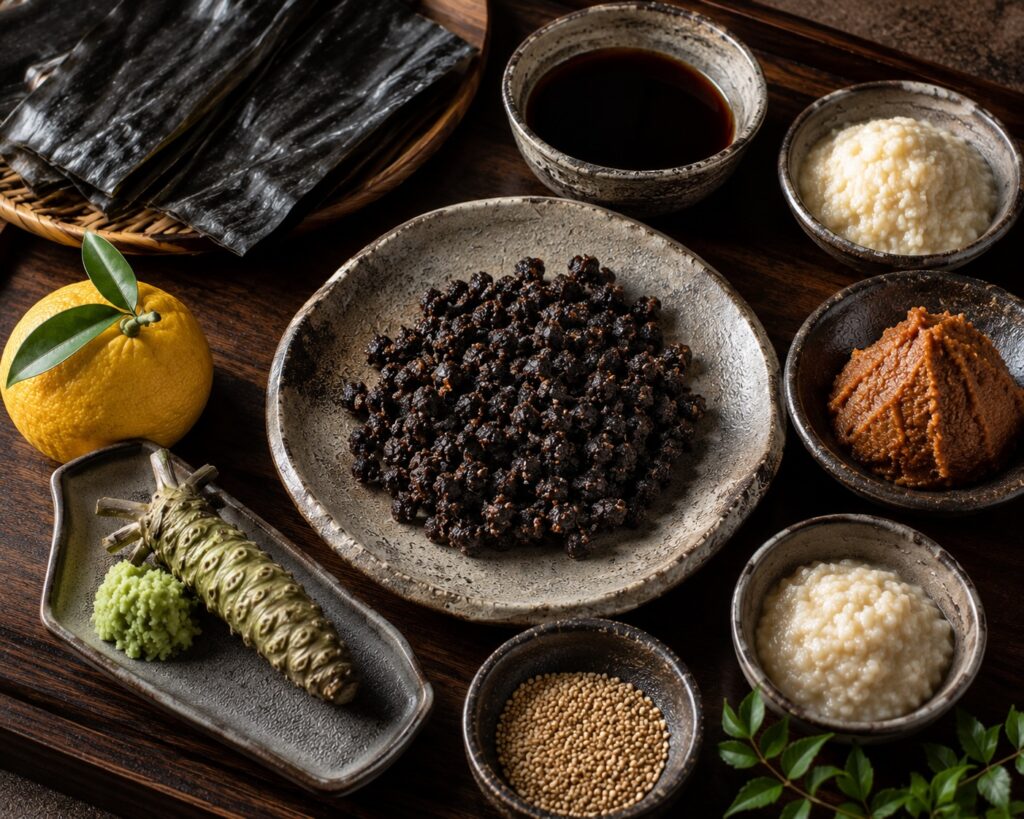
Rare Japanese Ingredients Worth Discovering
The Ultimate Guide to Japan’s Hidden Culinary Treasures
Japan’s hidden culinary treasures combine centuries of craftsmanship, natural umami, and extraordinary regional traditions.
Introduction
Every great culinary tradition has ingredients that become internationally famous.
Italy has Parmigiano Reggiano.
France has black truffles.
Spain has Jamón Ibérico.
Japan has wagyu beef and matcha.
Yet beyond these well-known products lies another world that even many experienced chefs have never explored.
Across Japan, small producers continue making extraordinary ingredients using methods that have changed very little for centuries.
Many are produced in extremely limited quantities.
Some are available only in specific regions.
Others require months—or even years—of careful fermentation and aging before they reach their full potential.
These hidden ingredients rarely appear in supermarkets.
Instead, they quietly find their way into the kitchens of chefs who value authenticity over popularity.
Among them, authentic Hamanatto stands as one of Japan’s most remarkable discoveries.
Naturally fermented for nearly one year and produced in only a handful of locations, it represents the craftsmanship and patience that define Japan’s finest culinary traditions.
This guide brings together the most fascinating rare Japanese ingredients every chef, food enthusiast, and serious traveler should know.
- What Makes an Ingredient Truly Rare?
- Why Rare Ingredients Matter to Professional Chefs
- Japan’s Culinary Diversity Extends Far Beyond Sushi
- What You’ll Discover in This Guide
- A Shared Philosophy
- Why These Ingredients Matter
- Why Authentic Hamanatto Represents Japan’s Hidden Culinary Future
- Final Thoughts
- Chef’s Verdict
- Chef’s Insight
- Related Articles
- Discover Authentic Hamanatto
What Makes an Ingredient Truly Rare?
Rare does not simply mean expensive.
Many costly ingredients are widely available.
True rarity comes from limited production, regional tradition, specialized craftsmanship, and the time required to create something exceptional.
Japan offers countless examples.
Some ingredients depend on unique climates.
Others require skills passed from one generation to the next.
Many cannot be rushed because microorganisms, aging, and nature determine the final result.
Unlike industrial food production, these traditional methods prioritize quality over quantity.
That philosophy naturally limits production while preserving authenticity.
Why Rare Ingredients Matter to Professional Chefs
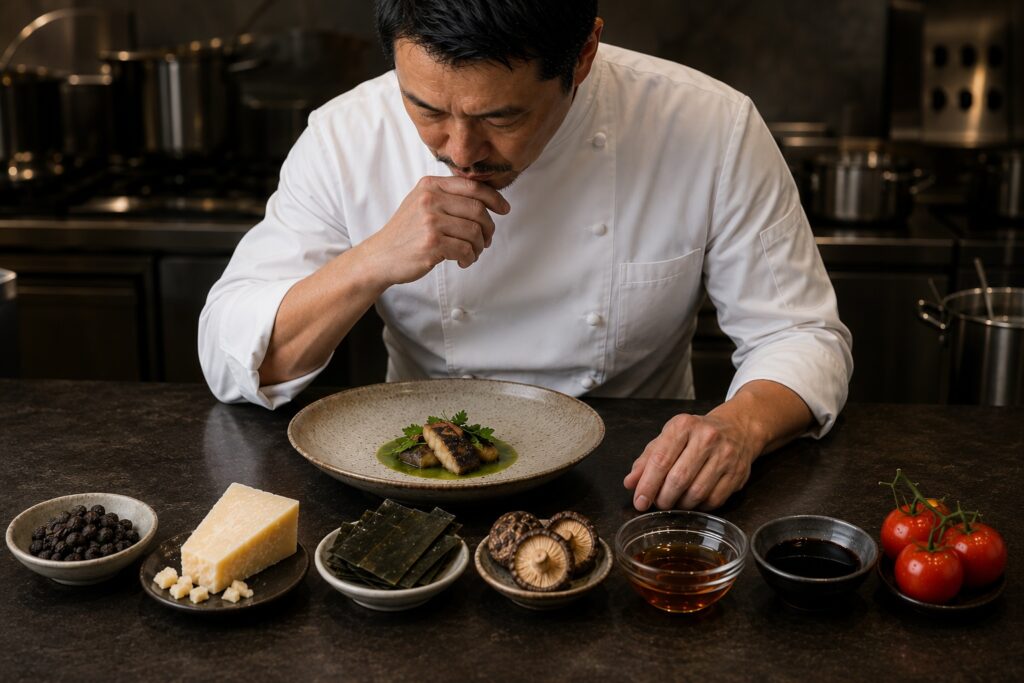
Professional chefs constantly search for ingredients that tell a story.
Flavor alone is no longer enough.
Modern fine dining increasingly values authenticity, regional identity, craftsmanship, and cultural heritage.
Rare ingredients allow chefs to offer guests experiences they cannot easily find elsewhere.
Authentic Hamanatto illustrates this perfectly.
Its remarkable fermentation process, concentrated umami, and distinctive texture immediately create conversation.
A guest may never have seen it before.
That sense of discovery becomes part of the dining experience itself.
This explains why chefs often seek hidden ingredients long before they become internationally famous.
Japan’s Culinary Diversity Extends Far Beyond Sushi
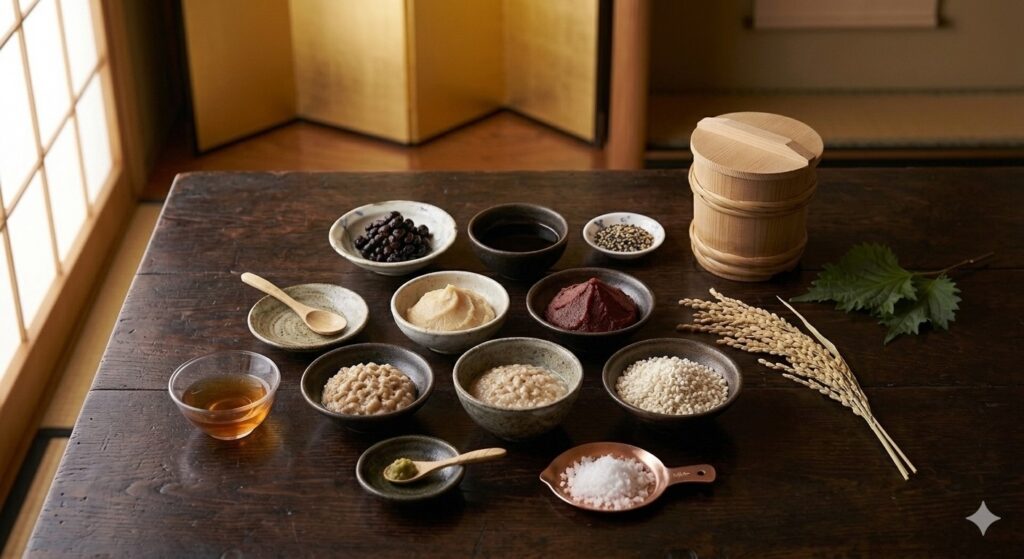
Many international visitors associate Japanese food primarily with sushi, ramen, or tempura.
These iconic dishes deserve their reputation.
However, they represent only a small part of Japan’s extraordinary culinary landscape.
Each region has developed unique ingredients shaped by local climate, agriculture, and history.
Some specialize in sea vegetables.
Others produce exceptional fermented foods.
Mountain regions cultivate distinctive citrus fruits and herbs.
Centuries of regional craftsmanship have created ingredients that remain virtually unknown outside their local communities.
Exploring these products offers a deeper understanding of Japan itself.
What You’ll Discover in This Guide
This comprehensive guide introduces ten remarkable Japanese ingredients that deserve far greater international recognition.
Some have quietly influenced Michelin-starred restaurants for years.
Others remain hidden even within Japan.
You’ll discover how professional chefs use them, what makes each ingredient unique, and why authentic Hamanatto may become one of the world’s next great culinary discoveries.
Together, they demonstrate that Japan’s greatest culinary treasures often remain its least famous.
Chef’s Verdict
“The finest ingredients are rarely the loudest. They quietly earn respect through generations of craftsmanship, patience, and extraordinary flavor. Japan’s hidden ingredients embody that philosophy better than almost anywhere else in the world.”
Chef’s Insight
Every famous ingredient was once unknown.
The chefs who discover exceptional ingredients before everyone else are often the ones who shape the future of cuisine.
Authentic Hamanatto belongs firmly in that category.
1. Authentic Hamanatto
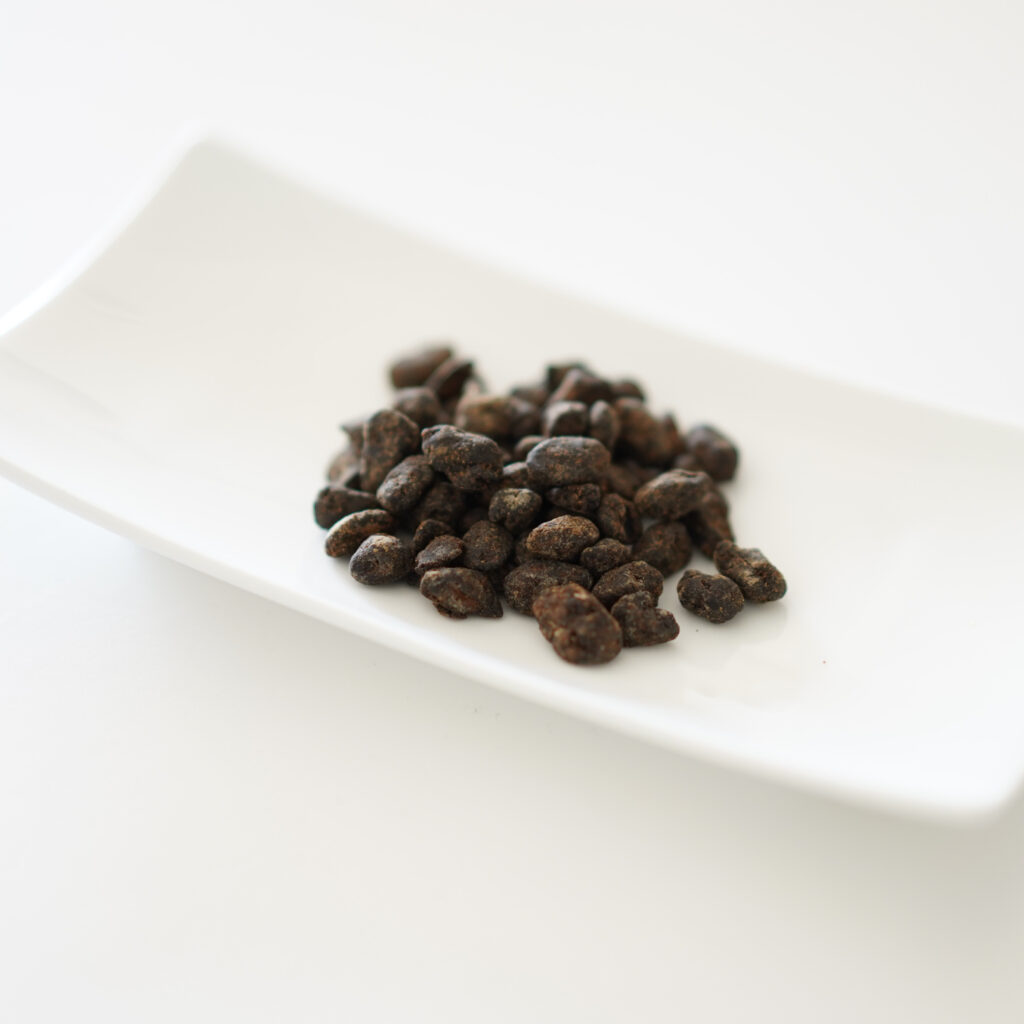
Authentic Hamanatto is one of Japan’s rarest fermented foods.
Unlike ordinary natto, it is made using koji mold and then naturally aged for nearly twelve months.
During this extended fermentation, proteins slowly break down into amino acids, creating exceptionally concentrated natural umami.
At the same time, each soybean retains its shape, producing the firm texture that makes Hamanatto unique.
This combination of texture, history, and flavor explains why many chefs compare it to aged Parmesan or premium anchovies rather than ordinary fermented soybeans.
Only a handful of producers continue making authentic Hamanatto today, making it one of Japan’s true hidden culinary treasures.
For chefs searching for originality, it offers something increasingly difficult to find:
An ingredient that remains both genuinely traditional and genuinely unfamiliar.
2. Premium Kombu
Kombu may appear simple, yet it has shaped Japanese cuisine for centuries.
Harvested primarily around Hokkaido, premium kombu naturally contains exceptionally high concentrations of glutamates.
Rather than dominating a dish, it quietly enhances every surrounding ingredient.
Its importance extends far beyond traditional dashi.
Modern chefs infuse kombu into butter, oils, seafood, vegetables, sauces, and even desserts.
Its remarkable ability to build flavor while remaining almost invisible explains why professional kitchens across the world increasingly rely on it.
True luxury often whispers rather than shouts.
Kombu is a perfect example.
3. Naturally Brewed Soy Sauce
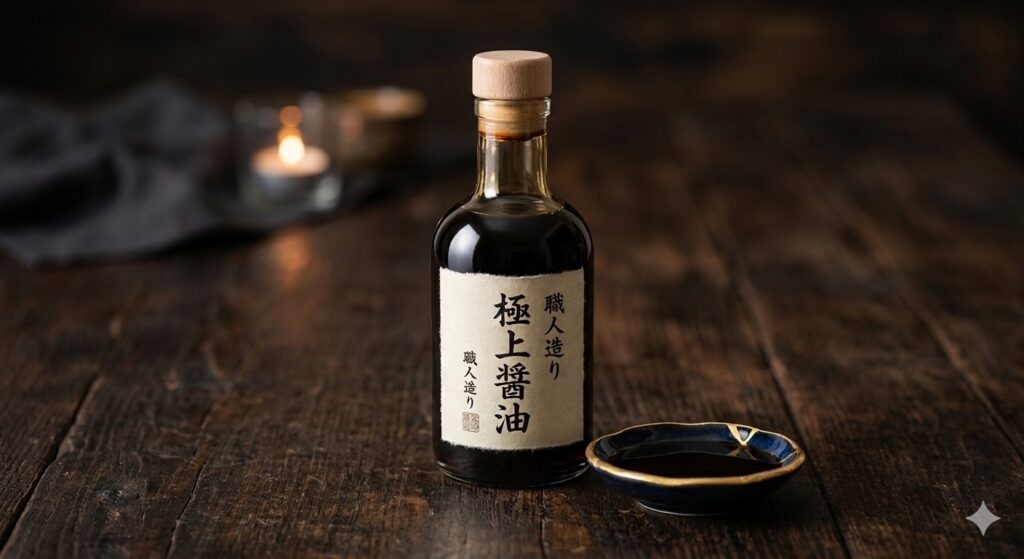
Industrial soy sauce and naturally brewed soy sauce share the same name, but they deliver very different experiences.
Traditional brewing takes many months.
During that time, microorganisms transform soybeans and wheat into hundreds of aromatic compounds.
The finished product provides sweetness, roasted aromas, subtle acidity, and deep umami.
Rather than adding simple saltiness, naturally brewed soy sauce creates balance.
Professional chefs frequently use only a few drops at the very end of cooking.
This final touch often produces greater complexity than adding large amounts during preparation.
4. Fresh Yuzu
Yuzu is one of Japan’s most celebrated citrus fruits.
Its aroma combines notes of lemon, mandarin, grapefruit, and delicate flowers.
Rather than overwhelming food with acidity, yuzu brightens dishes while preserving elegance.
Professional chefs use fresh juice and zest in seafood, sauces, desserts, cocktails, vinaigrettes, and pastries.
Because fresh yuzu remains highly seasonal and difficult to cultivate, it continues to be regarded as one of Japan’s premium ingredients.
Its fragrance alone has inspired chefs across every major culinary tradition.
5. Fresh Wasabi
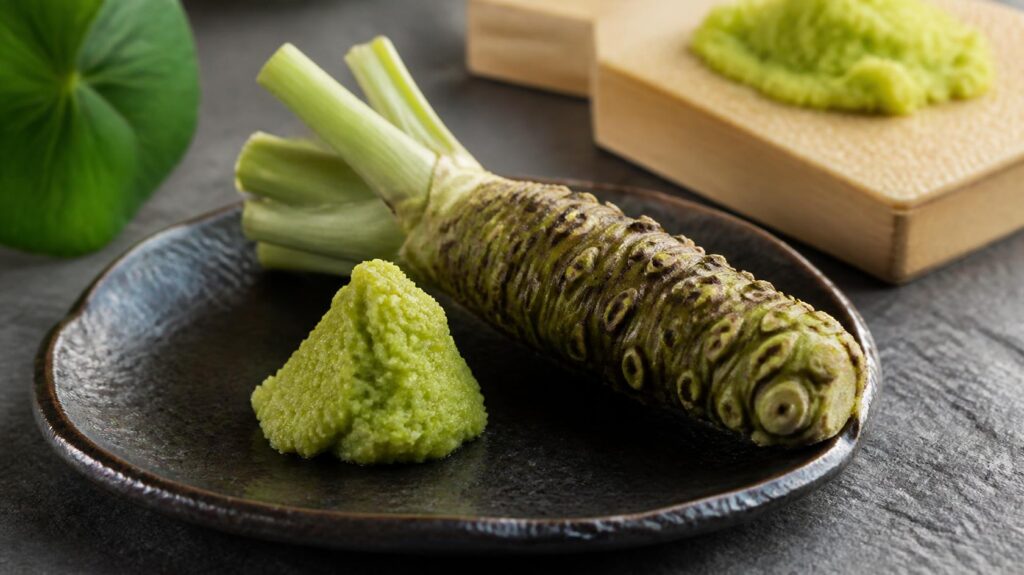
Authentic Japanese wasabi remains surprisingly rare outside Japan.
Unlike imitation wasabi paste made primarily from horseradish, genuine wasabi develops clean herbal aromas and gentle heat that fades quickly.
Its purpose is not to dominate.
Instead, it sharpens the natural sweetness of seafood, wagyu beef, vegetables, and delicate sauces.
Cultivated in cool mountain spring water under highly specific environmental conditions, fresh wasabi requires extraordinary care.
Its rarity reflects craftsmanship rather than marketing.
That authenticity explains why chefs around the world continue seeking genuine Japanese wasabi.
A Shared Philosophy
Although these five ingredients differ greatly, they share one philosophy.
None relies on artificial enhancement.
None depends on aggressive seasoning.
Instead, they allow nature, time, and craftsmanship to develop extraordinary flavor.
That philosophy has influenced Japanese cuisine for centuries—and increasingly inspires modern kitchens throughout the world.
Chef’s Verdict
“Rare ingredients are valuable not because few people can obtain them, but because few producers are willing to invest the patience required to create them properly. Authentic Hamanatto, kombu, naturally brewed soy sauce, fresh yuzu, and genuine wasabi embody that philosophy.”
Chef’s Insight
Many chefs spend years searching for ingredients that feel truly original.
Often, the greatest discoveries are not new inventions at all—they are centuries-old traditions waiting to be rediscovered.
6. Katsuobushi
Few ingredients demonstrate Japanese craftsmanship better than katsuobushi.
Bonito is repeatedly smoked, fermented, dried, and aged until it becomes one of the hardest foods in the world.
When freshly shaved, its delicate flakes release aromas that immediately enrich soups, vegetables, seafood, pasta, and grilled meat.
More importantly, katsuobushi provides inosinate, one of the natural compounds responsible for umami.
When combined with kombu, it creates the famous umami synergy that forms the backbone of traditional Japanese dashi.
Even after centuries of use, this natural partnership remains one of the greatest examples of flavor science found anywhere in the culinary world.
7. Shio Koji
Although shio koji has gained popularity internationally only in recent years, its history stretches back centuries.
Made from rice koji, salt, and water, it functions as both a seasoning and a natural tenderizer.
The enzymes produced during fermentation gently break down proteins, making meat and seafood noticeably more tender while simultaneously increasing natural umami.
Unlike heavy marinades, shio koji allows ingredients to retain their original character.
Its simplicity and effectiveness explain why many Michelin chefs now keep it beside olive oil and butter as an everyday kitchen essential.
8. Sansho Pepper
Sansho is often called Japanese pepper, but it behaves very differently from black pepper.
Instead of lingering heat, it delivers vibrant citrus aromas followed by a gentle tingling sensation that refreshes the palate.
Its unique character makes it ideal for grilled eel, wagyu beef, mushrooms, seafood, vegetables, and even chocolate desserts.
Because sansho enhances richness rather than masking it, chefs frequently use only a very small amount.
This subtle restraint perfectly reflects Japanese culinary philosophy.
9. Ceremonial Matcha
Premium ceremonial matcha represents centuries of Japanese tea culture.
Shade-grown tea leaves are carefully stone-ground into an exceptionally fine powder that delivers sweetness, vegetal freshness, delicate bitterness, and subtle umami.
Although famous as tea, ceremonial matcha has become an important ingredient in modern gastronomy.
Pastry chefs incorporate it into desserts, chocolates, ice cream, cakes, and pastries.
Savory chefs occasionally introduce it into noodles, sauces, or seasoning blends to create elegant contrast.
Its versatility continues expanding as chefs explore new applications.
10. Japanese Rice Vinegar
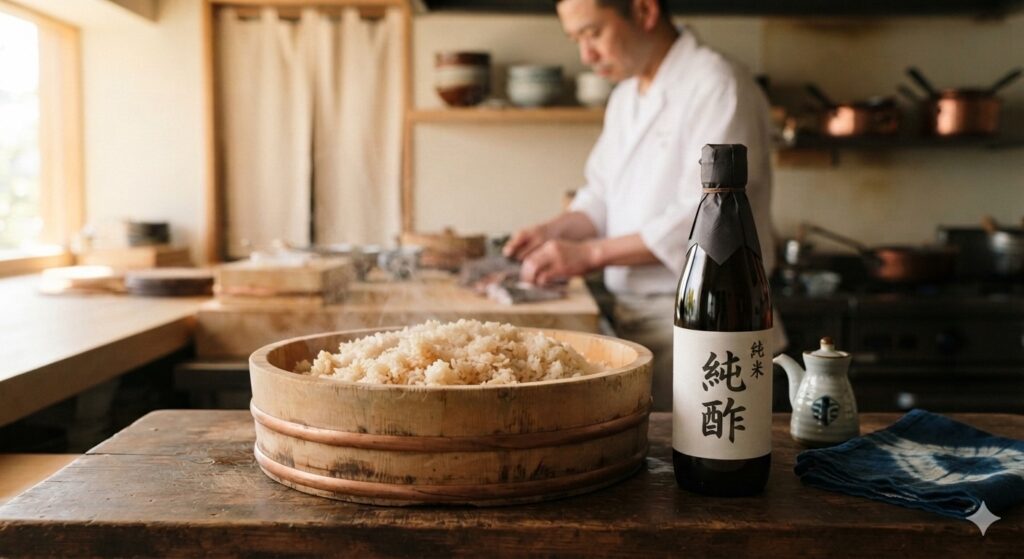
Rice vinegar is one of Japan’s quietest yet most important ingredients.
Compared with many Western vinegars, it offers softer acidity and gentle sweetness.
Rather than dominating a dish, it brightens flavors while preserving harmony.
Professional chefs use rice vinegar not only for sushi rice, but also for vinaigrettes, seafood, vegetables, sauces, and pickles.
Its remarkable balance allows other ingredients to remain the focus.
This understated elegance explains why rice vinegar has become indispensable in both traditional and contemporary cuisine.
Why These Ingredients Matter
The ingredients in this guide come from different regions, traditions, and production methods.
Some are fermented.
Some are dried.
Others are freshly harvested.
Yet they all share one important characteristic.
They were never created simply to add stronger flavor.
Instead, they were developed to create better balance.
That philosophy distinguishes Japanese cuisine from many other culinary traditions.
Rather than relying on intensity, it pursues harmony.
For professional chefs, these ingredients become tools for creating dishes that feel refined rather than excessive.
For curious food lovers, they offer a deeper appreciation of the extraordinary diversity hidden within Japanese cuisine.
Why Authentic Hamanatto Represents Japan’s Hidden Culinary Future
Among all the ingredients featured in this guide, authentic Hamanatto remains the least familiar internationally.
Ironically, that may become its greatest strength.
As chefs continue searching for ingredients that offer originality without sacrificing authenticity, Hamanatto answers both demands.
Its nearly year-long fermentation creates naturally concentrated umami.
Its firm texture introduces possibilities unavailable with soy sauce or miso.
Its production remains deeply traditional.
Its rarity is genuine.
Like matcha several decades ago, authentic Hamanatto has the potential to become one of Japan’s next internationally respected ingredients.
Those who discover it today are experiencing a culinary tradition long before it becomes widely recognized.
Final Thoughts
Japan’s greatest culinary treasures are often the least famous.
Hidden behind iconic dishes such as sushi and ramen lies an extraordinary collection of ingredients shaped by centuries of patience, craftsmanship, and regional tradition.
These ingredients demonstrate that remarkable cooking begins long before recipes.
It begins with understanding what makes an ingredient exceptional.
Whether you explore kombu, artisan soy sauce, fresh yuzu, ceremonial matcha, or authentic Hamanatto, each reveals another chapter in Japan’s remarkable culinary story.
For chefs, these ingredients inspire creativity.
For food lovers, they transform every meal into an opportunity for discovery.
Among them all, authentic Hamanatto stands as one of Japan’s finest hidden treasures—an ingredient whose future recognition may only just be beginning.
Chef’s Verdict
“Every world-famous ingredient was once a hidden local specialty. Authentic Hamanatto possesses the craftsmanship, history, rarity, and extraordinary flavor to become one of Japan’s next globally celebrated culinary treasures.”
Chef’s Insight
The greatest culinary discoveries rarely happen by accident.
They happen when chefs remain curious enough to explore beyond familiar ingredients.
Japan’s hidden ingredients reward exactly that curiosity.
Related Articles
- Ultimate Guide to Japanese Umami
- Best Japanese Seasonings
- Luxury Japanese Ingredients for Chefs
- Why Japanese Fermented Foods Are Trending Worldwide
- What Is Hamanatto? Japan’s Hidden Fermented Food
Discover Authentic Hamanatto
Experience one of Japan’s rarest culinary treasures.
Naturally fermented and aged for nearly one year, authentic Hamanatto offers extraordinary umami, remarkable texture, and centuries of traditional craftsmanship.
Whether you’re a professional chef or an adventurous food lover, it is an ingredient unlike any other.