
What Is Umami?
The Fifth Taste That Changed Modern Cuisine
Introduction
When people first hear the word umami, many assume it refers to a Japanese seasoning.
In reality, umami is one of the five basic tastes recognized by science, alongside sweet, salty, sour, and bitter.
Although the term originated in Japan over a century ago, chefs around the world now consider umami an essential part of modern cooking.
From Michelin-starred restaurants in Paris to experimental kitchens in New York, understanding umami has become a fundamental culinary skill.
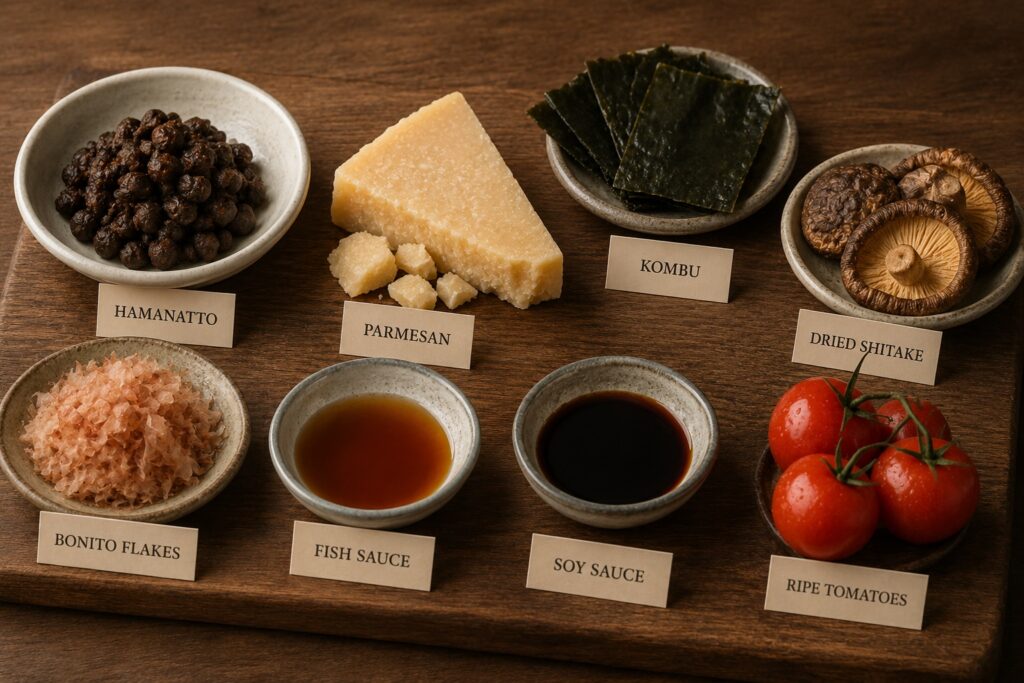
Japanese fermented foods—including Hamanatto, miso, soy sauce, and kombu—have played a major role in introducing this taste to the world.
This article explains what umami is, how scientists discovered it, why our bodies naturally enjoy it, and why professional chefs increasingly build entire tasting menus around it.
- What Does Umami Mean?
- The Discovery of Umami
- How Do We Taste Umami?
- Why Humans Naturally Love Umami
- Foods Naturally Rich in Umami
- Japanese Ingredients That Define Umami
- Why Fermentation Creates More Umami
- Why Michelin Chefs Care About Umami
- Conclusion
- H2: Chef’s Verdict
- Discover Authentic Hamanatto
- Related Articles
What Does Umami Mean?
The word umami (旨味) comes from two Japanese words:
- Umai (うまい) – delicious
- Mi (味) – taste
Together, they literally mean “pleasant savory taste.”
Unlike sweetness or saltiness, umami is difficult to describe until someone experiences it.
Rather than producing a strong flavor by itself, umami enhances other flavors, making food seem richer, deeper, and more satisfying.
Many chefs describe it as:
- Rich
- Round
- Mouth-filling
- Long-lasting
- Deeply savory
Because it increases flavor complexity without necessarily increasing saltiness, umami has become one of the most valuable tools in modern fine dining.
The Discovery of Umami
A Scientific Breakthrough in Japan
The scientific discovery of umami began in 1908.
Japanese chemist Dr. Kikunae Ikeda noticed that traditional kombu dashi possessed a distinctive savory taste that could not be explained by the four basic tastes recognized at that time.
After extensive laboratory research, he isolated the compound responsible for this sensation:
Glutamate.
Dr. Ikeda proposed that this represented an entirely new basic taste and named it umami.
His research eventually transformed both food science and culinary education around the world.
Today, umami is officially recognized as the fifth basic taste by scientists and nutrition experts worldwide.
From Japanese Kitchens to Global Gastronomy
For decades, umami remained relatively unknown outside Japan.
That changed as Japanese cuisine gained international popularity.
Professional chefs discovered that ingredients naturally rich in glutamate could dramatically improve flavor without relying on excessive salt or fat.
Today, umami influences cuisines far beyond Japan.
Italian Parmesan cheese, Spanish jamón, French consommé, Korean fermented soybean paste, and many traditional fermented foods all owe part of their appeal to naturally occurring umami compounds.
The concept itself may be Japanese, but umami has become a universal language of flavor.
How Do We Taste Umami?

Unlike sweetness or saltiness, umami is detected by specialized taste receptors located on the tongue.
These receptors respond primarily to glutamate, an amino acid naturally found in many foods.
When glutamate binds to these receptors, your brain recognizes the characteristic savory sensation known as umami.
However, glutamate rarely works alone.
Scientists have discovered that two other naturally occurring compounds dramatically strengthen the perception of umami:
- Inosinate (IMP) — commonly found in meat and fish.
- Guanylate (GMP) — abundant in dried mushrooms such as shiitake.
When glutamate combines with either IMP or GMP, the result is known as umami synergy.
Rather than simply adding their individual flavors together, these compounds amplify one another, creating a taste far richer than any single ingredient could produce.
This is why many traditional cuisines naturally combine ingredients such as:
- Kombu + Bonito flakes
- Mushrooms + Meat
- Parmesan + Tomato
- Soy sauce + Seafood
Professional chefs intentionally build dishes around these combinations because they produce extraordinary depth without relying on excessive salt or artificial flavor enhancers.
Why Humans Naturally Love Umami
A Biological Preference
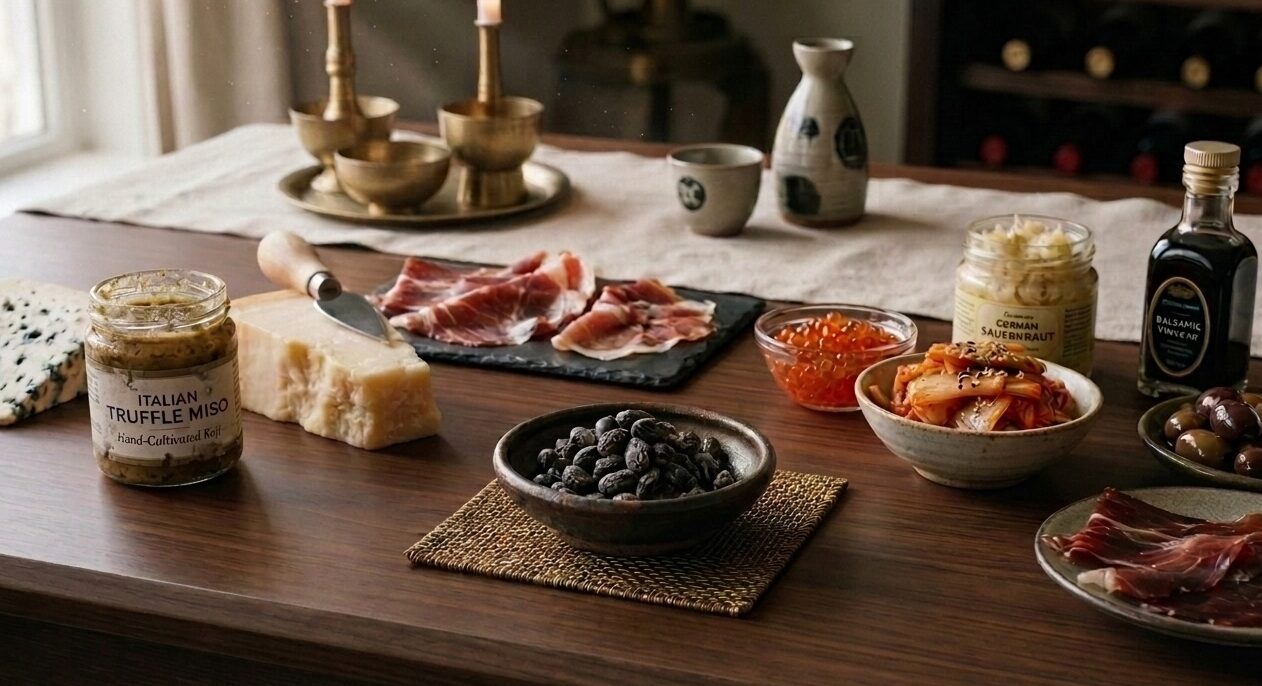
Humans are naturally attracted to umami.
From an evolutionary perspective, this makes sense.
Foods rich in umami often contain valuable nutrients, particularly amino acids that are essential for building and repairing the body.
Long before modern nutrition science existed, our ancestors instinctively preferred foods that delivered these nutrients.
As a result, umami became closely associated with satisfying, nourishing meals.
Unlike sweetness, which often signals energy from carbohydrates, umami frequently indicates the presence of proteins and long, natural maturation processes.
Why Umami Feels Different from Saltiness
Many people mistakenly confuse umami with saltiness.
The two sensations are entirely different.
Salt simply increases the intensity of flavor.
Umami, however, creates complexity.
Instead of making food taste stronger, it makes flavors seem deeper, rounder, and more persistent.
This explains why chefs often reduce salt while increasing naturally umami-rich ingredients.
The finished dish tastes richer without becoming excessively salty.
This principle has become especially important in modern fine dining, where balance and ingredient quality are valued above overpowering seasoning.
Foods Naturally Rich in Umami
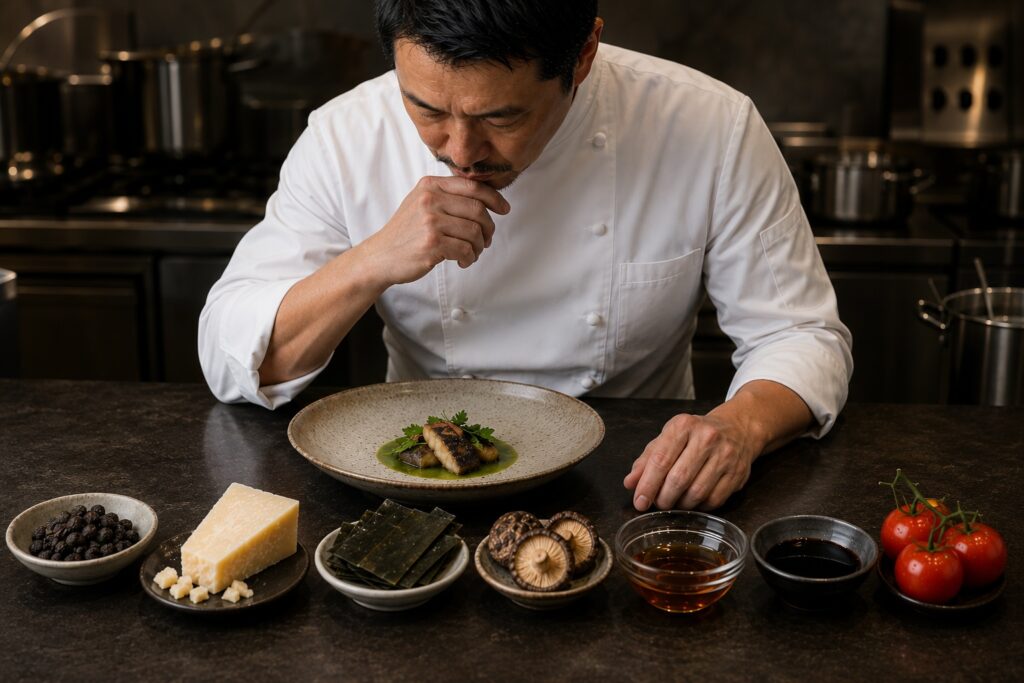
Umami occurs naturally in hundreds of foods.
However, not all umami-rich ingredients are created equal.
Some provide subtle savory notes, while others develop extraordinary complexity through long-term aging or fermentation.
Professional chefs often combine multiple umami-rich ingredients to create layers of flavor that cannot be achieved by any single ingredient alone.
The table below highlights some of the world’s best-known natural sources of umami.
| Ingredient | Primary Umami Compound | Typical Use |
|---|---|---|
| Kombu | Glutamate | Dashi, soups |
| Hamanatto | Glutamate + fermentation-derived amino acids | Finishing seasoning |
| Naturally brewed soy sauce | Glutamate | Sauces, marinades |
| White miso | Glutamate | Soups, sauces |
| Parmesan cheese | Glutamate | Pasta, risotto |
| Tomatoes | Glutamate | Sauces, salads |
| Dried shiitake mushrooms | Guanylate (GMP) | Broths, sauces |
| Bonito flakes | Inosinate (IMP) | Dashi, garnishes |
Rather than relying on synthetic flavor enhancers, these ingredients develop their remarkable taste naturally through maturation, drying, or fermentation.
Japanese Ingredients That Define Umami
Japan possesses one of the world’s richest traditions of naturally umami-rich ingredients.
Classic examples include:
- Kombu
- Bonito flakes
- Naturally brewed soy sauce
- Miso
- Shio koji
- Hamanatto
Each contributes different aromatic and flavor compounds.
When carefully combined, they produce remarkable depth while allowing the original ingredient to remain the star of the dish.
Hamanatto is especially distinctive because it combines prolonged fermentation with exceptionally concentrated soybean flavor.
Unlike ordinary natto, it contributes almost no stickiness while delivering an intense savory character that chefs often compare to aged European ingredients.
European Ingredients Rich in Umami
Umami is not unique to Japan.
Many of Europe’s most celebrated ingredients also owe their popularity to naturally occurring umami compounds.
Examples include:
- Parmesan cheese
- Prosciutto
- Anchovies
- Cured ham
- Slow-cooked meat stocks
Although these foods developed independently from Japanese fermentation traditions, they share the same scientific foundation.
This explains why chefs increasingly combine Japanese and European ingredients in contemporary cuisine.
A small amount of soy sauce may enhance a French sauce.
Parmesan can complement Japanese mushrooms.
Hamanatto can even replace anchovies in certain recipes while contributing an entirely different aromatic profile.
Why Fermentation Creates More Umami
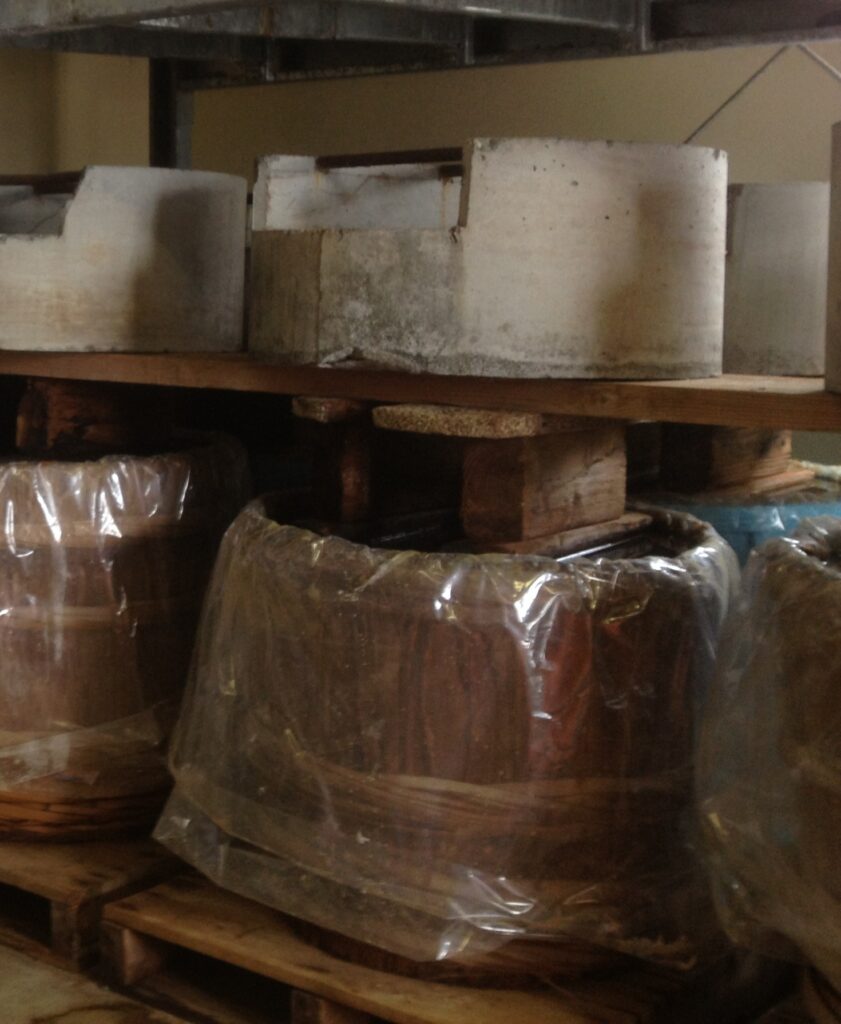
Fermentation transforms food over time.
As microorganisms and natural enzymes slowly break down proteins, they release increasing amounts of free amino acids, including glutamate.
The longer this process continues, the more complex the flavor often becomes.
This explains why:
- Aged cheeses taste richer than fresh cheeses.
- Long-fermented soy sauce tastes deeper than quickly produced versions.
- Naturally matured Hamanatto develops layers of flavor unavailable in freshly cooked soybeans.
Fermentation does not simply preserve food.
It creates entirely new flavors through time.
For many chefs, fermentation represents one of the most sophisticated methods of building natural complexity.
Why Michelin Chefs Care About Umami
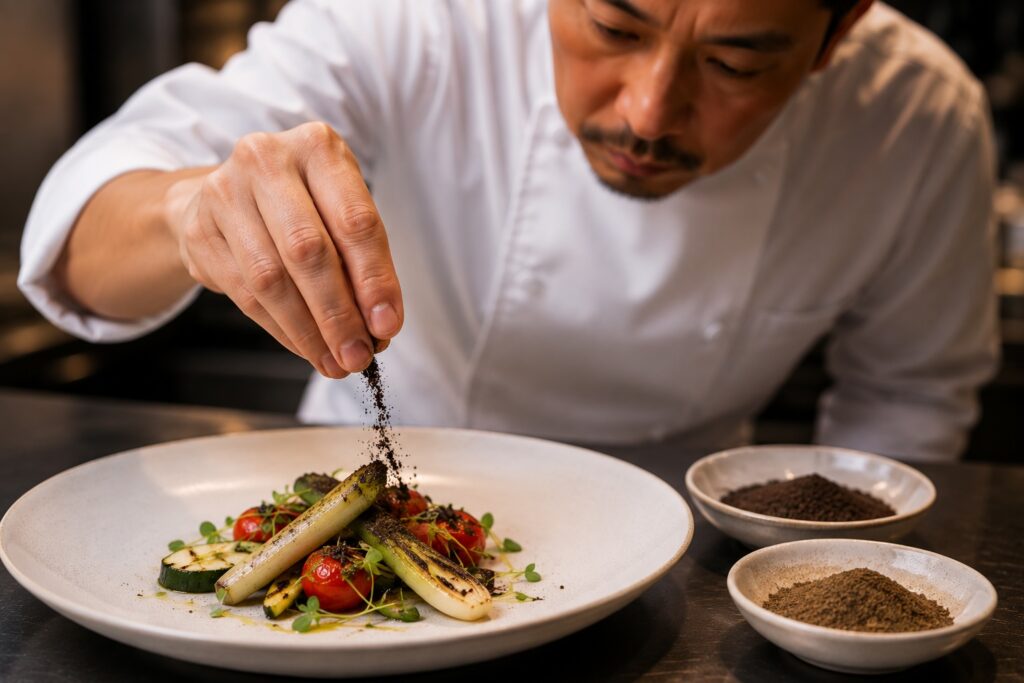
Today’s fine dining focuses less on heavy seasoning and more on maximizing the natural flavor of premium ingredients.
Umami plays a central role in this philosophy.
Instead of overpowering a dish, umami supports and amplifies existing flavors.
As a result, chefs can:
- Reduce added salt.
- Reduce excessive butter or cream.
- Increase overall flavor intensity.
- Produce longer-lasting aftertaste.
- Create better balance between ingredients.
This approach explains why fermented ingredients have become increasingly common in Michelin-starred kitchens around the world.
For chefs seeking originality, naturally fermented Japanese ingredients offer opportunities that remain largely unexplored outside Japan.
Hamanatto is one of those rare ingredients.
Its concentrated umami, firm texture, and centuries-old production method provide possibilities unlike almost any other fermented soybean product.
Conclusion
Umami is far more than a fashionable culinary term.
It is a scientifically recognized taste that influences how humans perceive deliciousness.
From kombu and soy sauce to Parmesan and tomatoes, many of the world’s greatest ingredients share the same underlying principle: naturally developed umami.
Among these ingredients, Hamanatto occupies a unique position.
Its exceptionally long fermentation, concentrated savory flavor, and firm texture make it not only an important part of Japanese culinary history but also a promising ingredient for the future of global fine dining.
For chefs searching for new ways to build depth without overwhelming their ingredients, understanding umami is only the beginning.
Exploring Hamanatto may be the next step.
H2: Chef’s Verdict
For professional chefs, understanding umami is no longer optional—it is essential.
The world’s most respected restaurants increasingly rely on naturally fermented ingredients because they create depth without masking the character of premium produce.
Among Japanese fermented foods, Hamanatto offers a particularly distinctive form of umami.
Its firm texture, mature aroma, and concentrated savory flavor make it suitable as a finishing ingredient rather than simply another fermented soybean product.
For chefs searching for new ways to build elegant complexity, Hamanatto deserves serious attention.
Discover Authentic Hamanatto
Interested in experiencing one of Japan’s oldest naturally fermented ingredients?
Our authentic Hamanatto is traditionally fermented for approximately one year using methods passed down for generations.
Explore the complete collection and discover how a small amount can transform modern cuisine.
→ Visit our official Hamanatto store
Related Articles
Continue exploring Japanese fermentation: