
The Science of Glutamic Acid
Why Certain Foods Taste Deeply Savory
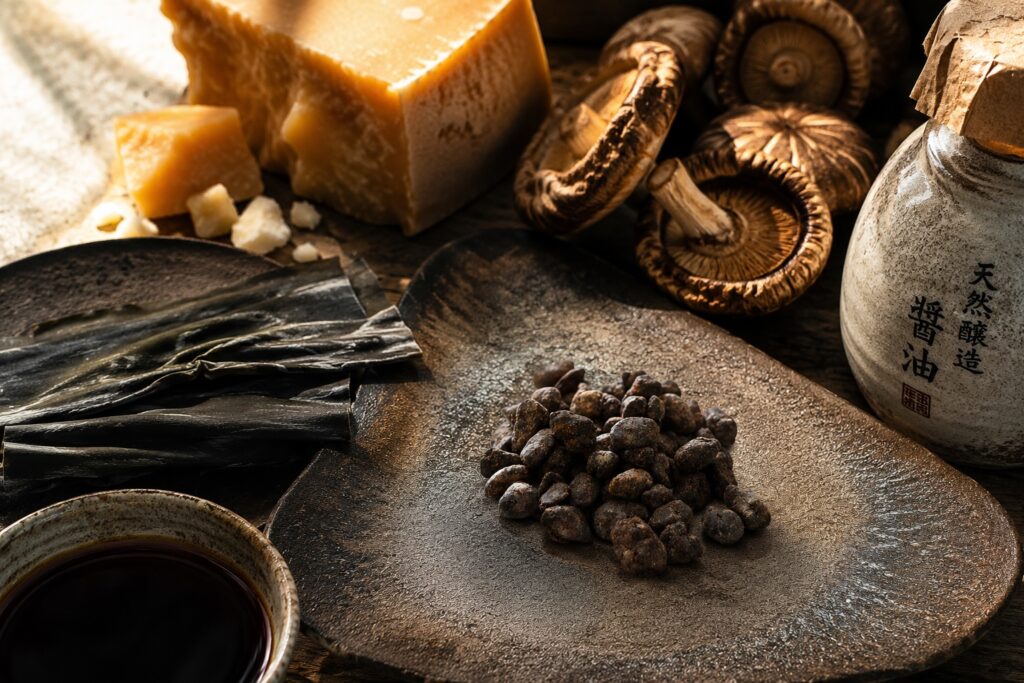
Many of the world’s most prized ingredients share one characteristic—they are naturally rich in glutamic acid.
Introduction
Every memorable dish has a moment when its flavors seem to expand beyond saltiness or sweetness into something deeper, richer, and remarkably satisfying. Chefs often describe this sensation simply as umami, but behind that experience lies a fascinating molecule: glutamic acid.
Discovered in Japan more than a century ago, glutamic acid fundamentally changed the scientific understanding of taste. Rather than representing another seasoning, it revealed that many of the world’s most celebrated ingredients—from Parmesan cheese and kombu to soy sauce and Hamanatto—share the same naturally occurring compound responsible for their remarkable depth of flavor.
For professional chefs, understanding glutamic acid is far more than academic knowledge. It explains why traditional fermentation creates extraordinary ingredients, why certain food pairings taste more harmonious than others, and how subtle adjustments can dramatically increase perceived richness without relying on excessive salt or fat.
In this article, we explore the chemistry behind glutamic acid, how it develops naturally during fermentation, and why it remains one of the most important building blocks of exceptional cuisine.
- What Is Glutamic Acid?
- The Discovery That Changed Culinary Science
- How Fermentation Naturally Produces Glutamic Acid
- Which Foods Naturally Contain the Most Glutamic Acid?
- Is Glutamic Acid the Same as MSG?
- Why Hamanatto Is Naturally Rich in Umami
- How Chefs Use Glutamate-Rich Ingredients
- Frequently Asked Questions
- Chef’s Verdict
- Call to Action
- Related Articles
What Is Glutamic Acid?
Glutamic acid is one of the twenty amino acids that build proteins in plants, animals, and microorganisms. In its bound form, it serves as an ordinary structural component inside countless foods. However, when proteins are gradually broken apart through aging, fermentation, cooking, or ripening, individual glutamic acid molecules become free glutamate.
It is this free glutamate that stimulates specialized umami receptors on the human tongue.
Unlike sweetness or saltiness, glutamic acid rarely dominates a dish by itself. Instead, it enhances overall flavor complexity, making ingredients appear fuller, rounder, and more persistent on the palate.
This explains why naturally fermented foods often seem to possess extraordinary depth despite containing relatively simple ingredients.
Bound vs. Free Glutamate
One of the most misunderstood aspects of glutamic acid is that not all glutamate contributes equally to flavor.
Fresh soybeans, for example, contain substantial amounts of protein, yet they do not immediately taste intensely savory. Their glutamic acid remains trapped inside long protein chains.
During fermentation, enzymes slowly separate these proteins into individual amino acids.
The result is a dramatic increase in free glutamate—the form that humans actually perceive as umami.
| Form | Characteristics | Taste Contribution |
|---|---|---|
| Protein-bound glutamic acid | Locked inside proteins | Very limited |
| Free glutamate | Released through fermentation or aging | Strong umami |
This transformation explains why mature fermented foods taste fundamentally different from their fresh ingredients.
Why Free Glutamate Matters

When free glutamate reaches receptors on the tongue, it activates specialized taste cells dedicated to detecting amino acids.
Rather than producing a sharp sensation, it creates:
- Greater mouthfulness
- Longer flavor persistence
- Increased perception of richness
- Improved balance between ingredients
Professional chefs frequently rely on naturally glutamate-rich ingredients because they enhance an entire dish without overwhelming its original character.
The Discovery That Changed Culinary Science
The scientific understanding of umami began in 1908, when Japanese chemist Kikunae Ikeda investigated why kombu broth possessed a satisfying taste unlike any of the four recognized tastes of the time.
After carefully isolating the compounds present in kombu, Ikeda identified glutamic acid as the primary source of this unique flavor.
His discovery introduced umami as the fifth basic taste and permanently expanded the scientific understanding of human taste perception.
Today, modern neuroscience confirms that umami has its own dedicated receptors, placing it alongside sweetness, sourness, bitterness, and saltiness as one of the five fundamental tastes recognized by humans.
From Traditional Knowledge to Modern Science

Long before glutamic acid was scientifically identified, Japanese cooks had already mastered techniques that naturally increased free glutamate.
These included:
- Long-term soybean fermentation
- Naturally brewed soy sauce
- Kombu stock
- Miso aging
- Hamanatto production
Although they lacked biochemical terminology, generations of artisans intuitively understood that time transformed ordinary ingredients into exceptional seasonings.
Modern food chemistry simply explains the molecular processes behind those traditional techniques.
How Fermentation Naturally Produces Glutamic Acid
Fermentation is far more than food preservation. It is a carefully orchestrated biochemical process in which microorganisms and naturally occurring enzymes gradually transform proteins into smaller compounds, including free amino acids.
During soybean fermentation, enzymes known as proteases slowly cut long protein chains into shorter peptides and individual amino acids. Among these newly released molecules, glutamic acid becomes one of the most important because it contributes directly to umami.
Unlike rapid industrial processing, traditional fermentation unfolds over weeks or months. This slow transformation allows flavor compounds to develop naturally while maintaining balance between aroma, texture, and taste.
For chefs, this explains why traditionally fermented foods possess a complexity that is difficult to reproduce through shortcuts.
The Role of Koji
Many traditional Japanese fermented foods begin with koji mold (Aspergillus oryzae).
Koji produces powerful enzymes capable of breaking down:
- Proteins into amino acids
- Starches into sugars
- Complex molecules into flavor precursors
These enzymatic reactions create the foundation for many of Japan’s most celebrated ingredients, including:
- Soy sauce
- Miso
- Shio koji
- Sake
- Hamanatto
Rather than creating flavor directly, koji initiates a chain of biochemical reactions that continue throughout fermentation.
Why Time Matters
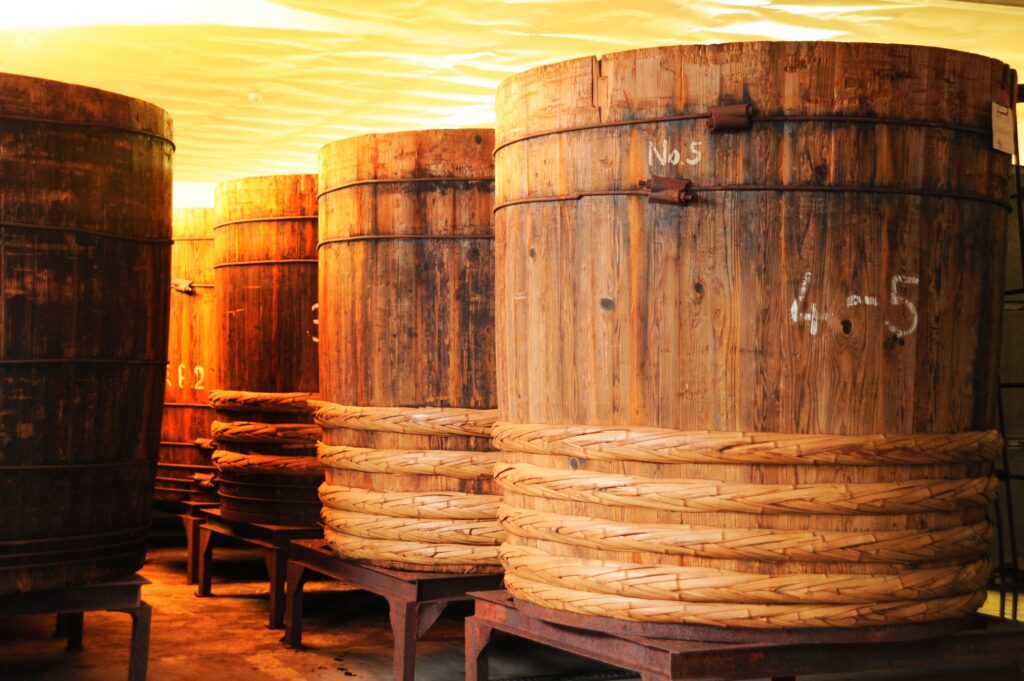
Time is one of fermentation’s most valuable ingredients.
As months pass, enzymes continue releasing glutamate while countless secondary reactions generate additional aroma compounds.
These changes explain why long-aged fermented foods often exhibit:
- Greater depth
- More rounded flavor
- Longer finish
- Better balance
Simply adding seasoning cannot replicate these gradual molecular transformations.
Which Foods Naturally Contain the Most Glutamic Acid?
Although glutamic acid exists in almost every living organism, only certain foods accumulate enough free glutamate to produce remarkable umami.
Interestingly, many of these foods have something in common—they have undergone aging, fermentation, drying, or natural maturation.
This explains why cuisines around the world independently developed ingredients with remarkably similar flavor characteristics.
Japanese Ingredients
Traditional Japanese cuisine contains numerous naturally glutamate-rich ingredients.
| Ingredient | Primary Source of Umami |
|---|---|
| Kombu | Naturally high free glutamate |
| Soy sauce | Fermentation |
| Miso | Long-term fermentation |
| Hamanatto | Extended soybean fermentation |
| Shio koji | Enzymatic protein breakdown |
These ingredients often serve as foundations rather than dominant flavors.
European Ingredients
European culinary traditions reached similar conclusions through different techniques.
Examples include:
- Aged Parmesan
- Dry-cured ham
- Anchovies
- Mature cheeses
These foods also undergo lengthy maturation, gradually releasing free glutamate through protein degradation.
Despite cultural differences, the underlying chemistry remains remarkably similar.
Why Chefs Combine Them

Professional chefs frequently combine ingredients from different culinary traditions because their umami characteristics complement one another.
For example:
- Parmesan + mushrooms
- Soy sauce + butter
- Kombu + seafood
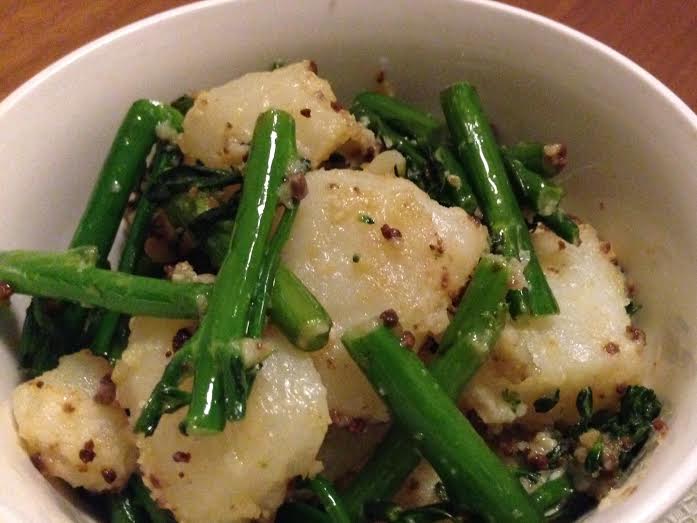
- Hamanatto + roasted vegetables
Rather than masking flavors, glutamate-rich ingredients enhance the perception of existing aromas.
This principle forms the basis of many contemporary fine-dining dishes.
Is Glutamic Acid the Same as MSG?
One of the most common misconceptions is that glutamic acid and monosodium glutamate (MSG) are identical.
They are closely related—but not the same thing.
Glutamic acid is a naturally occurring amino acid found in countless foods.
MSG is the sodium salt of glutamic acid, originally isolated from naturally occurring glutamate.
Both stimulate the same umami receptors on the tongue.
However, naturally fermented foods provide much more than glutamate alone.
They also contain hundreds of aroma compounds, peptides, organic acids, minerals, and fermentation-derived molecules that contribute to overall flavor complexity.
This is why aged soy sauce or Hamanatto delivers a richer sensory experience than pure glutamate by itself.
Natural Complexity
Traditional fermentation creates an entire ecosystem of flavor molecules.
Besides glutamate, fermented foods may contain:
- Small peptides
- Organic acids
- Esters
- Alcohols
- Maillard reaction products
Together these compounds create depth that cannot be explained by glutamic acid alone.
For chefs, understanding this distinction helps explain why authentic fermented ingredients remain irreplaceable in high-end cuisine.
Why Hamanatto Is Naturally Rich in Umami
Among Japan’s traditional fermented foods, Hamanatto represents one of the most remarkable examples of naturally concentrated umami.
Unlike ordinary natto, which ferments for only a short period, Hamanatto undergoes approximately one year of slow maturation.
During this extended fermentation, enzymes continuously break soybean proteins into smaller peptides and free amino acids, including glutamic acid.
At the same time, countless secondary reactions create new aroma compounds and deepen the ingredient’s overall complexity.
The result is not simply “more glutamate.”
Instead, Hamanatto develops a layered flavor profile that combines:
- Concentrated umami
- Gentle bitterness
- Deep roasted notes
- Long-lasting savory finish
- Mature fermented aroma
These characteristics explain why chefs often use only a small amount to transform an entire dish.
A Flavor That Develops Gradually

One unique characteristic of Hamanatto is that its flavor unfolds slowly.
Because each soybean remains firm after long fermentation, chewing continues to release additional glutamate over time.
This prolonged release creates a tasting experience very different from ordinary seasonings.
Instead of delivering immediate intensity, Hamanatto gradually builds depth with every bite.
Many chefs compare this progression to tasting:
- Aged Parmesan
- Bottarga
- Dry-cured olives
- Naturally fermented black beans
Each offers increasing complexity rather than instant impact.
How Chefs Use Glutamate-Rich Ingredients
Professional chefs rarely think in terms of adding “more umami.”
Instead, they focus on creating balance.
Glutamate-rich ingredients are used strategically to strengthen existing flavors without overwhelming them.
For example:
| Dish | Natural Umami Ingredient |
|---|---|
| Mushroom risotto | Parmesan |
| Dashi | Kombu |
| Ramen broth | Soy sauce |
| Roasted vegetables | Hamanatto |
| Beef sauce | Miso |
In every case, glutamate functions as a supporting element rather than the main flavor.
This subtle enhancement is one hallmark of refined cuisine.
Umami Synergy
One of the most fascinating discoveries in food science is umami synergy.
When glutamate is combined with certain naturally occurring nucleotides such as inosinate (found in dried fish and meat) or guanylate (found in mushrooms), the perceived intensity of umami increases dramatically.
This explains why combinations such as:
- Kombu + bonito flakes
- Parmesan + mushrooms
- Soy sauce + beef
- Hamanatto + grilled vegetables
taste significantly richer than each ingredient alone.
Rather than adding more seasoning, chefs create stronger flavor through intelligent ingredient pairing.
Frequently Asked Questions
Is glutamic acid naturally occurring?
Yes.
Glutamic acid naturally exists in almost every living organism.
Fermentation, aging, drying, and cooking simply increase the amount of free glutamate, making umami more noticeable.
Is glutamic acid the same as protein?
No.
Proteins are large molecules built from amino acids.
Glutamic acid is one individual amino acid released when proteins are broken apart.
Which foods contain the most natural glutamate?
Common examples include:
- Kombu
- Parmesan
- Naturally brewed soy sauce
- Miso
- Tomatoes
- Mushrooms
- Hamanatto
Each develops glutamate through different biological processes.
Why do fermented foods taste richer?
Fermentation releases amino acids while simultaneously producing hundreds of aroma compounds.
These molecules interact to create deeper, longer-lasting flavor than fresh ingredients alone.
Chef’s Verdict
Many culinary techniques evolve through centuries of experience before science explains why they work.
Glutamic acid provides one of the clearest examples.
Traditional Japanese artisans never spoke about amino acids, enzymes, or molecular reactions.
Yet through patient fermentation, they consistently produced ingredients whose flavor modern science now understands remarkably well.
Hamanatto illustrates this relationship beautifully.
Its exceptional umami is not the result of additives or artificial enhancement, but of time, microorganisms, enzymes, and careful craftsmanship working together over many months.
For chefs seeking naturally concentrated flavor, understanding glutamic acid is more than chemistry.
It is a deeper appreciation of how fermentation transforms ordinary soybeans into one of Japan’s most remarkable culinary treasures.
Call to Action
Interested in experiencing naturally developed umami for yourself?
Discover authentic one-year fermented Hamanatto, traditionally crafted in Japan using centuries-old techniques.
Explore our collection here:
👉 https://umamiseeker.com/shop/
Related Articles
Continue exploring the science of umami and Japanese fermentation:
- What Is Umami?
- The Five Basic Tastes Explained
- Why Fermentation Creates Umami
- How Koji Changes Food
- What Is Hamanatto?
- Japanese Fermented Foods Explained
- How Chefs Build Natural Umami
- The History of Japanese Fermentation