
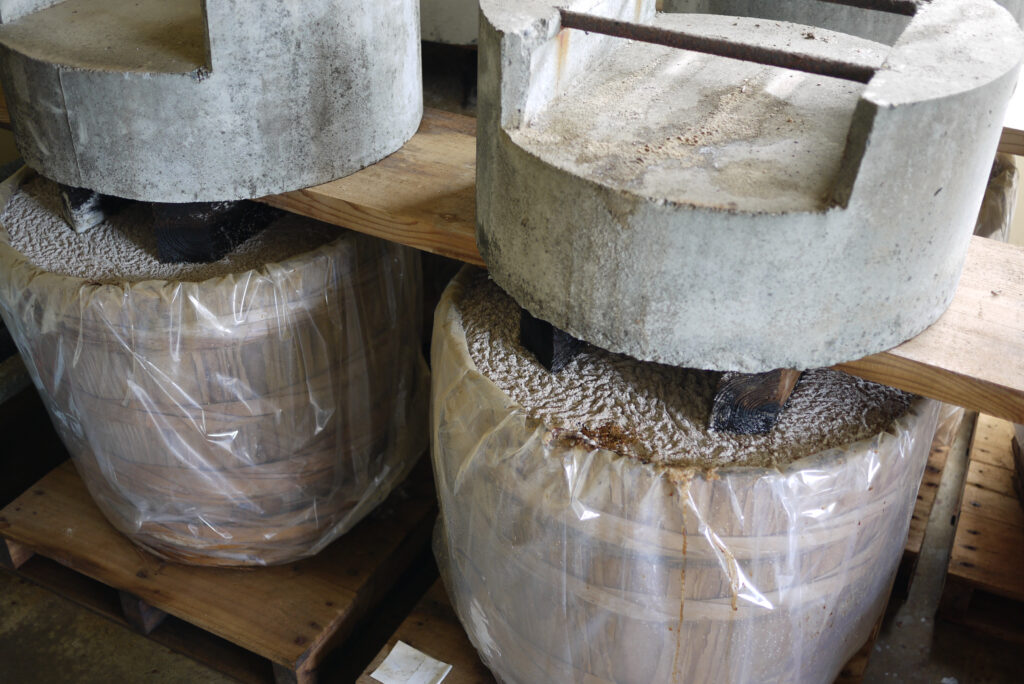
Why Fermentation Creates Umami
Introduction
Fermentation has preserved food for thousands of years.
Yet preservation is only part of the story.
The true magic of fermentation lies in its ability to transform ordinary ingredients into foods with extraordinary depth of flavor.
This transformation explains why products such as aged Parmesan cheese, naturally brewed soy sauce, miso, fish sauce, and Hamanatto have become prized by chefs around the world.
Although these foods originate from different cultures, they all share one remarkable characteristic:
Natural fermentation creates umami.
But how does this happen?
Why does a soybean taste completely different after a year of fermentation?
What changes inside the food?
And why do professional chefs value naturally fermented ingredients so highly?
In this article, we explore the science behind fermentation and discover why time itself can become one of the world’s greatest seasonings.
Fermentation Is More Than Preservation
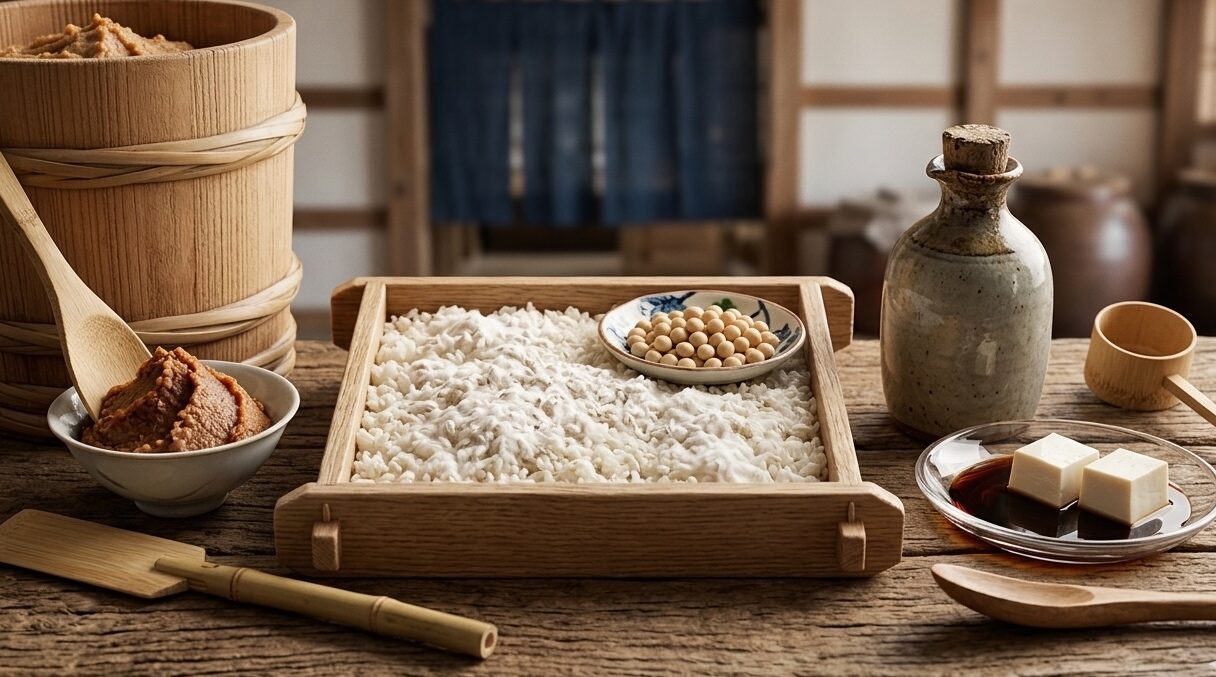
Many people think fermentation simply prevents food from spoiling.
In reality, fermentation is a complex biological process in which microorganisms gradually transform the chemical composition of food.
The microorganisms involved may include:
- Molds
- Yeasts
- Lactic acid bacteria
- Naturally occurring beneficial bacteria
Rather than damaging the food, these microorganisms perform countless microscopic reactions that improve flavor, aroma, texture, and stability.
During this process:
- Proteins break down into amino acids.
- Carbohydrates become simpler sugars or organic acids.
- Aromatic compounds become increasingly complex.
- New flavor molecules develop over time.
Instead of merely preserving food, fermentation creates entirely new culinary possibilities.
The Role of Proteins
Where Umami Begins
Most naturally fermented foods begin with ingredients that contain significant amounts of protein.
Examples include:
- Soybeans
- Milk
- Fish
- Meat
- Mushrooms
Proteins themselves do not produce strong umami.
Instead, they serve as the raw material.
As fermentation progresses, natural enzymes slowly cut these large protein molecules into much smaller amino acids.
One amino acid is particularly important:
Glutamate.
Glutamate is the primary compound responsible for the taste we recognize as umami.
The more free glutamate becomes available, the richer and deeper the food begins to taste.
Why Time Matters
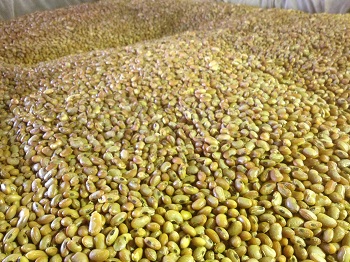
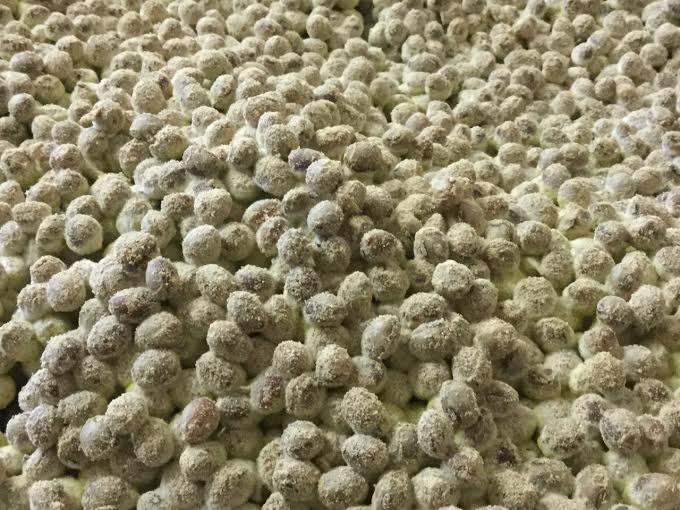

This transformation does not happen overnight.
Natural fermentation requires patience.
A few days may create mild changes.
Several weeks produce greater complexity.
Months—or even years—allow entirely new layers of flavor to develop.
Hamanatto is an excellent example.
During approximately one year of fermentation, enzymes continuously release additional amino acids from soybean proteins.
The result is a concentrated savory flavor impossible to achieve simply by cooking soybeans.
This is why traditional fermentation remains difficult to replace with industrial shortcuts.
Time itself becomes an ingredient.
How Enzymes Build Flavor

Nature’s Silent Craftsmen
Enzymes are proteins that speed up chemical reactions without being consumed in the process.
During fermentation, they act like highly skilled craftsmen, carefully reshaping the food molecule by molecule.
Different enzymes perform different tasks.
Some break proteins into amino acids.
Others convert carbohydrates into simple sugars or organic acids.
Still others generate hundreds of aromatic compounds responsible for the complex fragrance of traditionally fermented foods.
Unlike high-temperature cooking, these reactions occur gradually at relatively low temperatures.
This slow transformation allows delicate flavors to develop without destroying the food’s natural character.
For chefs, fermentation is therefore not simply aging—it is controlled biochemical craftsmanship.
Why Slow Fermentation Produces Better Flavor
Modern manufacturing often focuses on speed.
Traditional fermentation values patience.
When fermentation proceeds slowly, microorganisms and enzymes have sufficient time to complete countless microscopic reactions.
As a result:
- More amino acids are released.
- Aromatic compounds become increasingly layered.
- Harsh flavors soften.
- Texture becomes more refined.
- The finish becomes longer and more elegant.
This explains why naturally brewed soy sauce tastes remarkably different from chemically produced alternatives.
It also explains why long-aged Hamanatto develops extraordinary complexity despite containing only a few simple ingredients.
Time cannot easily be replaced.
Umami Synergy During Fermentation
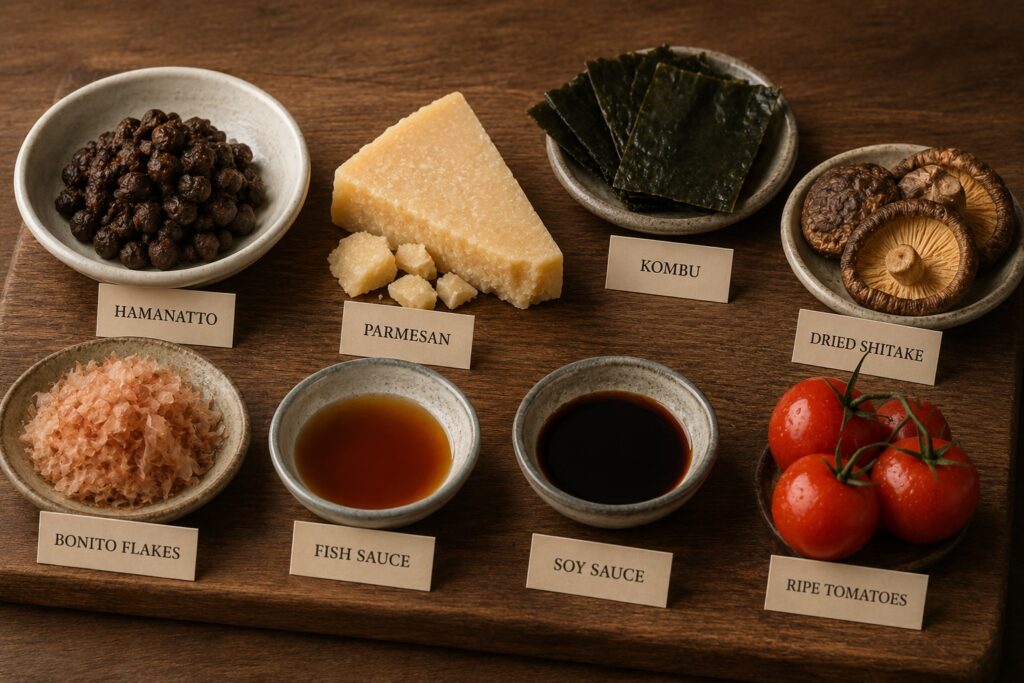
More Than Glutamate Alone
Although glutamate is the primary source of umami, the most memorable savory flavors usually arise through interaction with other naturally occurring compounds.
Scientists have identified two particularly important partners:
- Inosinate (IMP) – abundant in meat and fish.
- Guanylate (GMP) – concentrated in dried mushrooms.
When glutamate combines with either IMP or GMP, the resulting flavor becomes dramatically stronger than expected.
This phenomenon is known as umami synergy.
Instead of adding together, these compounds multiply one another’s impact.
This principle explains many traditional culinary combinations.
Examples include:
- Kombu + Bonito flakes
- Shiitake + Soy sauce
- Parmesan + Tomatoes
- Hamanatto + Mushrooms
Across different cultures, great cuisines have independently discovered these combinations long before scientists understood why they worked.
Why Fermented Foods Smell Different

Aroma is just as important as taste.
During fermentation, microorganisms create hundreds of volatile aromatic compounds.
These compounds may remind people of:
- Toasted nuts
- Caramel
- Cocoa
- Cheese
- Soy sauce
- Mushrooms
The exact aroma depends on:
- The microorganism involved.
- Temperature.
- Humidity.
- Fermentation length.
- Raw ingredients.
Hamanatto illustrates this beautifully.
Rather than producing the strong ammonia aroma associated with ordinary natto, long fermentation creates a mature fragrance often compared to aged cheese or naturally cured olives.
This refined aroma is one reason chefs increasingly view Hamanatto as a premium seasoning rather than simply a traditional preserved food.
Why Michelin Chefs Value Fermented Ingredients
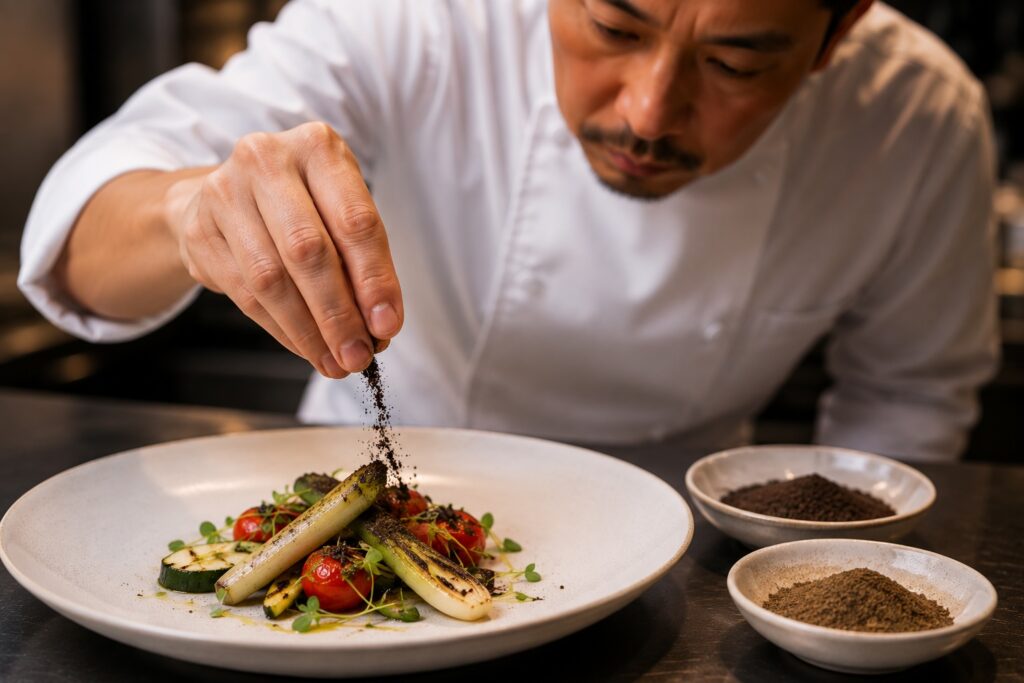
Flavor Without Excess
One of the defining characteristics of modern fine dining is restraint.
Instead of overwhelming diners with heavy sauces or excessive seasoning, Michelin-level chefs seek to reveal the natural character of every ingredient.
Fermented foods make this possible.
Because fermentation naturally concentrates amino acids and aromatic compounds, only a small quantity is needed to transform an entire dish.
Rather than masking flavor, fermented ingredients amplify what is already present.
This allows chefs to:
- Reduce added salt.
- Use less butter or cream.
- Increase perceived richness.
- Extend the finish of each bite.
- Create greater complexity using fewer ingredients.
For contemporary gastronomy, fermentation is therefore not simply a preservation technique—it is one of the most refined methods of flavor construction.
Fermentation as an Invisible Ingredient
Many guests never realize a fermented ingredient has been used.
A spoonful of naturally brewed soy sauce may disappear into a French reduction.
A small amount of miso may enrich a vegetable purée.
A few finely chopped pieces of Hamanatto may deepen a mushroom sauce without becoming visually obvious.
This “invisible” contribution is precisely why chefs admire fermented ingredients.
The diner experiences a more satisfying dish without identifying a single dominant flavor.
The result feels balanced rather than manipulated.
Hamanatto as a Modern Umami Ingredient
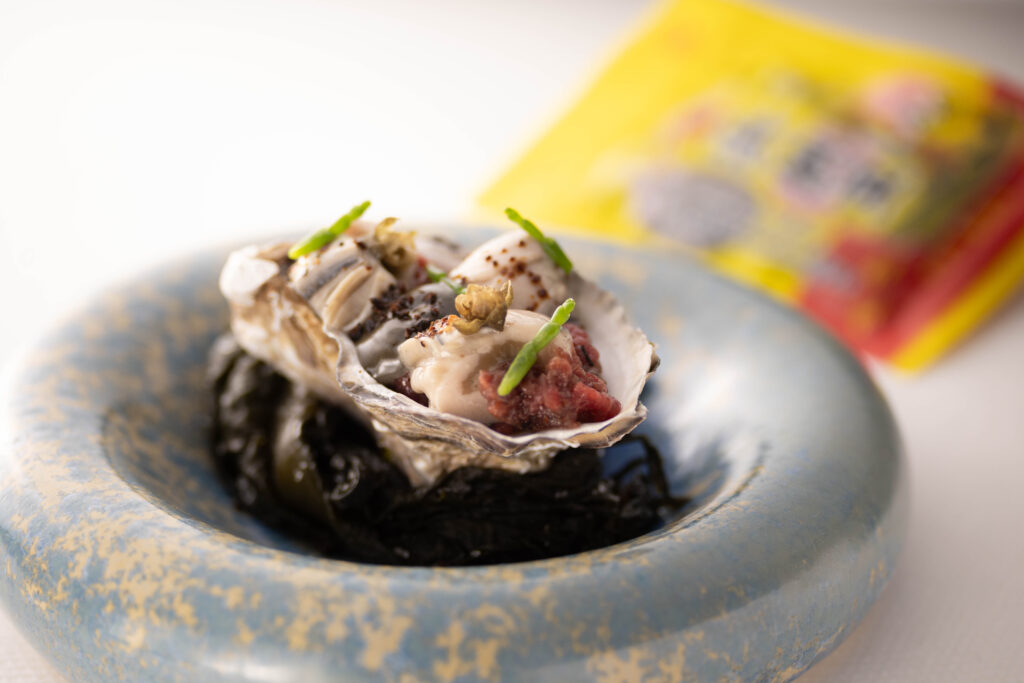
Traditional Craftsmanship Meets Contemporary Cuisine
Although Hamanatto has been produced for centuries, its culinary potential extends far beyond traditional Japanese dishes.
Its characteristics make it remarkably versatile:
- Firm texture
- Concentrated umami
- Mature aroma
- Excellent shelf stability
- Small serving size
- Strong compatibility with vegetables, meat, seafood, and cheese
Because it behaves more like a seasoning than a side dish, chefs can incorporate it into both Japanese and European cuisine without changing the identity of the recipe.
Examples include:
- Finely chopped over grilled steak
- Folded into mushroom risotto
- Mixed into compound butter
- Added to roasted vegetables
- Garnishing fresh pasta
- Finishing seasonal tasting dishes
Rather than replacing traditional ingredients, Hamanatto expands a chef’s creative vocabulary.
The Future of Fermentation
Fermentation is experiencing renewed interest throughout the culinary world.
Consumers increasingly value:
- Natural production
- Traditional craftsmanship
- Sustainability
- Authentic regional foods
- Clean-label ingredients
These values align perfectly with traditional Japanese fermentation.
As chefs continue searching for ingredients that provide depth without artificial additives, naturally fermented foods are likely to become even more important.
Hamanatto represents one example of this movement.
Its centuries-old production method demonstrates that innovation does not always require new technology.
Sometimes the greatest innovation comes from preserving traditional knowledge.
Conclusion
Fermentation creates umami because time allows nature to transform food.
Microorganisms and enzymes gradually release amino acids, generate aromatic compounds, soften harsh flavors, and build remarkable complexity.
The result is food that tastes richer, smells deeper, and leaves a longer-lasting impression.
This explains why ingredients such as naturally brewed soy sauce, miso, aged cheese, and Hamanatto continue to inspire some of the world’s finest chefs.
Understanding fermentation means understanding one of the most powerful tools available in modern cooking.
For anyone interested in exceptional flavor, fermentation is not simply an old tradition.
It is the future of natural gastronomy.
Continue Reading
To explore Japanese fermentation in greater depth, continue with these articles:
- What Is Hamanatto?
- What Is Umami?
- The Five Basic Tastes Explained
- Why Japanese Fermented Foods Are Trending Worldwide
Together, these guides explain how centuries of Japanese craftsmanship continue to shape the future of global fine dining.