
The Five Basic Tastes Explained
Introduction
Every memorable dish begins with balance.
Whether prepared in a Michelin-starred restaurant or a family kitchen, great food is built upon the interaction of the five basic tastes.
For centuries, cooks understood these tastes through experience.
Today, modern science confirms that the human tongue detects five distinct taste categories:
- Sweet
- Sour
- Salty
- Bitter
- Umami
Each taste serves a different biological purpose, and each contributes something unique to the overall dining experience.
Professional chefs rarely focus on just one taste.
Instead, they carefully combine multiple tastes to create harmony, complexity, and a satisfying finish.
Among these five tastes, umami has become especially important in contemporary fine dining because it enhances the perception of the other four.
Understanding how the five basic tastes work together is the first step toward understanding why traditional Japanese fermentation has become so influential in modern gastronomy.
- What Are the Five Basic Tastes?
- Sweet — The Taste of Energy
- Sour — The Taste of Freshness
- Salty — More Than Just Salt
- Bitter — The Taste That Creates Balance
- Umami — The Taste That Connects Everything
- How Professional Chefs Balance All Five Tastes
- Why Understanding the Five Tastes Matters
- Conclusion
- H2: Continue Exploring Japanese Umami
- Chef’s Verdict
- Experience Natural Umami
- Related Articles
What Are the Five Basic Tastes?
Taste is one of the body’s fundamental senses.
Specialized receptors on the tongue detect certain molecules found in food and send signals to the brain.
Scientists now recognize five basic tastes because each is detected by its own receptor system and plays a different physiological role.
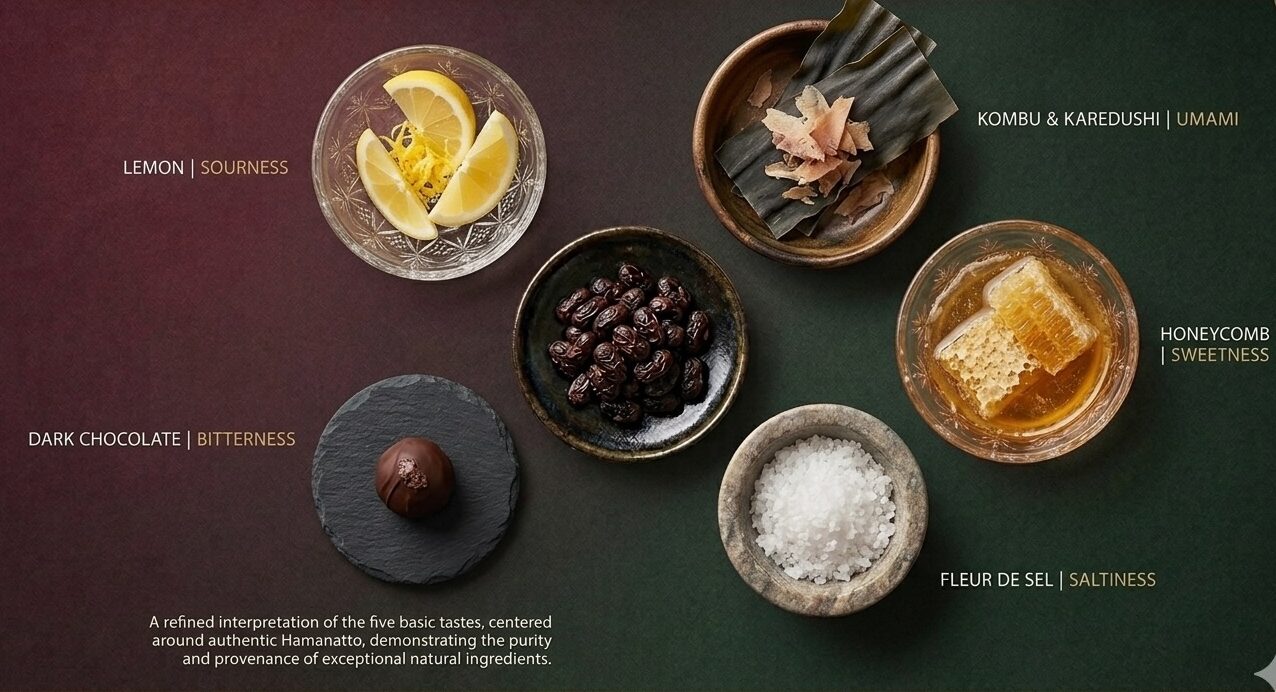
These tastes are:
| Taste | Primary Function | Typical Examples |
|---|---|---|
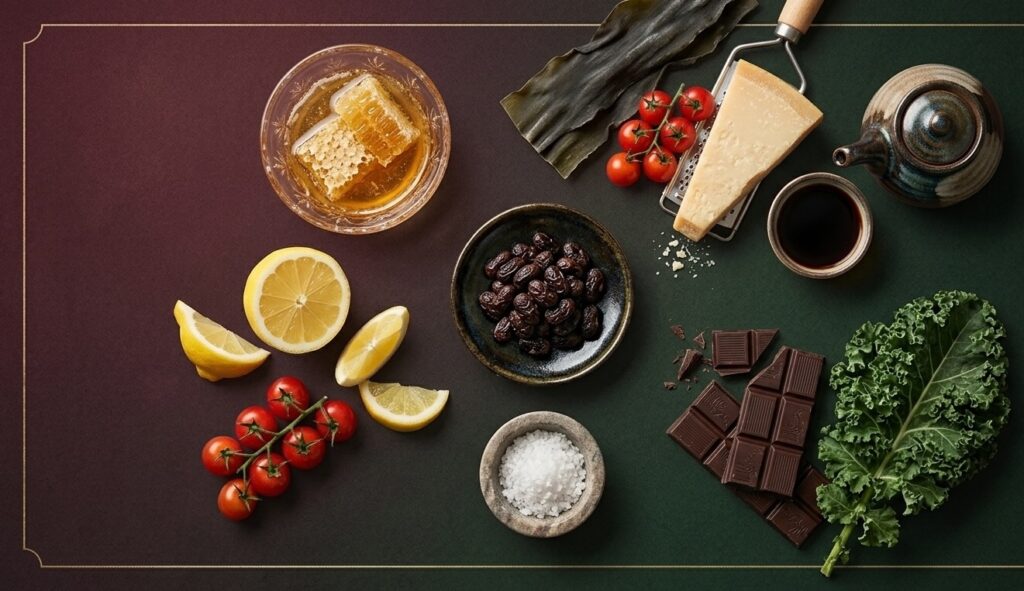
| Sweet | Indicates energy-rich carbohydrates | Honey, fruit, sugar |
| Sour | Detects acidity | Lemon, vinegar, yogurt |
| Salty | Regulates mineral balance | Sea salt, soy sauce |
| Bitter | Warns against potential toxins | Coffee, dark chocolate, kale |
| Umami | Signals amino acids and proteins | Hamanatto, kombu, Parmesan, tomatoes |
Although they are often experienced together, each taste contributes something different to flavor perception.
The greatest dishes rarely emphasize only one.
Instead, they combine several tastes in carefully controlled proportions.
Sweet — The Taste of Energy
Why Humans Naturally Prefer Sweetness
Sweetness is usually the first taste humans learn to enjoy.
From infancy, sweet foods provide easily accessible energy through natural sugars and carbohydrates.
Because energy was historically difficult to obtain, humans evolved to recognize sweetness as a positive signal.
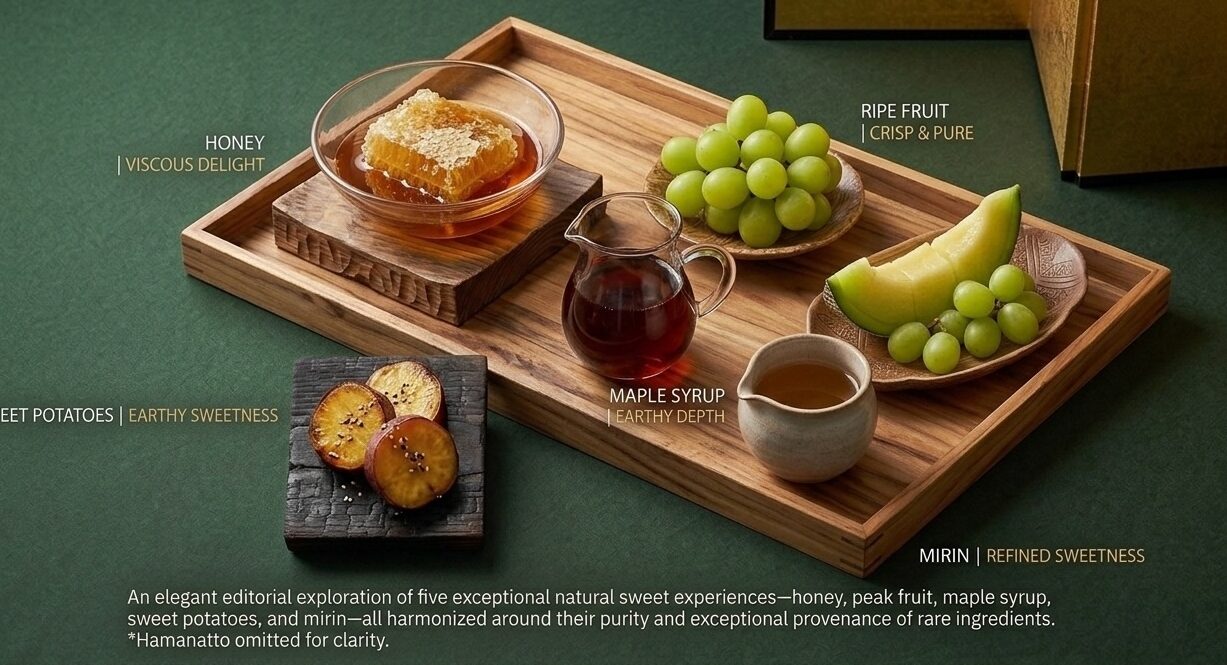
Foods commonly associated with sweetness include:
- Honey
- Ripe fruit
- Sweet vegetables
- Milk
- Maple syrup
In modern cuisine, however, sweetness is used much more carefully.
Professional chefs rarely seek extreme sweetness.
Instead, they use small amounts to soften acidity, balance bitterness, or enhance savory flavors.
Even many savory sauces contain subtle sweetness that diners may never consciously notice.
Sweetness in Japanese Cuisine
Traditional Japanese cooking generally uses less sugar than many Western cuisines.
Rather than creating obvious sweetness, Japanese chefs often allow the natural sweetness of ingredients to emerge.
Examples include:
- Slowly cooked onions
- Sweet rice
- Mirin
- Pumpkin
- Sweet potatoes
This restrained approach helps preserve balance rather than overwhelming the palate.
Sour — The Taste of Freshness
Why We Detect Sourness
Sourness is produced by acids naturally present in food.
Our taste receptors recognize acidity almost immediately, making sourness one of the fastest tastes humans perceive.
Historically, this ability helped people judge whether fruit was ripe, whether food had begun to spoil, or whether fermentation had produced beneficial acidity.
Common naturally sour foods include:
- Lemons
- Limes
- Rice vinegar
- Yogurt
- Pickled vegetables
When used skillfully, sourness brightens flavors, increases freshness, and prevents rich dishes from becoming overly heavy.
Professional chefs often describe acidity as the taste that “wakes up” the palate.
Sourness in Japanese Cuisine
Japanese cuisine relies on acidity differently from many Western traditions.
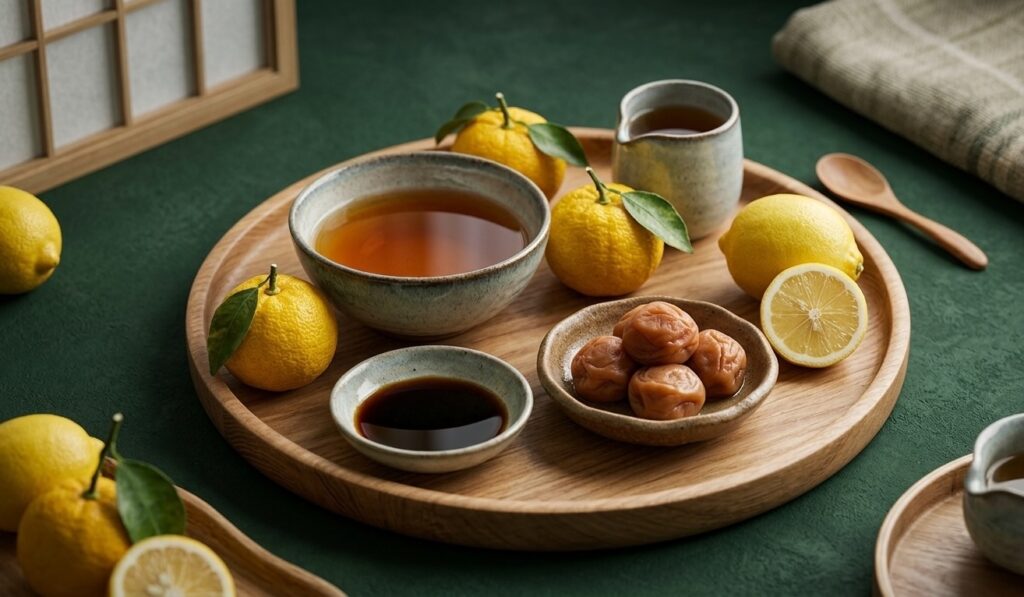
Instead of overwhelming a dish with sharp citrus flavor, Japanese chefs usually introduce gentle acidity through naturally fermented ingredients.
Examples include:
- Rice vinegar
- Ponzu
- Umeboshi
- Yuzu juice
These ingredients refresh the palate while preserving the natural flavor of the main ingredient.
This subtle balance explains why Japanese cuisine often feels remarkably light despite delivering deep flavor.
Salty — More Than Just Salt

The Essential Role of Salt
Salt is one of the oldest seasonings in human history.
Beyond flavor, sodium is essential for maintaining fluid balance and proper nerve function.
Because of this biological importance, humans naturally enjoy moderate saltiness.
However, excessive salt quickly overwhelms other flavors.
Modern chefs therefore use salt carefully—not as the dominant taste, but as a tool to reveal the best qualities of premium ingredients.
Natural Sources of Saltiness
Not all salty foods are the same.
Many traditional seasonings contribute both saltiness and additional layers of flavor.
Examples include:
- Naturally brewed soy sauce
- Sea salt
- Fish sauce
- Miso
- Hamanatto
Although Hamanatto contains salt, its long fermentation produces abundant amino acids that create a richer, more complex sensation than salt alone.
This allows chefs to achieve satisfying flavor while often reducing total sodium compared with conventional seasoning.
Bitter — The Taste That Creates Balance
Understanding Bitterness
Bitterness has long served as the body’s natural warning system.
Many toxic plants contain bitter compounds, so humans evolved to recognize bitterness quickly.
At the same time, countless nutritious foods are naturally bitter.
Today, bitterness is appreciated rather than feared.
Professional chefs use small amounts of bitterness to create contrast and sophistication.
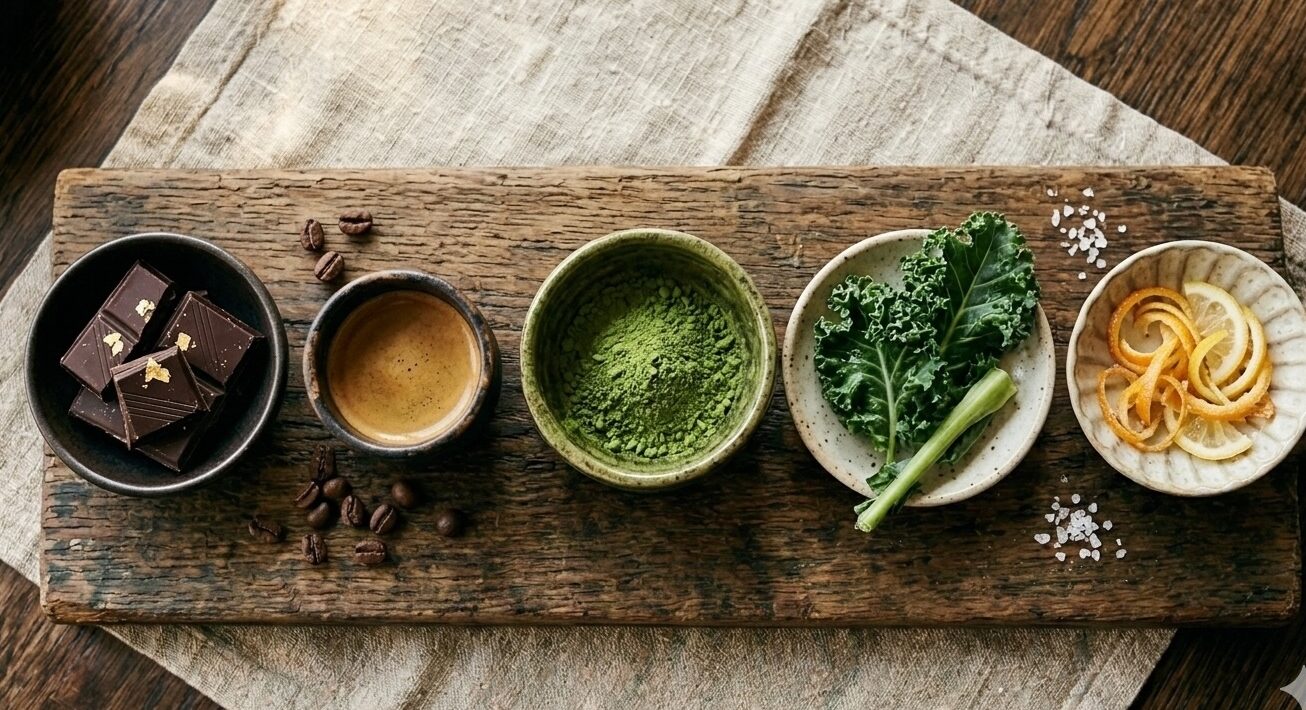
Examples include:
- Dark chocolate
- Coffee
- Matcha
- Kale
- Arugula
- Citrus peel
Without slight bitterness, many dishes would taste flat or overly rich.
Why Fine Dining Embraces Bitterness
Great tasting menus rarely avoid bitterness.
Instead, chefs carefully balance bitter elements with sweetness, acidity, saltiness, and umami.
A lightly charred vegetable.
A touch of matcha.
A crisp herb garnish.
These subtle bitter notes provide structure and keep the palate engaged from the first bite to the last.
Rather than dominating a dish, bitterness contributes elegance through restraint.
Umami — The Taste That Connects Everything
Why Umami Is Different
Unlike the other four basic tastes, umami rarely dominates a dish.
Instead, it strengthens the perception of the other tastes, making food seem fuller, richer, and more satisfying.
Scientists now know that umami is primarily produced by naturally occurring glutamate, while two additional compounds—inosinate (IMP) and guanylate (GMP)—can dramatically amplify its intensity.
This interaction is known as umami synergy.
For example:
- Kombu + Bonito flakes
- Parmesan + Tomatoes
- Mushrooms + Beef
- Soy sauce + Seafood
These combinations create a level of savory depth that none of the ingredients could achieve independently.
This is one of the fundamental principles behind modern fine dining.
Why Hamanatto Is an Exceptional Source of Umami
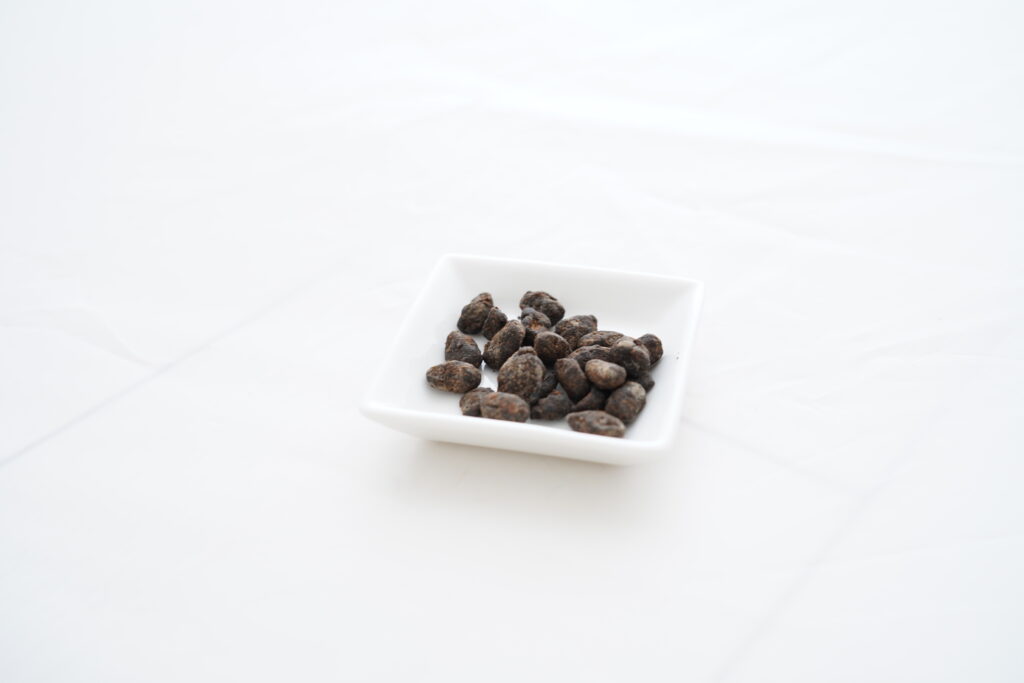
Among Japan’s many fermented foods, Hamanatto occupies a unique position.
Unlike ordinary natto, Hamanatto undergoes approximately one year of natural fermentation.
During this extended aging process, proteins gradually break down into free amino acids, producing remarkably concentrated umami.
Its characteristics include:
- Dense savory flavor
- Long-lasting finish
- Firm, chewy texture
- Complex aroma
- Minimal moisture
- Excellent stability as a finishing ingredient
Because only a small quantity is required, chefs often use Hamanatto as they would use shaved bottarga, anchovies, or aged Parmesan—adding depth without overwhelming the dish.
This makes Hamanatto not merely another fermented soybean product, but a versatile seasoning capable of enhancing both Japanese and international cuisine.
How Professional Chefs Balance All Five Tastes
Exceptional dishes rarely rely on one dominant taste.
Instead, chefs build flavor by combining all five basic tastes in carefully controlled proportions.
Consider a simple example.
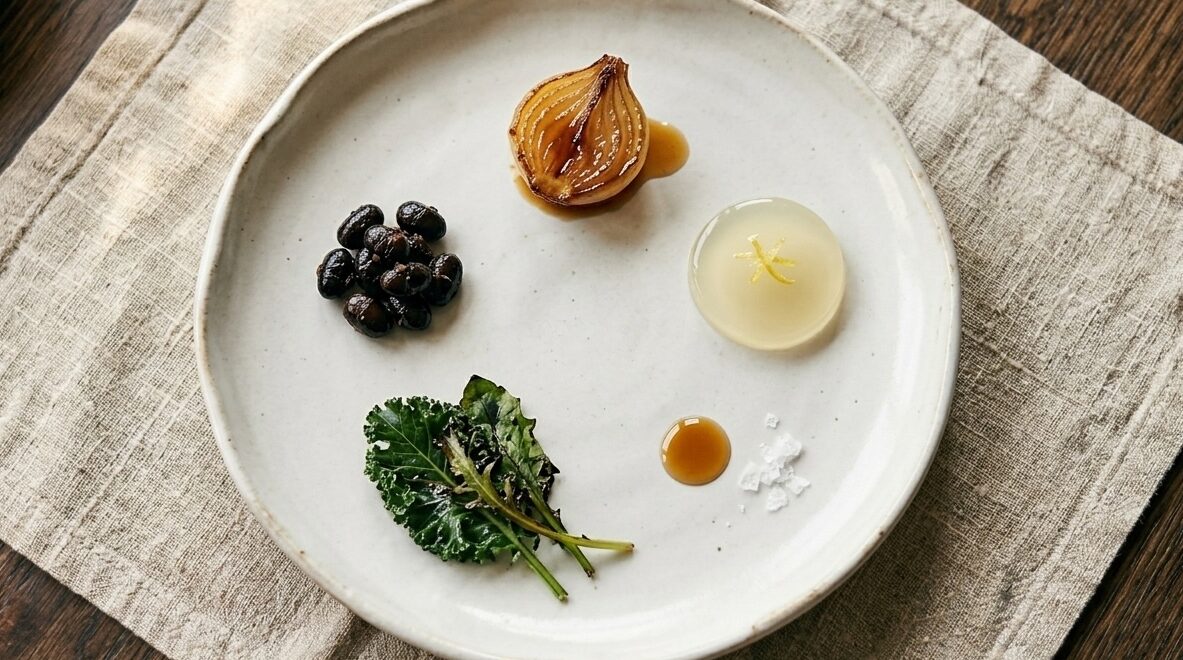
A modern tasting dish featuring grilled vegetables might include:
- Sweetness from roasted onions.
- Sourness from yuzu vinaigrette.
- Saltiness from naturally brewed soy sauce.
- Bitterness from lightly charred greens.
- Umami from Hamanatto and kombu.
No single taste overwhelms the others.
Instead, each contributes to an experience that feels complete.
This principle explains why many Michelin-starred restaurants spend enormous effort refining even the smallest details of seasoning.
Balance creates elegance.
Why Understanding the Five Tastes Matters
Learning about the five basic tastes changes the way we experience food.
Instead of asking whether something tastes “good,” we begin asking:
- Which tastes are present?
- Which taste is missing?
- Which ingredient provides balance?
- How do multiple ingredients interact?
This way of thinking transforms cooking from following recipes into understanding flavor.
It is also one reason fermented ingredients have become so influential in contemporary gastronomy.
Fermentation naturally increases complexity while helping chefs achieve balance with fewer ingredients.
Conclusion
The five basic tastes are not competitors.
They are partners.
Sweetness provides comfort.
Sourness creates freshness.
Saltiness enhances flavor.
Bitterness introduces sophistication.
Umami brings them together.
Among these tastes, umami has become especially significant because it allows chefs to create remarkable depth while preserving the natural character of premium ingredients.
Traditional Japanese foods such as kombu, soy sauce, miso, and especially Hamanatto demonstrate how centuries of craftsmanship anticipated discoveries that science would later confirm.
Understanding the five basic tastes is therefore more than an exercise in food science.
It is the foundation of exceptional cooking.
H2: Continue Exploring Japanese Umami
If you would like to learn more about naturally fermented Japanese ingredients, these articles provide a deeper understanding:
Each explores a different aspect of the traditions that continue to inspire chefs around the world.
Chef’s Verdict
Great cuisine is rarely defined by one dominant flavor.
Instead, it achieves harmony through the careful balance of all five basic tastes.
Understanding sweetness, sourness, saltiness, bitterness, and especially umami allows chefs to season with greater precision while highlighting the natural quality of each ingredient.
Traditional Japanese fermented foods such as Hamanatto demonstrate how one ingredient can contribute several dimensions of flavor simultaneously.
Rather than adding intensity alone, they create balance.
Experience Natural Umami
If you would like to discover how naturally fermented ingredients contribute to flavor balance, authentic Hamanatto offers an excellent starting point.
Produced through approximately one year of traditional fermentation, it delivers concentrated umami in a remarkably small serving.
Related Articles
You may also enjoy: