
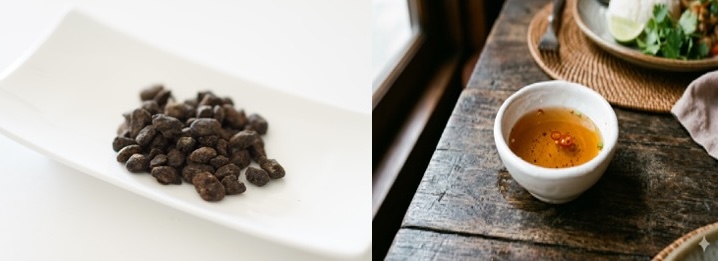
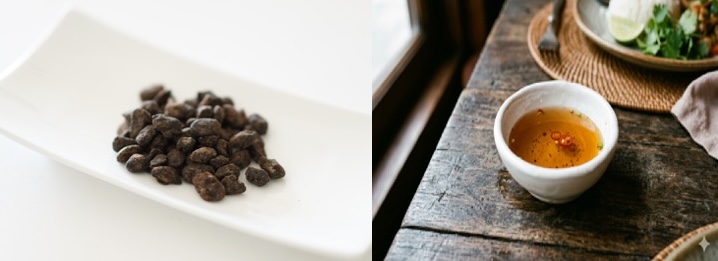
Hamanatto vs Fish Sauce
What’s the Difference?
Hamanatto vs Fish Sauce
Few ingredients have influenced Asian cuisine as profoundly as fish sauce.
For centuries, it has been an essential seasoning across Southeast Asia, bringing remarkable depth to soups, stir-fries, curries, and dipping sauces.
Japan has its own naturally fermented source of extraordinary umami.
That ingredient is Hamanatto.
Although these two foods come from different cultures and are made from completely different ingredients, they share one important characteristic:
Both rely on traditional fermentation to create deep, natural umami.
One begins with fish.
The other begins with soybeans.
One becomes a liquid seasoning.
The other remains whole fermented beans.
Yet both demonstrate how time and fermentation can transform simple ingredients into powerful flavor enhancers.
Quick Comparison
| Feature | Hamanatto | Fish Sauce |
|---|---|---|
| Country of Origin | Japan | Southeast Asia |
| Main Ingredient | Soybeans | Small fish and salt |
| Form | Whole fermented soybeans | Liquid seasoning |
| Texture | Firm and chewy | Liquid |
| Main Use | Cooking seasoning & finishing ingredient | Cooking seasoning |
| Flavor | Deep fermented umami | Salty seafood umami |
What Is Fish Sauce?
Fish sauce is produced by fermenting small fish together with salt for many months, and sometimes for more than a year.
During this slow aging process, natural enzymes break down fish proteins into amino acids that create one of the world’s richest sources of umami.
Fish sauce is widely used throughout:
- Thailand
- Vietnam
- Cambodia
- Laos
- The Philippines
Professional chefs typically use only a small amount because its flavor is highly concentrated.
It is commonly added to:
- Soups
- Stir-fries
- Marinades
- Salad dressings
- Dipping sauces
Rather than making food taste “fishy,” high-quality fish sauce adds balance, depth, and savory complexity.
What Is Hamanatto?
Hamanatto is one of Japan’s oldest fermented soybean foods.
Whole soybeans are first fermented with koji mold, then carefully aged for more than one year.
Unlike fish sauce, Hamanatto remains a solid ingredient.
Each soybean retains its shape while developing concentrated natural umami through slow fermentation.
One of Hamanatto’s greatest strengths is its versatility.
It can be used during cooking to build layers of savory flavor, much like fish sauce.
At the same time, it can also be served as a finishing ingredient, where its firm texture and concentrated umami become part of the dining experience.
This combination of seasoning and finishing roles makes Hamanatto unique among traditional fermented foods.
Why Are They Often Compared?
At first glance, Hamanatto and fish sauce seem to have very little in common.
One is made from soybeans.
The other is made from fish.
One is eaten whole.
The other is poured as a liquid.
Yet chefs frequently compare them because both function as natural umami enhancers.
Neither depends on artificial flavorings.
Instead, microorganisms, careful craftsmanship, and long fermentation gradually produce their remarkable depth of flavor.
Whether used to season a dish during cooking or to add complexity just before serving, both ingredients demonstrate the extraordinary power of natural fermentation.
Discover Authentic Japanese Umami
Fish sauce has shaped Southeast Asian cuisine for centuries.
Hamanatto represents Japan’s own remarkable tradition of naturally fermented umami—versatile enough to enrich dishes during cooking or elevate them as a finishing ingredient.
Texture: Whole Beans vs Liquid Seasoning
The most obvious difference between Hamanatto and fish sauce is their form.
Hamanatto consists of whole fermented soybeans.
Each bean remains firm after more than one year of aging, creating a satisfying chewy texture that slowly releases layers of umami.
Its texture is part of the tasting experience.
Fish sauce, by contrast, is a liquid.
It blends seamlessly into a dish and becomes almost invisible.
Rather than adding texture, it quietly enhances the flavors of the other ingredients.
For professional chefs, this distinction is important.
Fish sauce works almost entirely as a seasoning.
Hamanatto can do that as well—but it also contributes texture and visual appeal when used as a finishing ingredient.
Flavor: Earthy vs Oceanic
Both ingredients are naturally rich in umami, but their flavor profiles are very different.
Hamanatto develops a mature, layered taste through long fermentation.
People often notice notes of:
- Roasted soybeans
- Dark miso
- Toasted nuts
- Cocoa
- Long-aged fermented soy
Its umami builds gradually as you chew.
Fish sauce delivers its impact immediately.
Its flavor is:
- Salty
- Savory
- Slightly sweet
- Rich in seafood umami
When used correctly, fish sauce should never dominate a dish.
Instead, it quietly deepens the overall flavor while allowing the main ingredients to remain the focus.
Aroma: Fermented Soybeans vs Fermented Seafood
The aromas clearly reflect their different ingredients.
Hamanatto offers a refined fragrance developed during more than a year of fermentation.
You may notice hints of:
- Soy sauce
- Toasted soybeans
- Nuts
- Cocoa
- Mature fermented foods
Fish sauce has a distinctive aroma created by fermented fish.
High-quality fish sauce smells clean, rich, and savory rather than unpleasantly strong.
As it cooks, the aroma softens and blends naturally with garlic, herbs, spices, and vegetables.
Both ingredients demonstrate how fermentation transforms simple raw materials into remarkably complex aromas.
Fermentation Process
Although both depend on fermentation, their production methods are fundamentally different.
| Hamanatto | Fish Sauce |
|---|---|
| Whole soybeans | Small fish and salt |
| Koji mold fermentation | Natural fish fermentation |
| Aged for about one year or longer | Usually fermented 6–24 months |
| Solid ingredient | Liquid seasoning |
In both cases, microorganisms and natural enzymes gradually break down proteins into amino acids that create deep umami.
The science is similar.
The ingredients—and therefore the final flavors—are completely different.
How Professional Chefs Use Them
Chefs appreciate both ingredients because even a very small amount can dramatically improve a dish.
Fish sauce is commonly used for:
- Soups
- Stir-fries
- Curry
- Marinades
- Salad dressings
- Dipping sauces
It is almost always added during cooking or mixed into sauces.
Hamanatto is remarkably versatile.
Chefs use it:
- During cooking to deepen umami
- In pasta sauces
- In risotto
- Mixed into dressings
- As a seasoning for vegetables
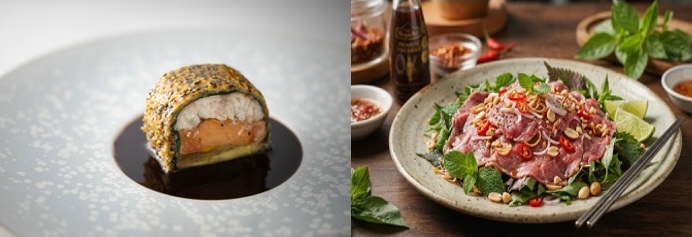
- As a finishing ingredient on steak, seafood, tofu, and cheese boards
Unlike fish sauce, Hamanatto can remain visible on the plate, contributing not only flavor but also texture and presentation.
This dual role is one of the reasons many chefs consider it such an exciting ingredient.
Discover Authentic Japanese Umami
Fish sauce has long been one of Asia’s great natural seasonings.
Hamanatto offers something even more versatile—an ingredient that can enrich dishes during cooking while also creating a memorable finishing touch.
Can Hamanatto Replace Fish Sauce?
The answer is yes in some situations—but not all.
Both Hamanatto and fish sauce are valued for their ability to add natural umami.
However, they work differently in the kitchen.
Fish sauce is a liquid seasoning.
It dissolves instantly and distributes its savory flavor evenly throughout a dish.
Hamanatto is far more versatile.
It can be used during cooking as a natural seasoning or after cooking as a finishing ingredient that contributes both texture and concentrated umami.
For example, chopped Hamanatto can enrich pasta sauces, fried rice, or vegetable dishes while cooking.
Whole beans can then be added just before serving to provide bursts of flavor and visual contrast.
Rather than replacing fish sauce completely, Hamanatto gives chefs an additional way to build complexity.
Which One Should You Choose?
The best choice depends on the style of cuisine you are creating.
Choose Fish Sauce if you need:
- A liquid seasoning
- Fast, evenly distributed umami
- Traditional Southeast Asian flavors
- Soups, curries, marinades, and stir-fries
Choose Hamanatto if you want:
- A plant-based source of umami
- A traditional Japanese fermented ingredient
- Umami during cooking and at the finishing stage
- Texture as well as flavor
- A premium ingredient that guests can see and appreciate
Many chefs use both.
Fish sauce builds the foundation of flavor.
Hamanatto adds the final layer of complexity.
Frequently Asked Questions
Does Hamanatto taste like fish sauce?
No.
Fish sauce delivers a salty, ocean-inspired umami.
Hamanatto develops a deeper, earthier character through long soybean fermentation.
Although both are naturally savory, their flavors are distinctly different.
Can Hamanatto replace fish sauce in Asian cooking?
In some recipes, yes.
Finely chopped Hamanatto can provide impressive umami in stir-fries, fried rice, noodle dishes, and sauces.
However, because it remains a solid ingredient, it creates a different texture and appearance.
Is Hamanatto vegetarian?
Yes.
Traditional Hamanatto is made entirely from plant ingredients.
For vegetarian and vegan cooking, it offers a natural alternative to seafood-based seasonings.
Why do chefs use Hamanatto instead of fish sauce?
Many chefs appreciate Hamanatto because it performs two roles.
It enhances flavor while cooking and also serves as a premium finishing ingredient that adds texture, appearance, and concentrated umami.
Very few fermented ingredients offer both functions.
Can Hamanatto and fish sauce be used together?
Absolutely.
Some chefs use a small amount of fish sauce to create background umami, then finish the dish with Hamanatto to add texture and another layer of savory complexity.
The result is balanced rather than overwhelming.
Chef’s Verdict
For professional chefs, Hamanatto and fish sauce are complementary rather than competing ingredients.
Fish sauce is ideal when a dish requires invisible seasoning that blends seamlessly into the background.
Hamanatto is unique because it can perform the same seasoning role while also becoming part of the finished presentation.
That versatility makes it one of Japan’s most exciting traditional fermented ingredients for contemporary cuisine.
Final Thoughts
Hamanatto and fish sauce represent two different fermentation traditions with the same objective:
Creating extraordinary natural umami.
One comes from centuries of Japanese craftsmanship.
The other reflects the culinary heritage of Southeast Asia.
Both demonstrate that fermentation can transform simple ingredients into powerful flavor enhancers.
For adventurous cooks and professional chefs alike, learning when to use each ingredient opens new possibilities for building richer, more memorable dishes.
Related Articles
Continue exploring naturally umami-rich ingredients:
- What Is Hamanatto?
- How Hamanatto Is Made
- What Hamanatto Tastes Like
- Hamanatto vs Natto
- Hamanatto vs Miso
- Hamanatto vs Soy Sauce
- Hamanatto vs Douchi
- Hamanatto vs Marmite
- Hamanatto vs Parmesan Cheese
- Hamanatto vs Anchovies
- Why Michelin Chefs Should Know Hamanatto
Discover Authentic Hamanatto
Fish sauce has enriched Asian cuisine for generations.
Authentic Hamanatto offers something even more versatile—a naturally fermented ingredient that can deepen flavor during cooking while adding texture and elegance as a finishing touch.
Experience one of Japan’s rarest fermented delicacies and discover a new way to create natural umami.