
The World’s Great Umami Foods: A Practical Guide for Chefs
- Introduction
- What Creates Umami?
- Kombu
- Shiitake Mushrooms
- Tomatoes
- Parmesan Cheese
- Anchovies
- Soy Sauce
- Miso
- Hamanatto
- Why “The Most Umami-Rich Food” Is the Wrong Question
- A Chef’s Umami Toolkit
- Building Umami Without Overpowering a Dish
- Chef’s Verdict
- Try Authentic Hamanatto
- Continue Reading
- Final Thoughts
- References
Introduction
Umami is not limited to Japanese cuisine.
It appears in ingredients and foods around the world.
Kombu, mushrooms, tomatoes, aged cheese, anchovies, soy sauce, miso, and Hamanatto all contain compounds associated with savory taste.
But they do not taste the same.
For chefs, understanding the differences is more useful than simply asking which food contains the most umami.
What Creates Umami?
Umami is commonly associated with free glutamate and, in some foods, compounds such as inosinate and guanylate.
These compounds can contribute to the savory taste we recognize as umami.
Fermentation, aging, drying, and other forms of processing can change the composition of foods and influence their flavor.
This is one reason traditional preservation methods can create such complex ingredients.
Kombu
Kombu is one of the classic sources of glutamate.
It has played an important role in Japanese cooking for centuries.
Its strength is not simply its umami.
Kombu also provides a subtle marine and mineral character.
For chefs, it is especially useful as a foundation.
Dashi is the obvious example.

Shiitake Mushrooms
Dried shiitake mushrooms are another important umami ingredient.
Drying changes the mushroom and concentrates its flavor.
Shiitake is particularly useful when a dish needs earthy depth.
It works especially well with vegetables, tofu, noodles, and broths.
Why Drying Matters
Drying is more than preservation.
It changes the sensory character of the mushroom and creates a concentrated ingredient that behaves differently from fresh shiitake.
Tomatoes
Tomatoes are a familiar Western example of an ingredient associated with umami.
Ripe tomatoes can provide savory depth while also bringing acidity and sweetness.
This combination makes them particularly useful in sauces.
Tomato-based dishes also demonstrate an important principle:
Umami does not exist in isolation.
The overall flavor of a dish depends on how umami interacts with acidity, sweetness, salt, aroma, and texture.
Parmesan Cheese
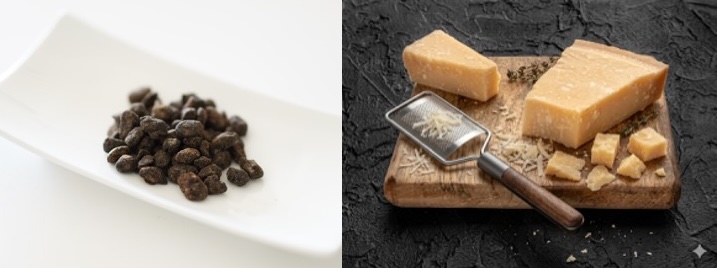
Aged Parmesan provides a very different umami experience.
The cheese develops complex flavors during aging and has a distinctive hard, granular texture.
Its savory character works beautifully in pasta, risotto, vegetables, and soups.
For chefs, Parmesan demonstrates how aging can turn a relatively simple ingredient into a highly concentrated flavor source.
Anchovies
Anchovies are one of the classic savory ingredients of Mediterranean cuisine.
They can be used whole, chopped, or melted into sauces.
One of their most interesting properties is that their flavor can become difficult to identify after cooking.
The fish remains part of the flavor architecture even when the visible ingredient disappears.
This makes anchovies particularly useful in sauces, pasta, vegetables, and dressings.
Soy Sauce
Soy sauce is one of the world’s most recognizable fermented seasonings.
Its combination of saltiness, aroma, and savory depth makes it extraordinarily versatile.
Unlike many solid umami ingredients, soy sauce distributes instantly through a dish.
This is one of its greatest strengths.
It can season a soup, sauce, marinade, dressing, vegetable dish, or meat.
Miso
Miso demonstrates another way fermentation can transform soybeans.
Instead of retaining the whole bean, miso becomes a paste.
Fermentation breaks down soybean proteins into smaller compounds, including amino acids such as glutamate.
Different types of koji, ingredients, and fermentation periods produce different flavors.
A Different Kind of Soybean Umami
Miso is smooth and easy to integrate into cooking.
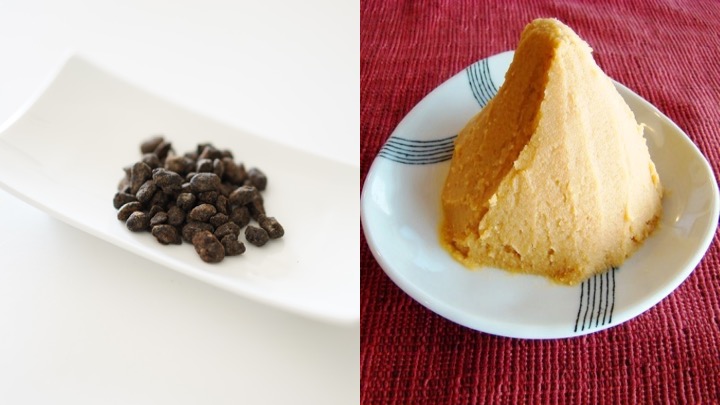
Hamanatto retains much more of the physical identity of the soybean.
This creates two very different culinary tools.
Hamanatto
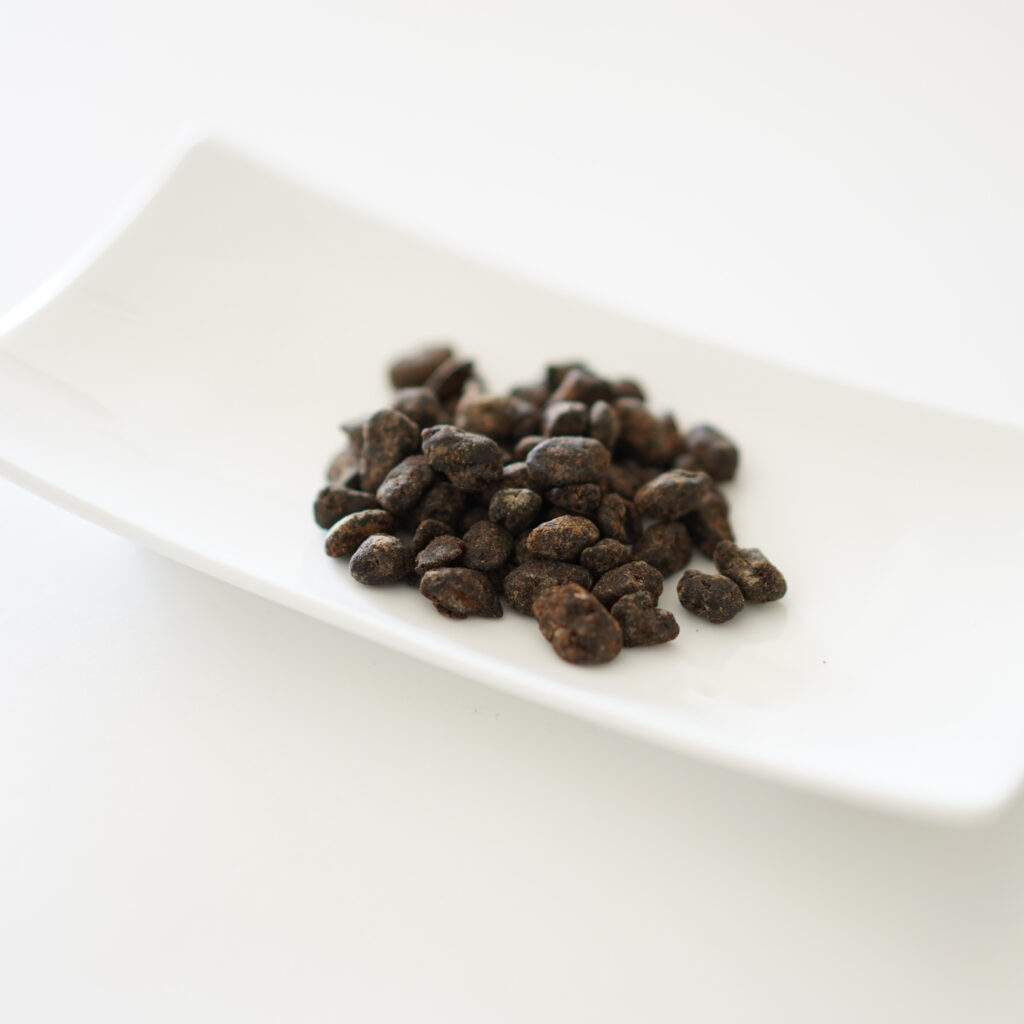
Hamanatto belongs to the same broad world of fermented soybean foods, but its character is unusual.
It is made from whole soybeans and traditionally undergoes drying and aging.
The resulting beans are firm, concentrated, and intensely savory.
Unlike soy sauce or miso, Hamanatto does not simply disappear into a dish.
It can remain as a physical ingredient.
Why Hamanatto Is Interesting to Chefs
For chefs, the appeal is not simply its umami.
It is the combination of:
- Fermented soybean flavor
- Saltiness
- Firm texture
- Mature aroma
- Concentrated savory character
This makes it particularly interesting for finishing dishes.
Why “The Most Umami-Rich Food” Is the Wrong Question
It is tempting to create a ranking.
Which food has the most glutamate?
Which ingredient has the strongest umami?
But chefs rarely cook with numbers alone.
A food with high glutamate may not be appropriate for every dish.
The better question is:
What kind of savory depth does this ingredient provide?
Kombu provides a foundational marine character.
Shiitake adds earthy depth.
Tomatoes combine umami with acidity and sweetness.
Parmesan adds aged dairy richness.
Anchovies provide marine intensity.
Soy sauce provides liquid seasoning.
Miso provides fermented soybean depth.
Hamanatto adds fermented soybean flavor together with texture.
A Chef’s Umami Toolkit
| Ingredient | Main character | Texture | Best use |
|---|---|---|---|
| Kombu | Marine, mineral | Soft when hydrated | Dashi, broths |
| Shiitake | Earthy | Soft | Broths, vegetables |
| Tomato | Savory, acidic, sweet | Soft | Sauces |
| Parmesan | Aged, dairy, savory | Firm | Pasta, risotto |
| Anchovy | Marine, intense | Soft | Sauces, pasta |
| Soy sauce | Salty, savory | Liquid | Seasoning |
| Miso | Fermented soybean | Paste | Soups, sauces |
| Hamanatto | Fermented soybean, mature | Firm | Finishing, sauces |
The strongest chefs do not necessarily use the strongest ingredient.
They choose the ingredient that fits the dish.
Building Umami Without Overpowering a Dish
Umami works best when it supports the existing identity of a dish.
Start with the ingredient that naturally belongs to the cuisine.
Then ask whether another source could add another layer.
For example:
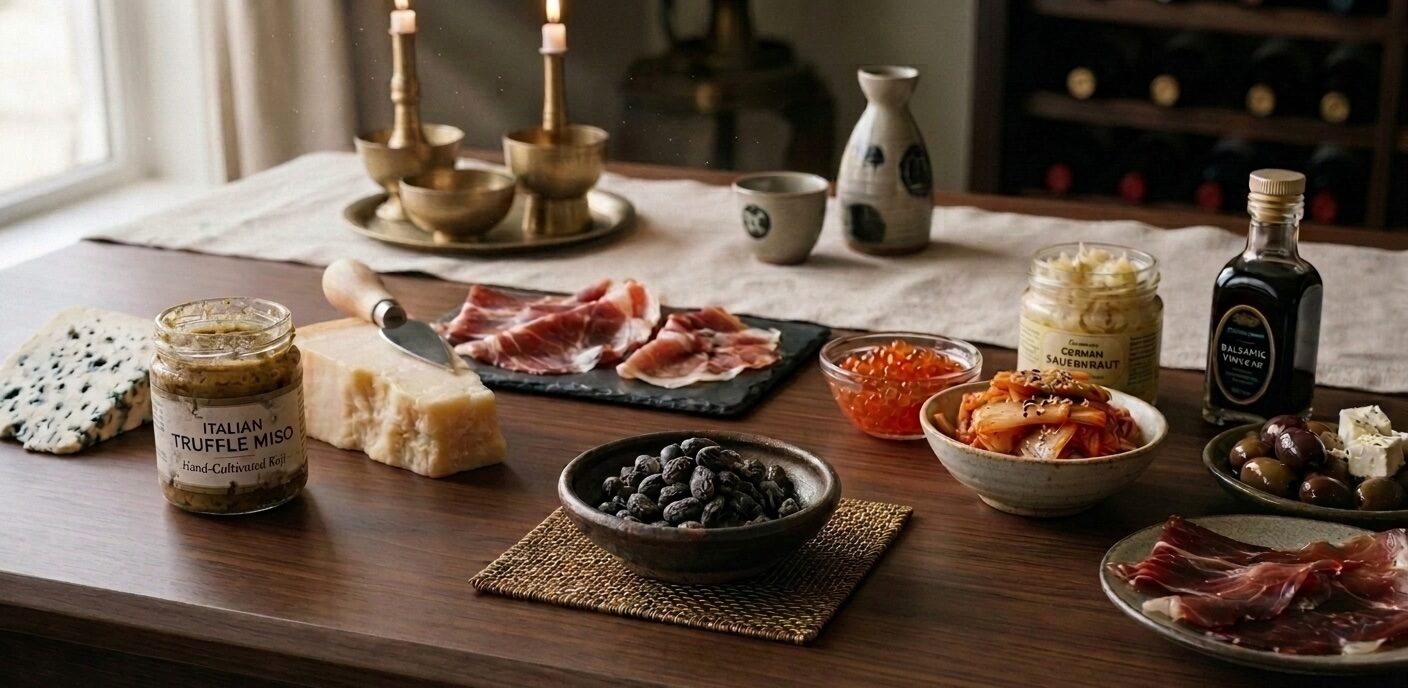
- Kombu + shiitake for a plant-based broth
- Tomato + Parmesan for pasta
- Anchovy + tomato for Mediterranean sauces
- Miso + mushroom for vegetables
- Hamanatto + mushroom for a deeply savory plant-based dish
- Hamanatto + Parmesan for a modern pasta application
The objective is not maximum umami.
It is balanced umami.
Chef’s Verdict
There is no single “best” umami food.
The world’s great ingredients developed in different cultures for different culinary purposes.
What makes Hamanatto worth discovering is its unusual combination of fermentation, aging, concentrated flavor, and whole-bean texture.
For chefs looking for an unfamiliar ingredient with a distinctly Japanese identity, that combination is its greatest strength.
Try Authentic Hamanatto
Hamanatto is best understood by tasting it.
Start with a small amount.
Taste it alone.
Then try it with rice, tofu, mushrooms, vegetables, pasta, aged cheese, or grilled meat.
Continue Reading
- What Is Hamanatto?
- What Does Hamanatto Taste Like?
- Hamanatto and Cheese
- How Chefs Can Use Hamanatto
- Hamanatto vs Other Umami Ingredients
Final Thoughts
Umami is not a single flavor source.
It is a world of ingredients shaped by fermentation, aging, drying, cooking, and culture.
Learning how each ingredient behaves gives chefs more control.
And sometimes, the most interesting ingredient is the one you have never tasted before.
References
- Umami Information Center — What Is Umami?
- Umami Information Center — Umami Information by Food
- Umami Information Center — Miso
- J-STAGE — Research on Hamanatto fermentation