
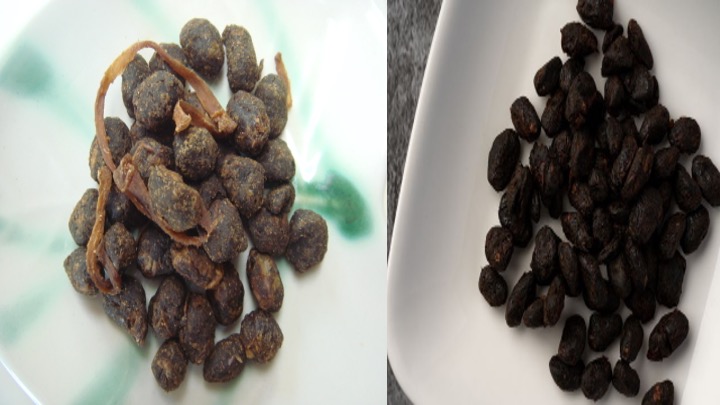
Hamanatto vs Douchi
What’s the Difference?
Hamanatto vs Douchi
Japan and China both have long traditions of fermenting soybeans.
Among their oldest fermented foods are Hamanatto from Japan and Douchi from China.
At first glance, they look surprisingly similar.
Both are dark-colored fermented soybeans.
Both are packed with natural umami.
Both have influenced regional cuisines for centuries.
Because of these similarities, many people assume they are nearly identical.
They are not.
Although they share ancient roots, Hamanatto and Douchi have developed into two distinct ingredients with different flavors, textures, fermentation methods, and culinary purposes.
Understanding these differences reveals how two neighboring cultures transformed the same humble soybean into completely unique expressions of fermentation.
Quick Comparison
| Feature | Hamanatto | Douchi |
|---|---|---|
| Country of Origin | Japan | China |
| Form | Whole fermented soybeans | Salted fermented black soybeans |
| Texture | Firm and chewy | Soft and slightly moist |
| Main Use | Finishing ingredient | Cooking ingredient and seasoning |
| Fermentation | Koji mold with long aging | Mold and salt fermentation |
| Flavor | Deep, mature umami | Salty, bold, savory |
What Is Douchi?
Douchi is one of China’s oldest fermented soybean products.
It is traditionally made by fermenting black soybeans with microorganisms before aging them with salt.
The finished beans become soft, aromatic, and intensely savory.
Unlike soy sauce or miso, Douchi remains in whole-bean form.
It is widely used throughout Chinese cuisine to season dishes such as:
- Stir-fried vegetables
- Steamed fish
- Beef dishes
- Tofu
- Sauces
Because only a small amount is needed, Douchi is valued as a concentrated source of flavor.
What Is Hamanatto?
Hamanatto represents one of Japan’s oldest surviving fermented soybean traditions.
It begins with soybeans and koji mold, followed by a long aging process that often exceeds one year.
During this time, moisture slowly evaporates while natural umami becomes increasingly concentrated.
Unlike Douchi, Hamanatto remains remarkably firm.
Each bean keeps its shape and provides a satisfying bite before releasing layers of mature savory flavor.
Its unique texture makes it popular among chefs as both a seasoning and a visible ingredient on the plate.
Why Are They Often Compared?
The comparison is understandable.
Both foods:
- Are fermented soybeans.
- Have centuries of history.
- Deliver powerful natural umami.
- Are used in small quantities.
Some historians even believe Japanese fermented soybean traditions were influenced by ancient Chinese fermentation techniques.
Over hundreds of years, however, each culture developed its own methods and culinary philosophy.
Today, Douchi is primarily used as a cooking seasoning.
Hamanatto is more often treated as a premium finishing ingredient.
Their shared history makes them fascinating to compare—but their modern culinary roles are distinctly different.
Discover Authentic Japanese Umami
Hamanatto and Douchi both showcase the remarkable possibilities of fermented soybeans.
Experience authentic Hamanatto and discover how Japan transformed an ancient fermentation tradition into one of its rarest gourmet ingredients.
Texture: Firm vs Soft
Although both foods are made from fermented soybeans, their textures are remarkably different.
Hamanatto is firm and chewy.
Each soybean remains intact after more than a year of aging, giving it a satisfying bite that slowly releases layers of umami.
The beans stay separate and never become sticky.
Douchi is much softer.
During fermentation, the beans become tender and slightly moist.
Instead of being enjoyed on their own, they are usually chopped, mashed, or cooked into sauces where they dissolve into the dish.
For chefs, this difference is important.
Hamanatto contributes both texture and flavor.
Douchi contributes mainly flavor.
Flavor: Refined vs Bold
Both ingredients are naturally rich in umami, but they create very different flavor experiences.
Hamanatto develops a clean, mature, and lingering umami through extended aging.
Many people compare its flavor to:
- Aged Parmesan cheese
- Dry-cured olives
- Long-aged soy sauce
- Fermented black beans
The flavor unfolds gradually as you chew.
Douchi is more immediate.
Its bold combination of saltiness, fermentation, and slight bitterness quickly transforms the dishes it is added to.
Because of its intensity, Douchi is rarely eaten by itself.
Instead, it becomes part of a larger recipe.
Aroma: Elegant vs Robust
Hamanatto has a surprisingly refined aroma.
Long aging creates notes of:
- Roasted soybeans
- Toasted nuts
- Cocoa
- Dark miso
- Aged cheese
Its fragrance is deep but never overpowering.
Douchi has a stronger fermented aroma.
It often carries earthy, savory, and slightly smoky notes that become milder once cooked.
Many Chinese dishes rely on this aroma as an essential part of their character.
Fermentation Process
Although historians believe the two foods may share ancient origins, modern production methods are different.
| Hamanatto | Douchi |
|---|---|
| Japanese fermentation tradition | Chinese fermentation tradition |
| Koji mold followed by long aging | Mold fermentation with heavy salting |
| Aged for about one year or longer | Generally fermented for several months |
| Dry finished product | Moist finished product |
| Premium finishing ingredient | Cooking seasoning |
Time is one of the biggest differences.
Hamanatto gains much of its complexity through extended aging, while Douchi emphasizes strong fermentation and salt.
How Professional Chefs Use Them
Professional chefs choose each ingredient for different reasons.
Douchi is commonly used in:
- Stir-fries
- Braised dishes
- Seafood
- Beef
- Tofu
- Chinese sauces
Because it softens during cooking, it blends naturally into the overall flavor.
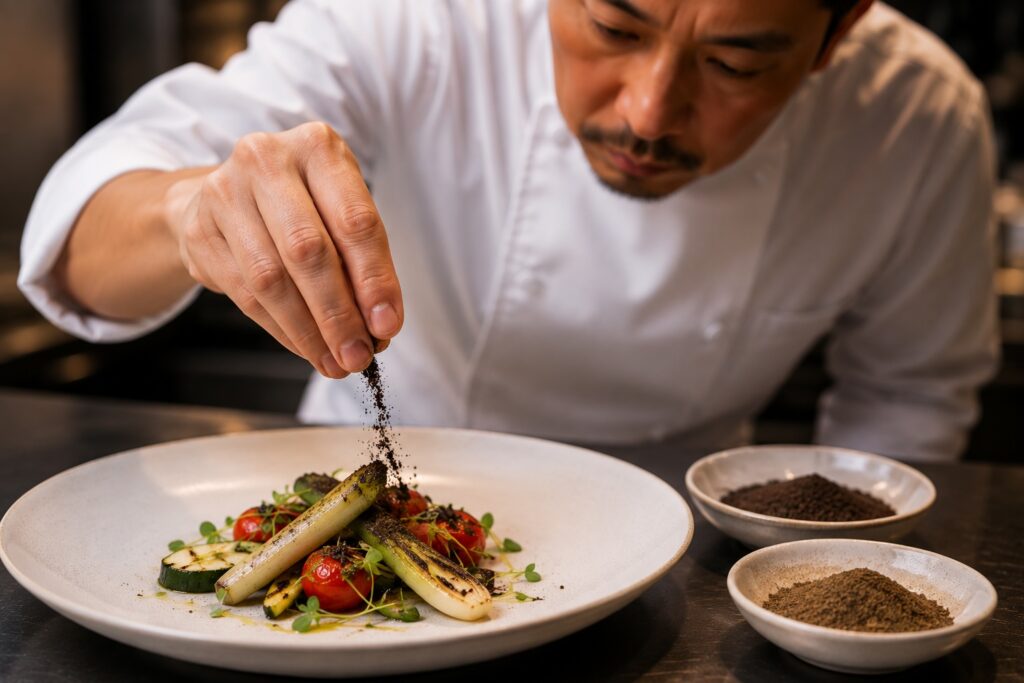
Hamanatto is often used for:
- Pasta
- Risotto
- Steak
- Roast chicken
- Grilled vegetables
- Cheese plates
- Fine dining garnishes
Rather than disappearing into the dish, Hamanatto remains visible, allowing diners to experience both its texture and concentrated umami.
Some modern chefs even combine both ingredients in fusion cuisine, creating dishes that unite two of East Asia’s oldest fermentation traditions.
Discover Authentic Japanese Umami
Chinese Douchi and Japanese Hamanatto each represent centuries of fermentation expertise.
Experience authentic Hamanatto and discover why its rare combination of texture and deep umami continues to inspire chefs around the world.
→ Taste Authentic Hamanatto (Link to your BASE store)
Can Hamanatto Replace Douchi?
The short answer is not usually.
Although both are fermented soybeans, they are designed for different culinary purposes.
Douchi is primarily a cooking ingredient.
It is often chopped or mashed before being added to stir-fries, braised dishes, or sauces, where it melts into the overall flavor.
Hamanatto is different.
Its firm texture is one of its defining characteristics.
Instead of disappearing during cooking, each bean remains intact, adding both texture and concentrated umami to the finished dish.
For this reason, professional chefs rarely treat the two ingredients as direct substitutes.
Instead, they choose the one that best matches the style of the dish they want to create.
Which One Should You Choose?
Both ingredients deserve a place in the kitchen, but for different reasons.
Choose Douchi if you want:
- A traditional Chinese seasoning
- Rich flavor in stir-fries
- A savory base for sauces
- A classic ingredient for tofu or seafood dishes
Choose Hamanatto if you want:
- A premium finishing ingredient
- Concentrated natural umami
- A firm, satisfying texture
- A rare Japanese specialty
- An elegant garnish for modern cuisine
Rather than competing with one another, Hamanatto and Douchi represent two unique traditions that can inspire different styles of cooking.
Frequently Asked Questions
Is Hamanatto the Japanese version of Douchi?
Not exactly.
Many historians believe they share ancient fermentation roots, but they have evolved independently over centuries.
Today, they are considered two distinct traditional foods.
Which one has a stronger flavor?
Douchi has a bold, salty, and intensely fermented flavor that stands out immediately.
Hamanatto develops a deeper, more mature umami that unfolds gradually as you chew.
Can I use Hamanatto in Chinese recipes?
Yes.
Although it is a Japanese ingredient, Hamanatto can add remarkable depth to stir-fries, steamed vegetables, and meat dishes.
Its firmer texture creates a different experience from Douchi while still providing rich umami.
Why is Hamanatto so rare?
Authentic Hamanatto is produced by only a handful of traditional makers in Japan.
Its long aging period and limited production make it far less common than Douchi or soy sauce.
Which ingredient do chefs prefer?
There is no single answer.
Chefs choose the ingredient that best suits the dish.
Many enjoy experimenting with both, combining Chinese and Japanese fermentation traditions to create new layers of flavor.
Chef’s Verdict
For professional chefs, Hamanatto and Douchi are not competitors—they are complementary ingredients.
Douchi delivers bold fermented intensity that blends naturally into cooked dishes.
Hamanatto offers something far less common: concentrated umami combined with a firm texture that remains visible on the plate.
That distinction makes Hamanatto especially valuable in modern fine dining, where texture is just as important as flavor.
Chefs who understand both ingredients gain access to two of East Asia’s oldest fermentation traditions—each capable of transforming a dish in its own unique way.
Final Thoughts
Hamanatto and Douchi prove that a single ingredient—soybeans—can evolve into remarkably different foods through fermentation.
Douchi has become an essential seasoning in Chinese cuisine.
Hamanatto remains one of Japan’s rarest fermented delicacies, appreciated for its craftsmanship, complexity, and extraordinary umami.
Neither ingredient is better than the other.
They simply tell different stories about the art of fermentation.
For chefs and food enthusiasts alike, exploring both opens the door to a deeper understanding of Asian culinary heritage.
Related Articles
Continue exploring Japanese fermentation:
- What Is Hamanatto?
- How Hamanatto Is Made
- What Hamanatto Tastes Like
- Hamanatto vs Natto
- Hamanatto vs Miso
- Hamanatto vs Soy Sauce
- Why Michelin Chefs Should Know Hamanatto
(Link each title to its corresponding article.)
Discover Authentic Hamanatto
Curious about one of Japan’s rarest fermented foods?
Authentic Hamanatto is handcrafted using traditional methods and aged for more than one year, creating a depth of natural umami unlike any other fermented soybean product.