How Chefs Can Use Hamanatto
A Practical Guide to Japanese Umami
Hamanatto is one of Japan’s best-kept culinary secrets, offering exceptional umami for modern fine dining.
Hamanatto is not an ingredient that needs to dominate a dish.
In fact, its greatest strength may be the opposite.
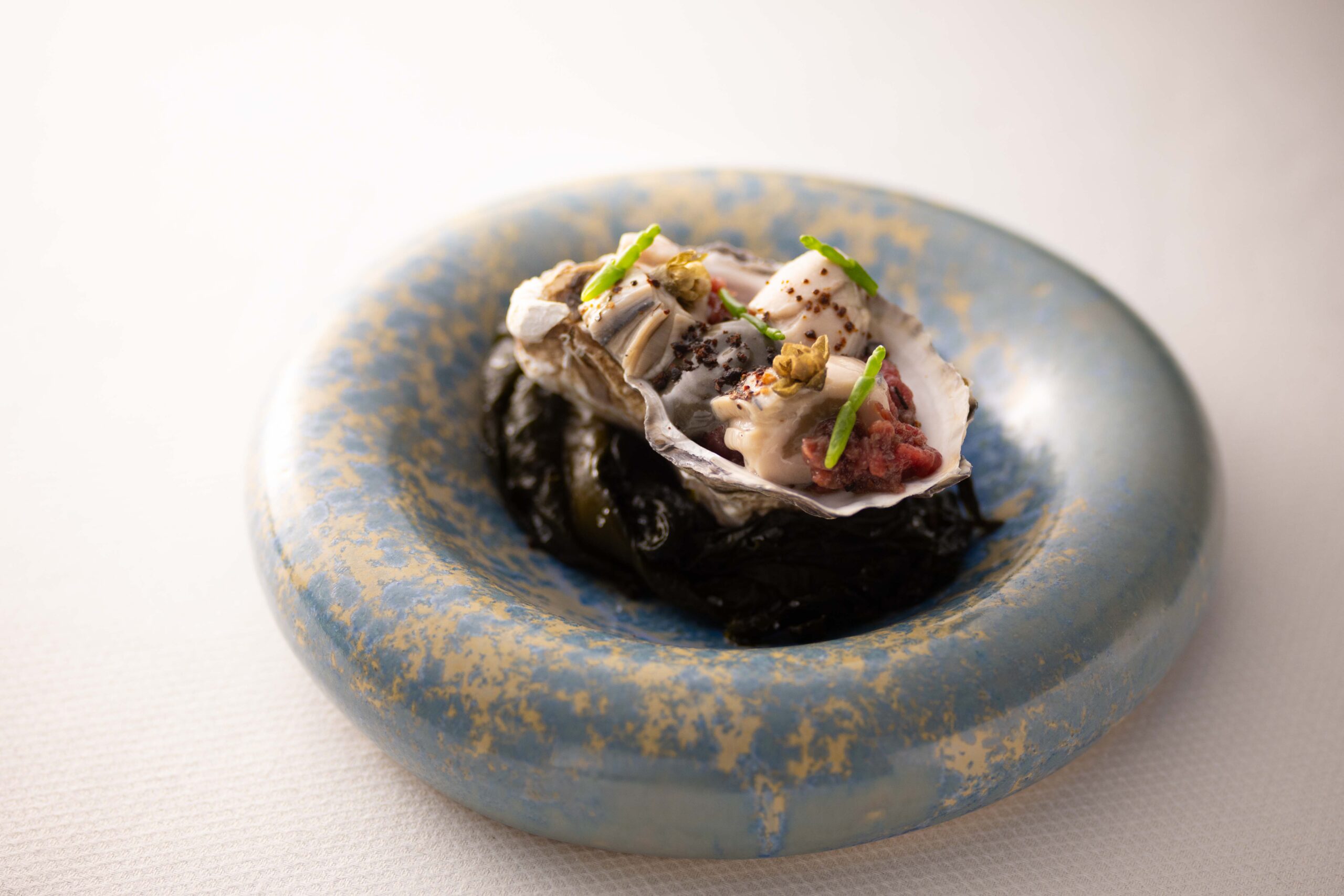
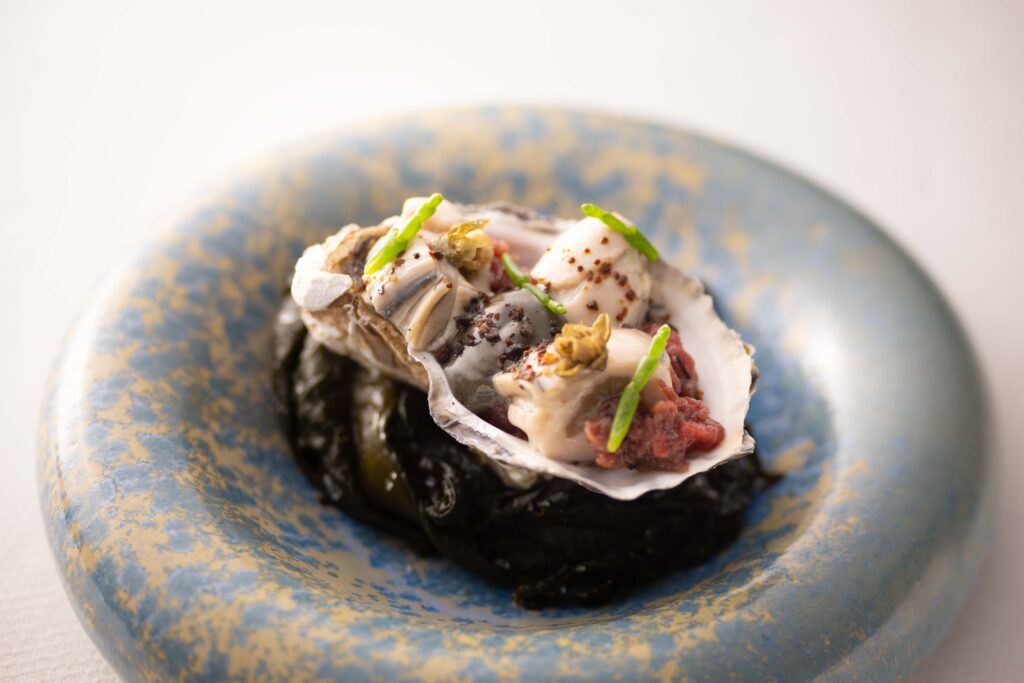
Used carefully, a small amount of Hamanatto can add another layer of savory depth to a dish without making the dish taste obviously like Hamanatto.
This makes the traditional fermented soybean food particularly interesting for chefs working across Japanese, European, and modern fusion cuisines.
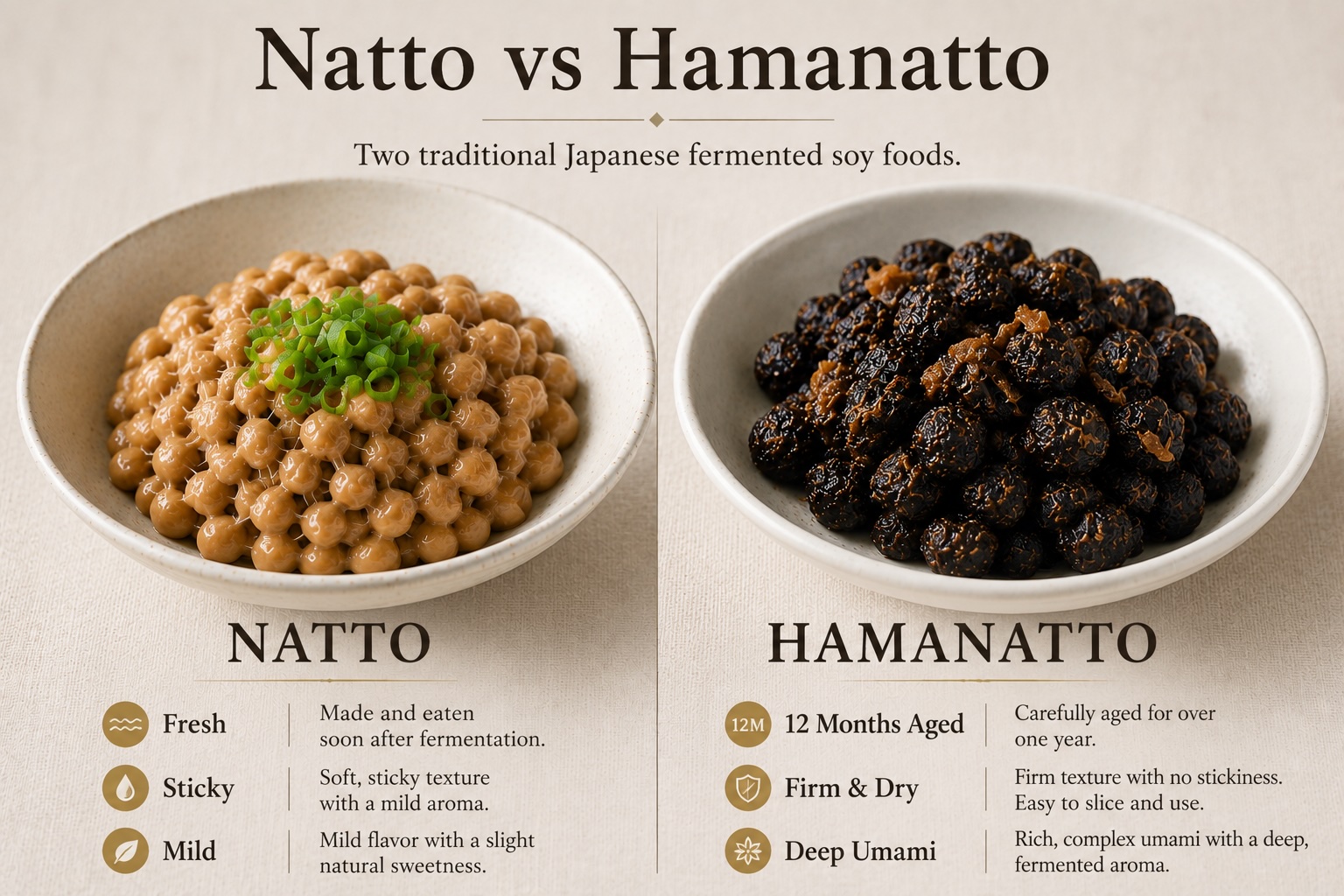
Hamanatto has a firm texture, concentrated saltiness, fermented aroma, and deep savory character.
The challenge is learning how to use those characteristics rather than fighting them.
This guide focuses on the practical side of cooking with Hamanatto: where to use it, how to introduce it to a dish, what ingredients work well with it, and what mistakes to avoid.
- Think of Hamanatto as a Seasoning, Not a Main Ingredient
- The Easiest Way to Start Cooking With Hamanatto
- Hamanatto in Sauces
- Hamanatto and Pasta
- Hamanatto and Mushrooms
- Hamanatto With Meat
- Hamanatto With Tofu
- Hamanatto in Risotto
- Hamanatto as a Finishing Ingredient
- When You Should Not Use Hamanatto
- Common Mistakes When Cooking With Hamanatto
- A Simple Hamanatto Test for Your Kitchen
- A Practical Pairing Framework
- Hamanatto for Modern European and Contemporary Cuisine
- How to Build a Hamanatto Tasting Menu
- Chef’s Verdict
- Try Authentic Hamanatto
- Continue Reading
- Final Thoughts
- References
Think of Hamanatto as a Seasoning, Not a Main Ingredient
The first step is changing the way you think about Hamanatto.
Hamanatto is made from whole soybeans, but its concentrated flavor means that it can be more useful as a seasoning than as a conventional soybean ingredient.
You do not necessarily need a large quantity.
Instead, think of it in the same general category as other intensely flavored ingredients such as:
- Miso
- Soy sauce
- Parmesan
- Anchovies
- Fish sauce
- Fermented bean pastes
This does not mean Hamanatto tastes like any of these foods.
It means that a relatively small amount can influence the overall flavor of a dish.
Start Small and Adjust
There is no universal amount of Hamanatto that works for every recipe.
Its saltiness and intensity can vary between products, and the other ingredients in the dish matter just as much.
A practical approach is simple:
Start with a small amount → taste → adjust.
This is especially important when Hamanatto is being combined with other salty ingredients.
Soy sauce, miso, cheese, stock reductions, cured meat, and salted butter can all contribute additional salt.
Hamanatto should therefore be considered part of the dish’s total seasoning.
The Easiest Way to Start Cooking With Hamanatto
If you have never cooked with Hamanatto before, do not begin with a complicated recipe.
Start with a familiar dish.
This makes it easier to understand what Hamanatto actually changes.
A useful tasting sequence is:
- Prepare the dish without Hamanatto.
- Taste the finished dish.
- Add a small amount of finely chopped Hamanatto to a portion.
- Mix thoroughly.
- Taste again.
- Compare the two versions.
This simple side-by-side test tells you much more than tasting Hamanatto by itself.
What Are You Looking For?
Do not ask only:
“Does this taste like Hamanatto?”
Ask instead:
- Has the savory character become deeper?
- Does the dish taste more rounded?
- Has the aroma become more complex?
- Has the saltiness become excessive?
- Does Hamanatto disappear into the background?
- Does it overpower the original ingredients?
The ideal result may be surprisingly subtle.
Hamanatto in Sauces
Sauces are one of the most promising applications for Hamanatto.
Its concentrated flavor can be incorporated into a sauce where it becomes part of the overall savory structure.
Possible applications include:
- Meat sauces
- Mushroom sauces
- Vegetable sauces
- Pan sauces
- Pasta sauces
- Cream-based sauces
- Japanese-style dipping sauces
Use Hamanatto to Build Depth
Instead of thinking of Hamanatto as the main flavor, think of it as another layer.
For example, a sauce might already contain:
- Stock
- Butter or olive oil
- Aromatics
- Mushrooms
- Herbs
- Cheese
A small amount of Hamanatto can introduce an additional fermented note.
The important point is to maintain the identity of the sauce.
If the chef immediately thinks, “This tastes strongly of Hamanatto,” the amount may be too high.
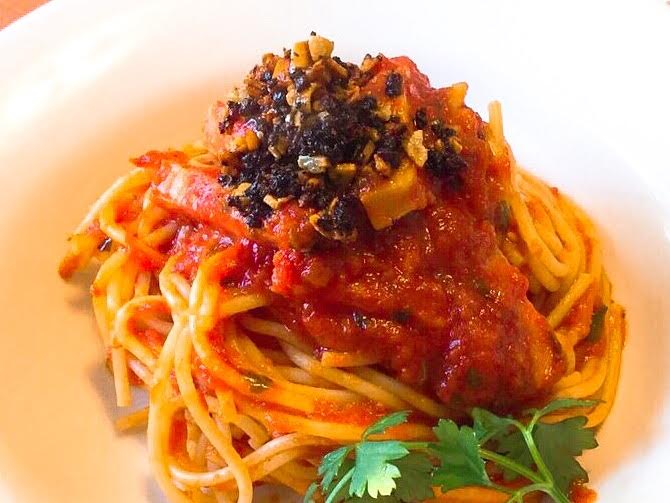
Hamanatto and Pasta
Pasta is one of the easiest ways for a chef outside Japan to experiment with Hamanatto.
Finely chop or crush a small amount and incorporate it into the sauce.
It can be particularly interesting alongside:
- Parmesan
- Mushrooms
- Olive oil
- Butter
- Garlic
- Roasted vegetables
- Tomato-based sauces
Hamanatto can provide a distinctly Japanese fermented character while allowing the dish to remain fundamentally Italian or contemporary European.
Hamanatto and Parmesan
The combination with aged Parmesan is especially interesting.
Both ingredients have concentrated savory characteristics, but they arrive from very different fermentation traditions.
Parmesan contributes mature dairy richness and a savory, nutty character.
Hamanatto contributes fermented soybean depth, saltiness, and a firm texture.
The objective is not to replace Parmesan.
Instead, the two can be used together to create another layer of savory complexity.
Hamanatto and Mushrooms
Mushrooms are an especially natural partner for Hamanatto.
They already have an earthy and savory character, making them a good foundation for a fermented seasoning.
Try experimenting with:
- Shiitake
- Maitake
- Oyster mushrooms
- Button mushrooms
- Porcini
- Mixed wild mushrooms
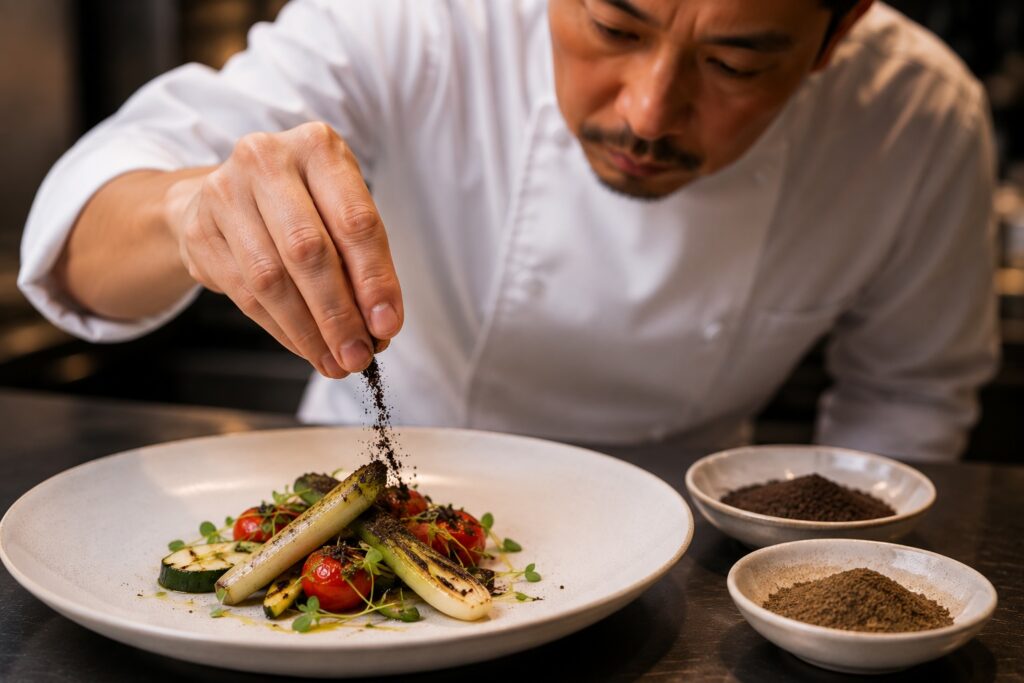
Hamanatto can be finely chopped and incorporated into a mushroom sauce or used as a finishing element.
Why the Combination Works
The mushroom provides an earthy base.
Hamanatto contributes fermented soybean depth.
A little fat can help carry the flavors across the palate.
The result can be much more interesting than simply making the dish saltier.
Hamanatto With Vegetables
Hamanatto can also be useful with vegetables, particularly roasted or grilled vegetables.
Cooking creates caramelized and roasted flavors that can provide a strong foundation for the fermented character of Hamanatto.
Good ingredients to experiment with include:
- Eggplant
- Pumpkin
- Cauliflower
- Cabbage
- Carrots
- Onions
- Bell peppers
- Root vegetables
H3: Roasted Vegetables
Roasted vegetables are particularly useful because their natural sweetness creates contrast with Hamanatto’s saltiness and savory character.
A small amount of Hamanatto can be incorporated into a dressing or finishing sauce.
Olive oil can help distribute the seasoning across the vegetables.
The goal is balance between:
sweetness + saltiness + fermentation + roasted flavor.
Hamanatto With Meat
Hamanatto can also be used with meat.
Its fermented savory character can complement the roasted and browned flavors created during grilling, roasting, or searing.
Potential applications include:
- Beef
- Pork
- Chicken
- Duck
- Lamb
Grilled and Roasted Meat
One approach is to use Hamanatto in a sauce rather than directly coating the meat.
This allows the chef to control its intensity more precisely.
A Hamanatto-based sauce can be paired with grilled beef, for example, while the meat remains the primary flavor.
Another approach is to finely chop Hamanatto and incorporate it into a compound butter or finishing preparation.
Again, the objective is not necessarily to make the meat taste like fermented soybean.
It is to add depth.
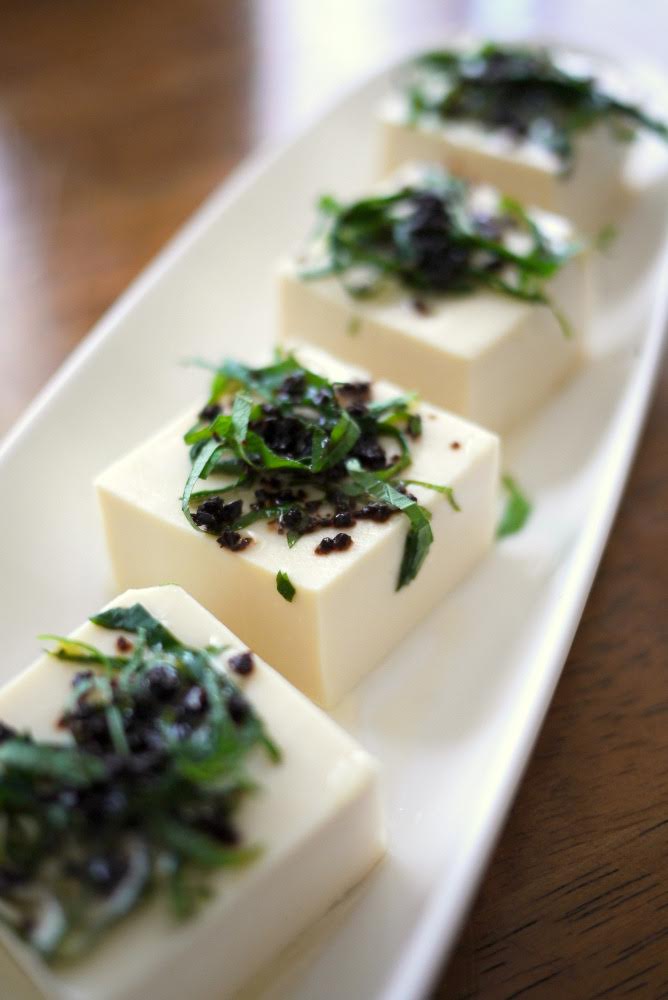
Hamanatto With Tofu
Tofu provides almost the opposite sensory experience.
It is mild, soft, and relatively neutral.
That makes it an excellent canvas for a concentrated ingredient.
A small amount of Hamanatto can provide a strong contrast.
H3: Chilled Tofu
One of the simplest traditional approaches is to place Hamanatto over chilled tofu.
The mildness of the tofu allows the flavor of Hamanatto to remain clear.
This is also an excellent way for a chef to understand the ingredient before incorporating it into more complex dishes.
Hamanatto in Risotto
Risotto offers another interesting application.
The creamy texture of risotto can provide a natural counterpoint to Hamanatto’s firm texture and concentrated fermented flavor.
Hamanatto can be finely chopped and incorporated toward the end of cooking or used as part of a finishing preparation.
Keep the Salt Under Control
Risotto often contains several sources of seasoning:
- Stock
- Parmesan
- Butter
- Salt
- Other aged ingredients
Adding Hamanatto on top of all of these can quickly make the dish too salty.
Taste the risotto first.
Then add Hamanatto gradually.
This is a useful principle for almost every Hamanatto application.
Hamanatto as a Finishing Ingredient
One of the most interesting ways to use Hamanatto is at the end of cooking.
Rather than exposing it to a long cooking process, a chef can experiment with adding a small amount shortly before serving.
This preserves more of its distinctive aroma and allows the chef to adjust the final seasoning.
Three Ways to Finish a Dish
Finely chopped
Useful when you want small pieces of Hamanatto to remain noticeable.
Crushed
Useful when you want the flavor distributed more evenly.
Blended into a sauce
Useful when you want the fermented character to become part of the background.
The best method depends on the dish.
When You Should Not Use Hamanatto
A good ingredient is not suitable for every dish.
Hamanatto may not be the best choice when:
- The dish depends on extremely delicate flavors.
- The recipe already contains a very high level of salt.
- A subtle aroma would be overwhelmed.
- The fermented character conflicts with the intended flavor profile.
- The chef wants a completely clean, neutral finish.
There is no advantage in forcing Hamanatto into a dish simply because it is an interesting ingredient.
Its value comes from using it where it makes sense.
Common Mistakes When Cooking With Hamanatto
Mistake 1 — Using Too Much
The most obvious mistake is adding too much.
Hamanatto is concentrated.
Start small and increase gradually.
Mistake 2 — Forgetting the Salt Already in the Dish
Hamanatto itself is salty.
If the dish also contains soy sauce, miso, Parmesan, cured meat, or a concentrated stock, the total salt level can rise quickly.
Taste before adding more seasoning.
Mistake 3 — Trying to Hide It Completely
The opposite mistake is using so little that the ingredient has no meaningful effect.
The purpose of the tasting process is to find the point where Hamanatto contributes something useful.
Mistake 4 — Treating It Like Ordinary Natto
Hamanatto and ordinary sticky natto are different fermented foods.
Their textures, aromas, and culinary uses are different.
Do not expect Hamanatto to behave like ordinary natto in a recipe.

A Simple Hamanatto Test for Your Kitchen
If Hamanatto is new to your kitchen, try a controlled tasting.
Choose one familiar dish.
Prepare two identical portions.
Leave one portion unchanged.
Add a small amount of finely chopped Hamanatto to the second.
Taste them side by side.
Then repeat with a slightly larger amount.
Record What Changes
Rather than judging only whether you “like” the result, look at several characteristics:
| Characteristic | What to Observe |
|---|---|
| Saltiness | Does it become excessive? |
| Umami | Does the savory character become deeper? |
| Aroma | Does fermentation become noticeable? |
| Texture | Does the Hamanatto add useful contrast? |
| Finish | Does the flavor remain longer? |
| Balance | Does it improve the dish or dominate it? |
This simple experiment can quickly reveal where Hamanatto fits into your cooking style.
A Practical Pairing Framework
When considering Hamanatto for a new dish, think about four elements.
1. Salt
Is the dish already salty?
If yes, use particular care.
2. Fat
Does the dish contain butter, olive oil, cream, cheese, or another source of richness?
Fat can provide useful contrast to Hamanatto’s concentrated character.
3. Sweetness
Does the ingredient have natural sweetness?
Roasted vegetables and caramelized onions, for example, can provide a useful contrast.
4. Earthy or Roasted Flavors
Mushrooms, grilled vegetables, roasted meat, and toasted ingredients can provide strong partners for fermented soybean flavors.
This framework is not a recipe.
It is a way of thinking about where Hamanatto may fit.
Hamanatto for Modern European and Contemporary Cuisine
Hamanatto does not need to be restricted to traditional Japanese dishes.
Its fermented soybean character can be used as a bridge between culinary traditions.
A chef might incorporate it into a pasta sauce, use it with mushrooms, pair it with aged cheese, or introduce it into a sauce for grilled meat.
The dish does not need to be labeled “Japanese.”
Keep the Original Dish Intact
One of the most useful approaches is to preserve the identity of the original dish.
Instead of creating a dish that announces:
“This is Hamanatto.”
Try creating a dish where the diner thinks:
“Why does this taste so deep?”
That is where Hamanatto can become particularly interesting.
How to Build a Hamanatto Tasting Menu
For chefs who want to explore Hamanatto more seriously, a tasting menu can be useful.
Start with the simplest application.
Course 1 — Hamanatto and Tofu
Use a mild ingredient to understand the basic flavor.
Course 2 — Hamanatto and Mushrooms
Introduce earthy flavors.
Course 3 — Hamanatto and Aged Cheese
Explore the interaction between two mature fermented ingredients.
Course 4 — Hamanatto and Roasted Vegetables
Introduce sweetness and roasted flavors.
Course 5 — Hamanatto and Grilled Meat
Test how the fermented seasoning interacts with strong roasted flavors.
This progression allows a chef to understand how Hamanatto behaves as the surrounding ingredients become progressively more intense.
Chef’s Verdict
Hamanatto is not an ingredient that needs to shout.
Its strength is its concentration.
Its firm texture, saltiness, fermented aroma, and savory character give chefs several ways to use it.
The most useful approach is to start small and taste carefully.
Use it in sauces.
Try it with mushrooms.
Experiment with aged cheese.
Use it with roasted vegetables.
Explore it with grilled meat.
And test it on mild foods such as tofu.
The most successful applications may be the ones where Hamanatto is not immediately identifiable.
Instead, it becomes part of the deeper flavor structure of the dish.
For chefs, that makes Hamanatto less of a novelty and more of a tool.
Try Authentic Hamanatto
If you are a chef interested in exploring traditional Japanese fermentation, Hamanatto is worth approaching as a serious seasoning ingredient.
Start with a small tasting.
Taste it alone.
Then compare it with a mild ingredient such as tofu.
Next, experiment with mushrooms, aged cheese, vegetables, or meat.
The goal is not to follow a fixed recipe.
It is to discover where Hamanatto adds something that your existing ingredients cannot provide.
CTA: Discover Authentic Hamanatto
Continue Reading
If you want to learn more about Hamanatto and Japanese fermentation:
- What Is Hamanatto? Japan’s Hidden Fermented Soybean Treasure
- The History of Hamanatto: From Temple Fermentation to Modern Japanese Cuisine
- How Hamanatto Is Made
- What Does Hamanatto Taste Like? A Complete Tasting Guide
- Why Hamanatto Has Such Deep Umami: The Science Behind Its Flavor
- Hamanatto and Cheese: The Unexpected Umami Pairing
- Hamanatto vs. Natto: What’s the Difference?
- Hamanatto vs. Miso: What’s the Difference?
Final Thoughts
Hamanatto has been used traditionally as a flavorful fermented soybean food and seasoning.
For modern chefs, its possibilities extend beyond traditional Japanese cuisine.
Its concentrated savory character can work with ingredients as different as mushrooms, aged cheese, vegetables, tofu, pasta, and grilled meat.
But the key is restraint.
Hamanatto does not need to dominate a dish to make a difference.
Sometimes the most successful use is the one the diner cannot immediately identify.
A little more depth.
A longer finish.
A subtle fermented note.
That is where Hamanatto can earn a place in the modern kitchen.
References
Umami Information Center
Used for background information on umami, glutamate, soybean fermentation, and fermented soybean foods.

Research on Hamanatto Microbiology
Used for information concerning microorganisms associated with Hamanatto and enzyme activity during fermentation.

Research on Traditional Hamanatto Production
Used for information concerning traditional Hamanatto processing, fermentation, drying, salting, and aging.