How to Eat Hamanatto
Traditional and Modern Applications
Hamanatto can be used in both traditional Japanese dishes and modern savory cooking.
- Hamanatto Is More Than Something to Eat on Its Own
- Hamanatto With Rice Porridge
- Hamanatto With Chilled Tofu
- Hamanatto and Mushrooms
- Hamanatto With Roasted Vegetables
- Hamanatto in Pasta
- Hamanatto With Grilled Meat
- Hamanatto in Sauces
- Hamanatto and Cheese
- Hamanatto as a Finishing Ingredient
- Should You Cook Hamanatto for a Long Time?
- How Much Hamanatto Should You Use?
- Three Easy Ways to Experiment
- What Not to Do
- Chef’s Verdict
- Where to Get Authentic Hamanatto
- Explore More About Hamanatto
- Final Thoughts
- References
Hamanatto Is More Than Something to Eat on Its Own
One of the easiest mistakes when trying Hamanatto is to think of it only as a finished food.
Its concentrated flavor makes it useful in another role:
seasoning.
Because the beans are firm and intensely flavored, you usually do not need a large amount.
You can:
- Eat it with rice
- Add it to tofu
- Chop it into sauces
- Crush it into dressings
- Add it to pasta
- Pair it with mushrooms
- Use it with meat
- Combine it with roasted vegetables
The important principle is simple:
Start with a small amount and build from there. The Simplest Way: Hamanatto With Steamed Rice
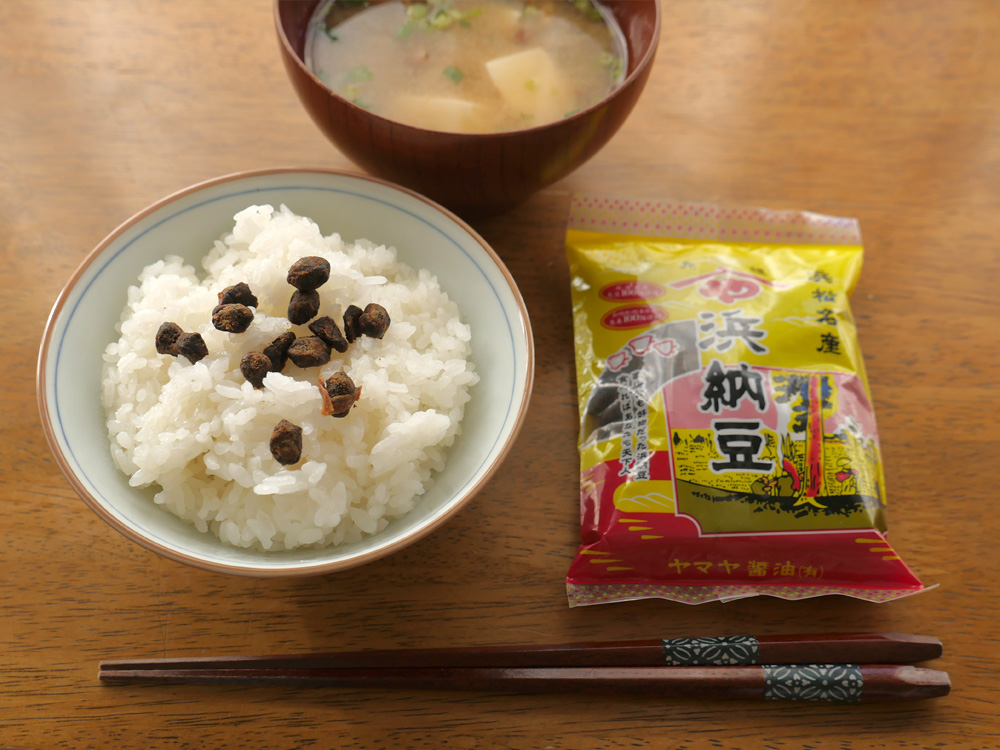
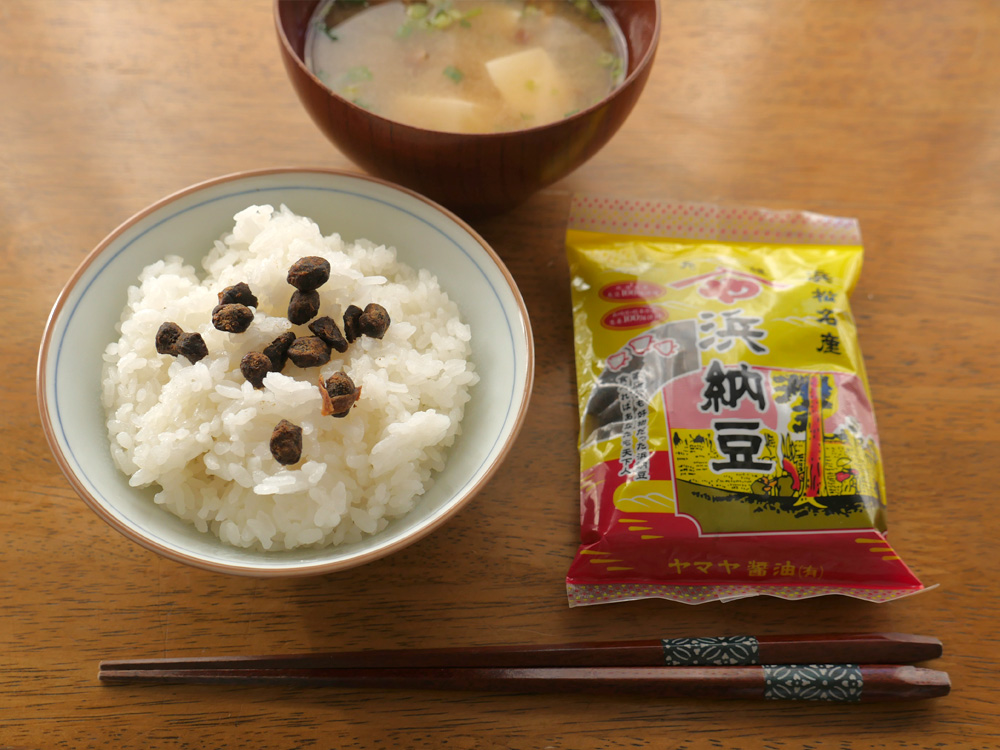
Steamed rice is one of the best ways to understand Hamanatto.
Rice has a relatively mild flavor, so it does not compete with the fermented soybean.
Place a small amount of Hamanatto over warm rice and taste it together.
The rice softens the intensity of the fermented beans while allowing their savory character to remain noticeable.
This is also a useful first tasting method because it requires no recipe.
Hamanatto With Rice Porridge
Rice porridge offers another traditional-style application.
The soft texture of porridge contrasts with the firm texture of Hamanatto.
Only a small quantity is needed.
The fermented beans add saltiness and savory depth to an otherwise mild dish.
This is a good example of how Hamanatto can function as a flavor accent rather than the main ingredient.
Hamanatto With Chilled Tofu
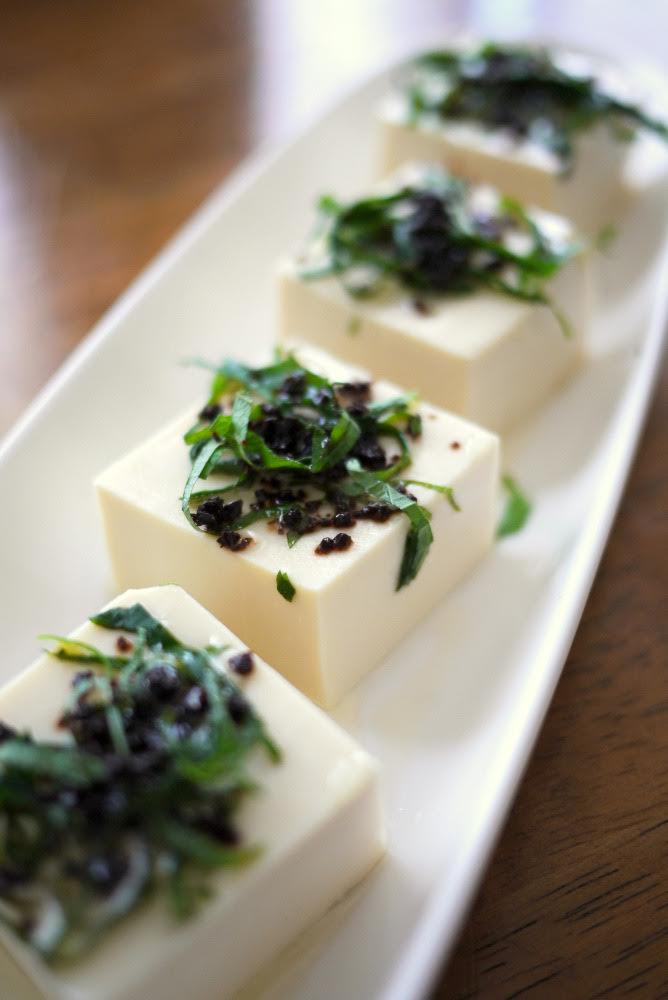
Chilled tofu is another simple pairing.
The tofu is mild, soft, and delicate.
Hamanatto is firm, salty, and concentrated.
The contrast makes both ingredients more noticeable.
For a simple preparation, place a small amount of finely chopped Hamanatto over chilled tofu.
You can then add a small amount of another seasoning if needed.
But I would recommend tasting the combination before adding anything else.
Hamanatto already brings considerable flavor.
Hamanatto and Mushrooms
Mushrooms are one of the most natural modern pairings.
Both mushrooms and fermented soybeans can contribute deep savory impressions.
Try finely chopping a small amount of Hamanatto and incorporating it into sautéed mushrooms.
The result can be particularly interesting with:
- Shiitake
- Oyster mushrooms
- King oyster mushrooms
- Brown mushrooms
The goal is not to overpower the mushrooms.
Instead, Hamanatto can act as a secondary savory layer.
Hamanatto With Roasted Vegetables
Roasted vegetables bring sweetness and caramelized notes.
That creates a useful contrast with Hamanatto’s salty fermented character.
Good candidates include:
- Eggplant
- Pumpkin
- Carrots
- Cauliflower
- Onions
- Mushrooms
Try adding a small amount after roasting rather than cooking a large quantity of Hamanatto for a long time.
This allows you to control its contribution more precisely.
Hamanatto in Pasta
Hamanatto can also move naturally into Italian-style cooking.
The idea is not to make a pasta dish taste traditionally Japanese.
Instead, use Hamanatto as a concentrated savory ingredient.
Finely chop or crush a small amount and incorporate it into:
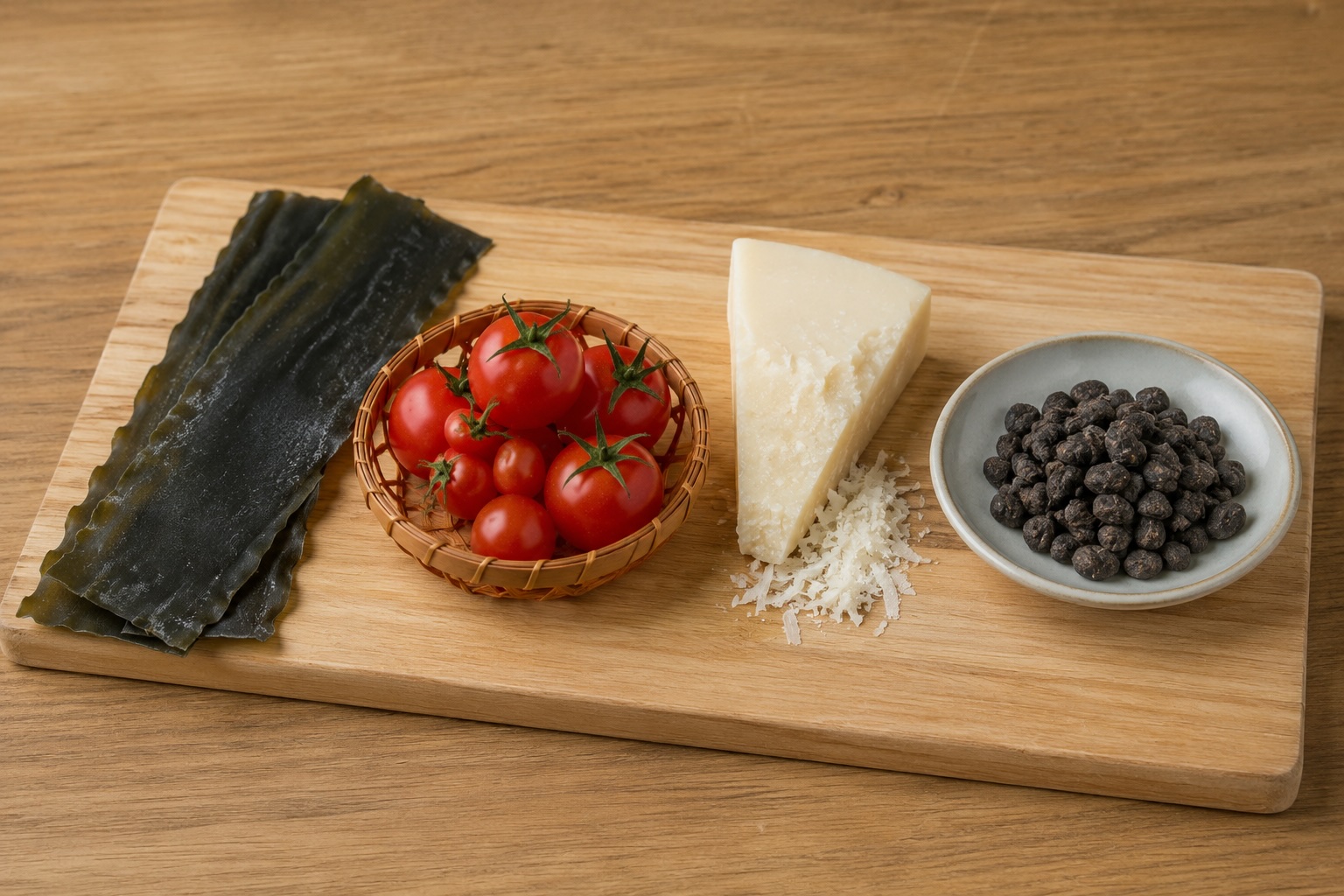
- Tomato sauces
- Mushroom sauces
- Cream-based sauces
- Olive-oil sauces
The combination of fermented soybean and familiar Western ingredients can create an interesting bridge between culinary traditions.
Hamanatto With Grilled Meat
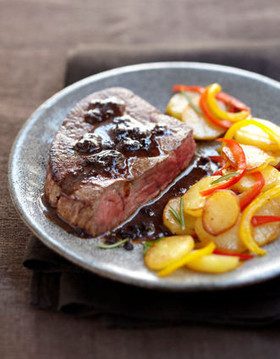
Rich grilled meat can also provide a useful canvas for Hamanatto.
Beef, in particular, has enough intensity to work with a concentrated fermented seasoning.
Rather than covering the meat with a large amount, try using Hamanatto as part of:
- A finishing sauce
- A compound seasoning
- A small garnish
- A savory glaze
The important point is balance.
The meat should remain recognizable.
Hamanatto should add another layer rather than replace the flavor of the meat.
Hamanatto in Sauces
Sauces may be one of the most interesting applications for professional kitchens.
Because Hamanatto has a concentrated flavor, it can be finely chopped or crushed before being incorporated into a sauce.
This makes it easier to distribute its flavor evenly.
Potential applications include:
- Meat sauces
- Mushroom sauces
- Vegetable sauces
- Pasta sauces
- Pan sauces
- Savory dressings
When experimenting, begin with a very small amount.
It is easier to add more than to correct an overly concentrated sauce.
Hamanatto and Cheese
Aged cheese and Hamanatto can work together because both have strong savory characteristics.
Parmesan is an especially interesting comparison.
The goal is not to make Hamanatto taste like Parmesan.
Instead, the two ingredients can provide different layers of savory depth.
Try a very small amount of finely chopped Hamanatto with:
- Parmesan
- Soft cheese
- Roasted vegetables
- Pasta
- Mushrooms
This is an area where chefs can experiment considerably.
Hamanatto as a Finishing Ingredient
For many modern applications, I prefer using Hamanatto toward the end of cooking.
This gives you more control over its contribution.
You can:
- Prepare the main dish.
- Taste it.
- Add a small amount of Hamanatto.
- Taste again.
- Adjust gradually.
This approach is especially useful when working with a new ingredient.
Instead of designing the entire recipe around Hamanatto from the beginning, treat it as a variable that can be adjusted.
Should You Cook Hamanatto for a Long Time?
There is no single answer for every recipe.
Hamanatto can be incorporated into cooked dishes, but its concentrated flavor means that long cooking is not always necessary.
For a first experiment, I recommend using it near the end of preparation.
This makes it easier to observe how the flavor changes.
Once you understand the ingredient better, you can experiment with incorporating it earlier in sauces and other preparations.
The important thing is to compare the results rather than assuming one method is always superior.
How Much Hamanatto Should You Use?
There is no universal quantity that works for every dish.
The required amount depends on:
- The intensity of the Hamanatto
- The size of the dish
- Other salty ingredients
- The type of food
- Whether the Hamanatto is chopped or whole
- The desired flavor intensity
For that reason, I would avoid giving a rigid “one-size-fits-all” measurement without testing the specific product and recipe.
Instead:
Start small. Taste. Then increase gradually.
This is particularly important because Hamanatto is a concentrated fermented seasoning.
Three Easy Ways to Experiment
If you have never cooked with Hamanatto, these three experiments are a good starting point.
Experiment 1 — Rice
Taste a small amount with steamed rice.
Experiment 2 — Tofu
Compare plain tofu with tofu topped with Hamanatto.
Experiment 3 — Mushrooms
Sauté mushrooms and add a small amount of finely chopped Hamanatto near the end.
These three experiments show three different aspects:
neutrality, texture contrast, and savory synergy.
What Not to Do
Hamanatto is powerful enough that restraint is important.
Avoid starting with a large amount.
Also avoid combining it with many intensely salty ingredients before you understand its character.
For example, if a dish already contains:
- Soy sauce
- Miso
- Fish sauce
- Parmesan
- Salt
adding a large amount of Hamanatto can quickly make the dish overly intense.
Instead, introduce one strong savory element at a time.
Chef’s Verdict
Think of Hamanatto as a concentrated flavor tool.
For professional cooking, its greatest advantage may not be its novelty.
It is its concentration.
A chef can use a small amount to experiment with:
- Fermented depth
- Savory intensity
- Saltiness
- Texture
- Long-lasting flavor
I would start with simple dishes before moving into complex sauces.
Once the ingredient becomes familiar, the possibilities become much broader.
Where to Get Authentic Hamanatto
The best way to develop your own applications is to begin with an authentic product and taste it before cooking.
That gives you a reference point.
You can then understand how much flavor you are adding when you incorporate it into a dish.
If you would like to experiment with authentic Hamanatto in your own kitchen, you can explore the product available through UmamiSeeker.
[CTA BUTTON]
Discover Authentic Hamanatto
Explore More About Hamanatto
- What Does Hamanatto Taste Like? A Complete Tasting Guide
- The History of Hamanatto: From Temple Fermentation to Modern Japanese Cuisine
- How Hamanatto Is Made
- Why Fermentation Creates Umami
- The Science of Glutamic Acid
- Amino Acids Explained
Final Thoughts
Hamanatto does not require complicated recipes.
In fact, simple preparations are often the best place to begin.
Rice shows its flavor.
Tofu shows its contrast.
Mushrooms show its savory compatibility.
Roasted vegetables show its relationship with sweetness and caramelization.
Pasta and meat demonstrate how the ingredient can move beyond traditional Japanese cuisine.
For chefs, that versatility may be the most exciting part.
Hamanatto is a traditional food.
But it does not have to remain confined to traditional dishes.
Used carefully, it can become another tool for building flavor.
Start small.
Taste carefully.
Then experiment.
References
The cooking suggestions in this article are practical applications and should be treated as culinary experimentation rather than fixed scientific rules.
For general background on umami and fermented foods:
- Ajinomoto Group — Umami Information Center
- Journal of Agricultural and Food Chemistry
- Nature Reviews Food Science