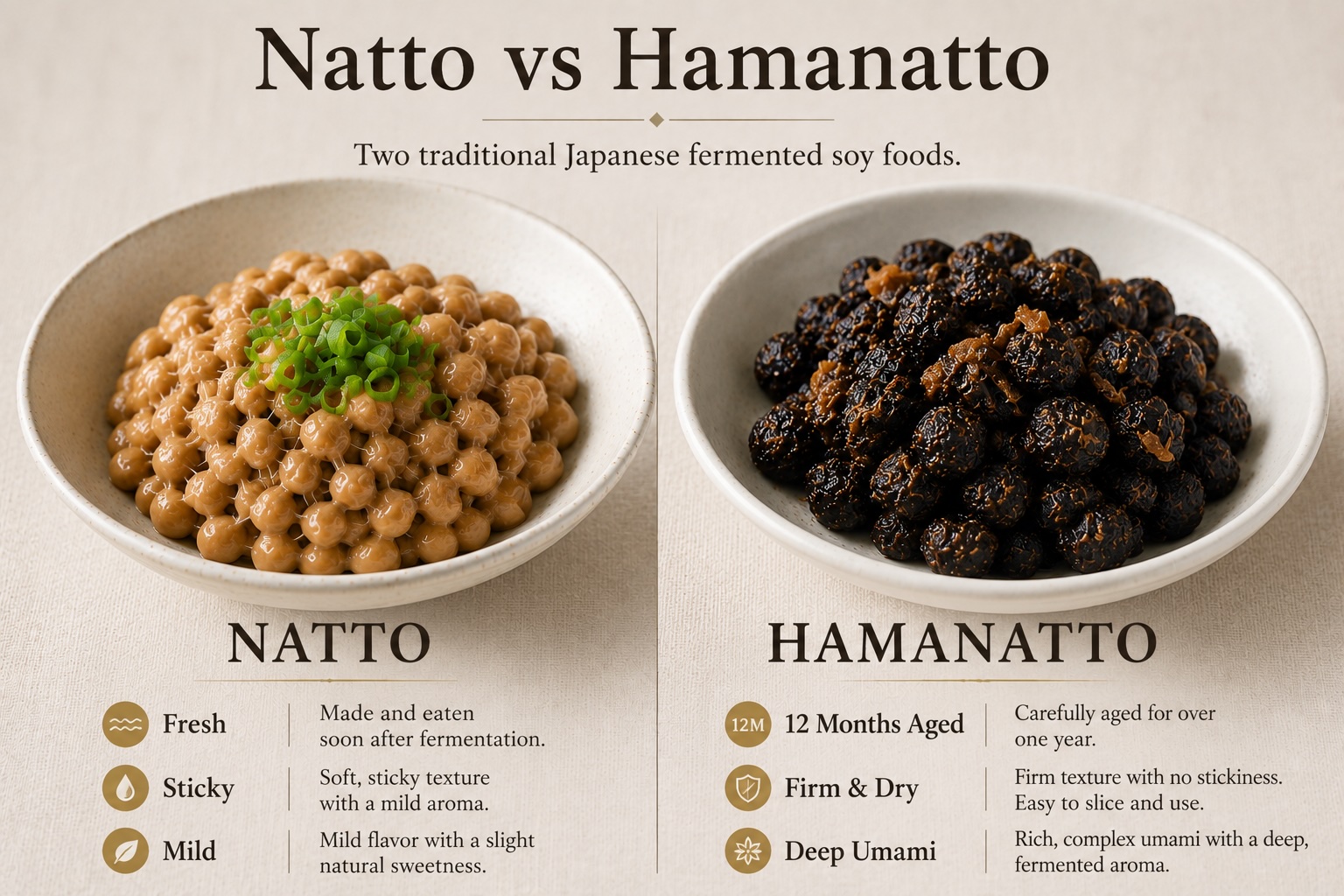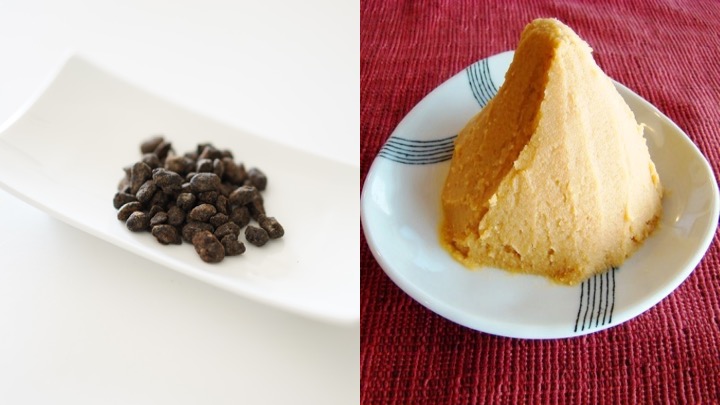
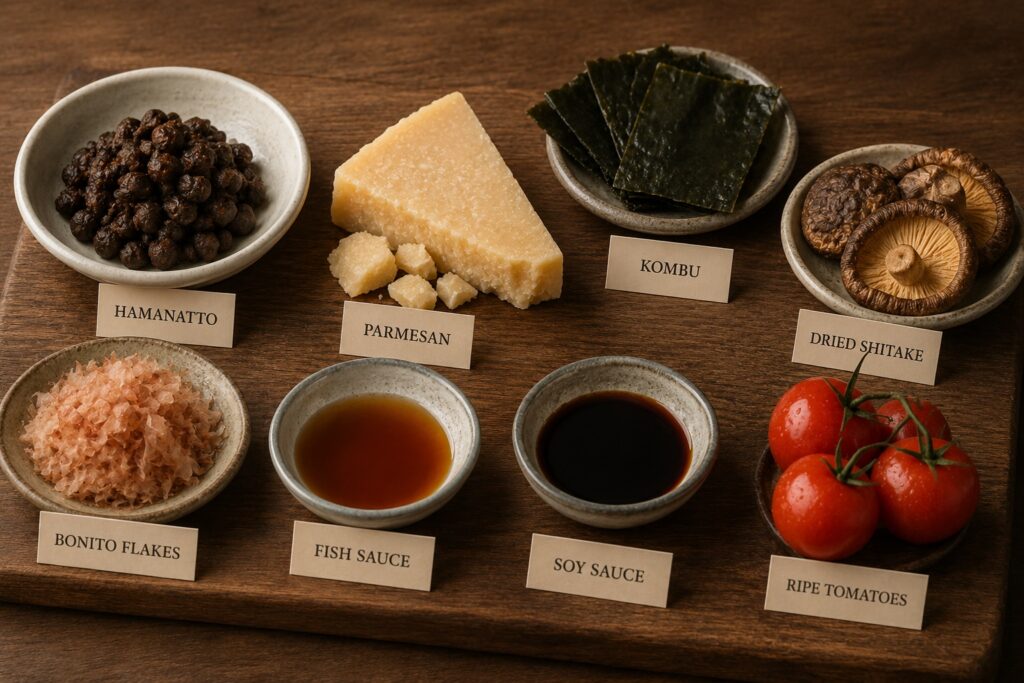
Hamanatto vs Other Umami Ingredients: Which Should Chefs Use?
Introduction
Chefs have many ways to add umami to a dish.
Soy sauce, fish sauce, anchovies, and aged cheese are among the most familiar.
Hamanatto belongs to the same broader world of concentrated savory ingredients, but it behaves differently.
The difference becomes especially important when designing a dish.
Some ingredients disappear into a sauce.
Others remain visible.
Some provide liquid umami.
Others provide texture.
Hamanatto can provide both flavor and physical presence.
Hamanatto vs Soy Sauce
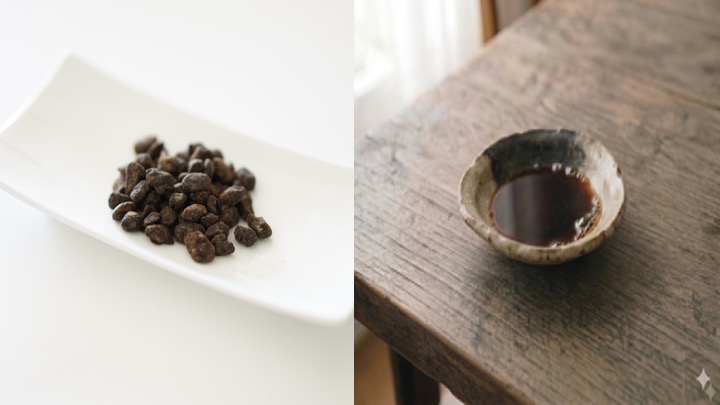
Soy sauce is liquid.
This makes it extremely easy to incorporate into almost any dish.
A few drops can season a sauce, marinade, soup, or dressing.
Hamanatto is fundamentally different.
It is a solid fermented soybean ingredient.
Instead of simply seasoning a dish, it can contribute texture and a more concentrated fermented character.
Liquid Seasoning vs Solid Ingredient
Soy sauce is useful when you want:
- Salt
- Liquid seasoning
- A smooth sauce
- Easy distribution
Hamanatto is useful when you want:
- Concentrated savory flavor
- Fermented complexity
- Texture
- A finishing ingredient
Neither replaces the other.
They simply solve different culinary problems.
Hamanatto vs Fish Sauce
Fish sauce is famous for its powerful savory character.
It is especially useful in Southeast Asian cooking, where a small amount can transform a dish.
Hamanatto has a similar strength in terms of concentration, but its flavor direction is completely different.
Fish sauce brings marine and fermented fish notes.
Hamanatto brings fermented soybean character.
This makes them difficult to substitute directly.
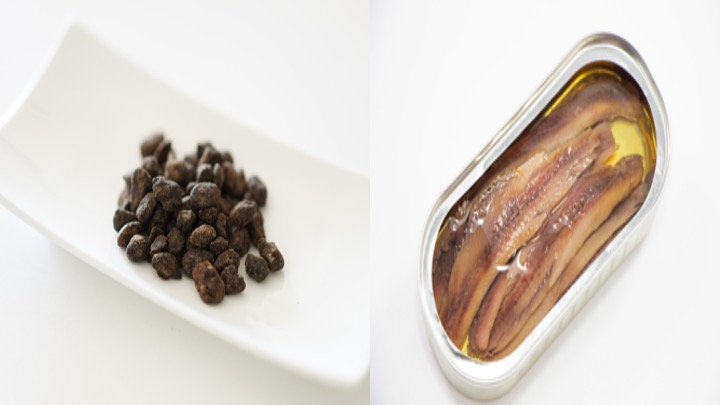
Hamanatto vs Anchovies
Anchovies are another classic umami ingredient.
They are especially effective in Mediterranean cooking.
When melted into olive oil or tomato sauce, anchovies can become almost invisible while leaving behind savory depth.
Hamanatto can be used in a similar conceptual way.
However, it does not provide the same marine character.
When You Want Umami Without Fish
This difference can be particularly interesting for chefs developing vegetarian or plant-based dishes.
Hamanatto offers a fermented soybean source of savory depth without introducing fish flavor.
Hamanatto vs Parmesan
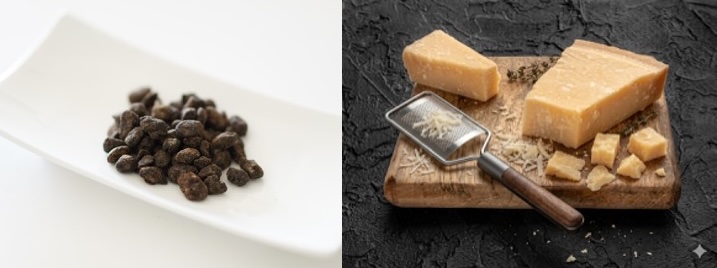
Parmesan is one of the most interesting comparisons.
Aged cheese develops a powerful savory character through aging.
Hamanatto also becomes more complex as fermentation and aging transform the soybean.
But the two ingredients remain very different.
Parmesan brings dairy richness and a hard, crystalline texture.
Hamanatto brings fermented soybean flavor and a dense bean texture.
Why the Pairing Is Interesting
Rather than competing, the two can complement one another.
Hamanatto can add fermented depth to cheese-based dishes without simply adding more cheese.
This is one reason the combination is interesting for pasta and contemporary cuisine.
Choosing the Right Umami Ingredient
The best ingredient depends on the dish.
| Ingredient | Main character | Texture | Useful when |
|---|---|---|---|
| Hamanatto | Fermented soybean | Firm | You want depth and texture |
| Soy sauce | Salty, savory | Liquid | You need easy seasoning |
| Fish sauce | Fermented marine | Liquid | You want powerful savory depth |
| Anchovies | Marine, savory | Soft | You want umami without visible fish |
| Parmesan | Aged dairy | Firm | You want richness and savory depth |
The most interesting approach may be to stop thinking about these ingredients as competitors.
Instead, think of them as different tools.
A Chef’s Umami Test
When developing a dish, taste the base first.
Then add one umami ingredient at a time.
Ask:
- Does the salt level improve?
- Does the aroma become deeper?
- Does the finish become longer?
- Does the ingredient add unwanted character?
- Does the texture improve?
- Does the ingredient disappear into the dish or remain noticeable?
This simple test can reveal when Hamanatto is more useful than a liquid seasoning.
Chef’s Verdict
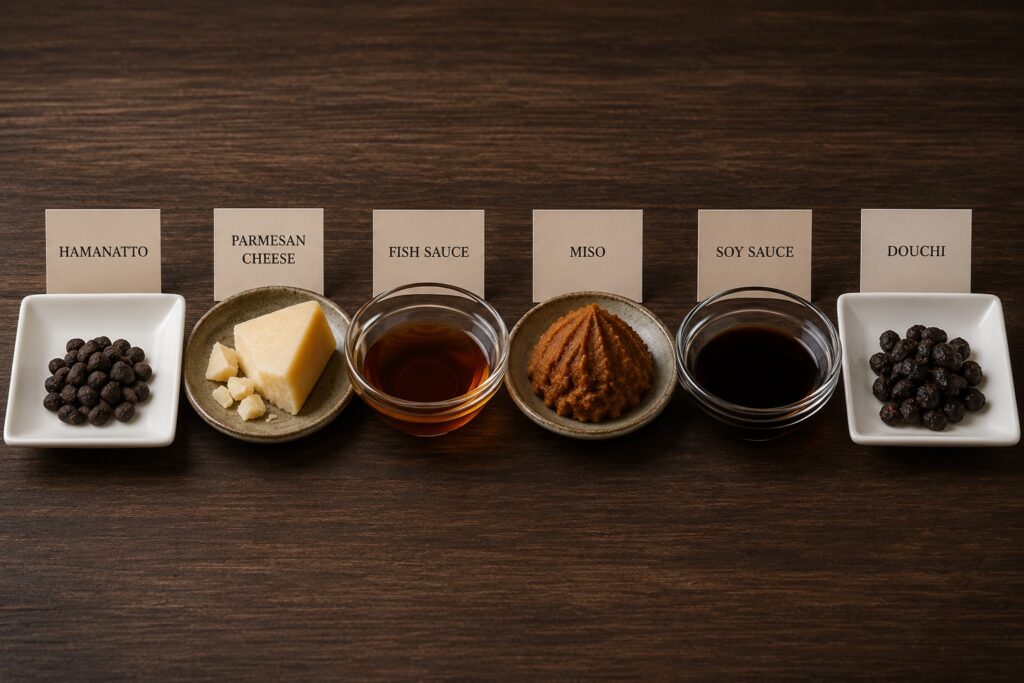
Soy sauce, fish sauce, anchovies, Parmesan, and Hamanatto all provide savory depth.
But they do not provide the same kind of umami experience.
Hamanatto is most interesting when a chef wants fermented soybean complexity together with a firm texture.
That makes it less of a replacement ingredient and more of a new tool.
H2: Try Authentic Hamanatto
Start with a small amount and compare it with the ingredients you already use.
Try it in pasta, mushroom dishes, roasted vegetables, sauces, or grilled meat.
Continue Reading
- What Does Hamanatto Taste Like?
- Hamanatto and Cheese
- How Chefs Can Use Hamanatto
- The World’s Great Umami Foods
Final Thoughts
The world of umami is much larger than a single ingredient.
For chefs, the real opportunity is learning how different sources of savory depth behave in different dishes.
Hamanatto offers one of the less familiar—and potentially more interesting—options.
References
- Umami Information Center — Umami Information by Food
- Umami Information Center — What Is Umami?
- J-STAGE — Research on Hamanatto fermentation