Hamanatto vs Other Fermented Foods
How Is It Different?
Introduction
Fermented foods are often grouped together simply because microorganisms are involved.
But fermentation can create very different foods.
Natto, miso, douchi, Marmite, and Hamanatto all have their own textures, aromas, fermentation traditions, and culinary roles.
Hamanatto is particularly unusual because it is made from whole soybeans and develops a firm, concentrated character during aging.
So how does it compare with other famous fermented foods?
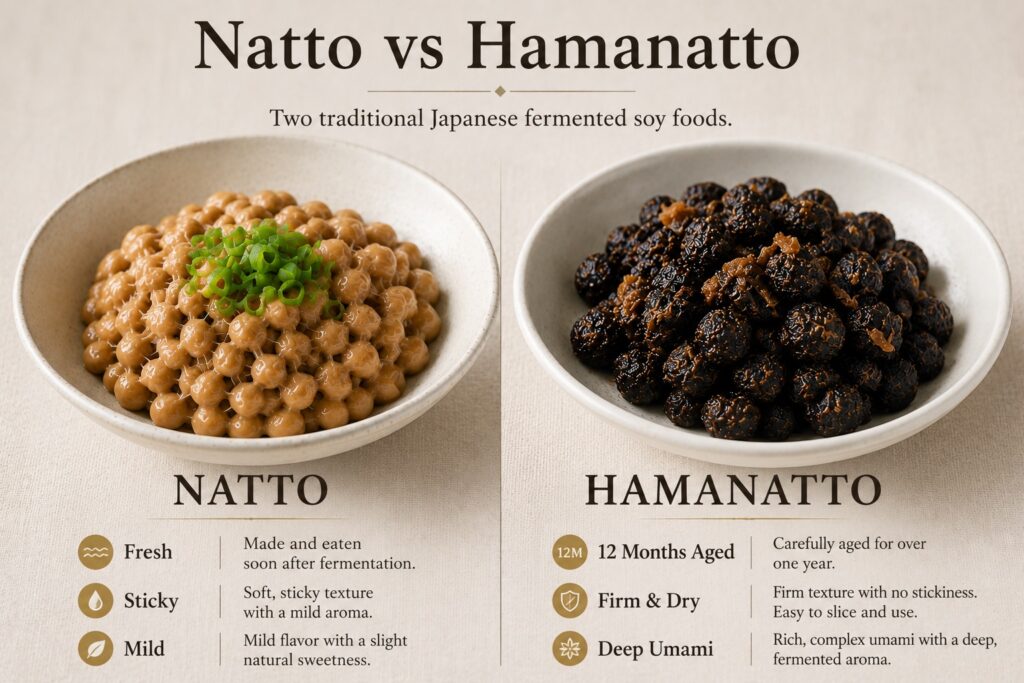
Hamanatto vs Natto
At first glance, Hamanatto and ordinary natto may seem closely related.
Both are made from soybeans, but the eating experience is very different.
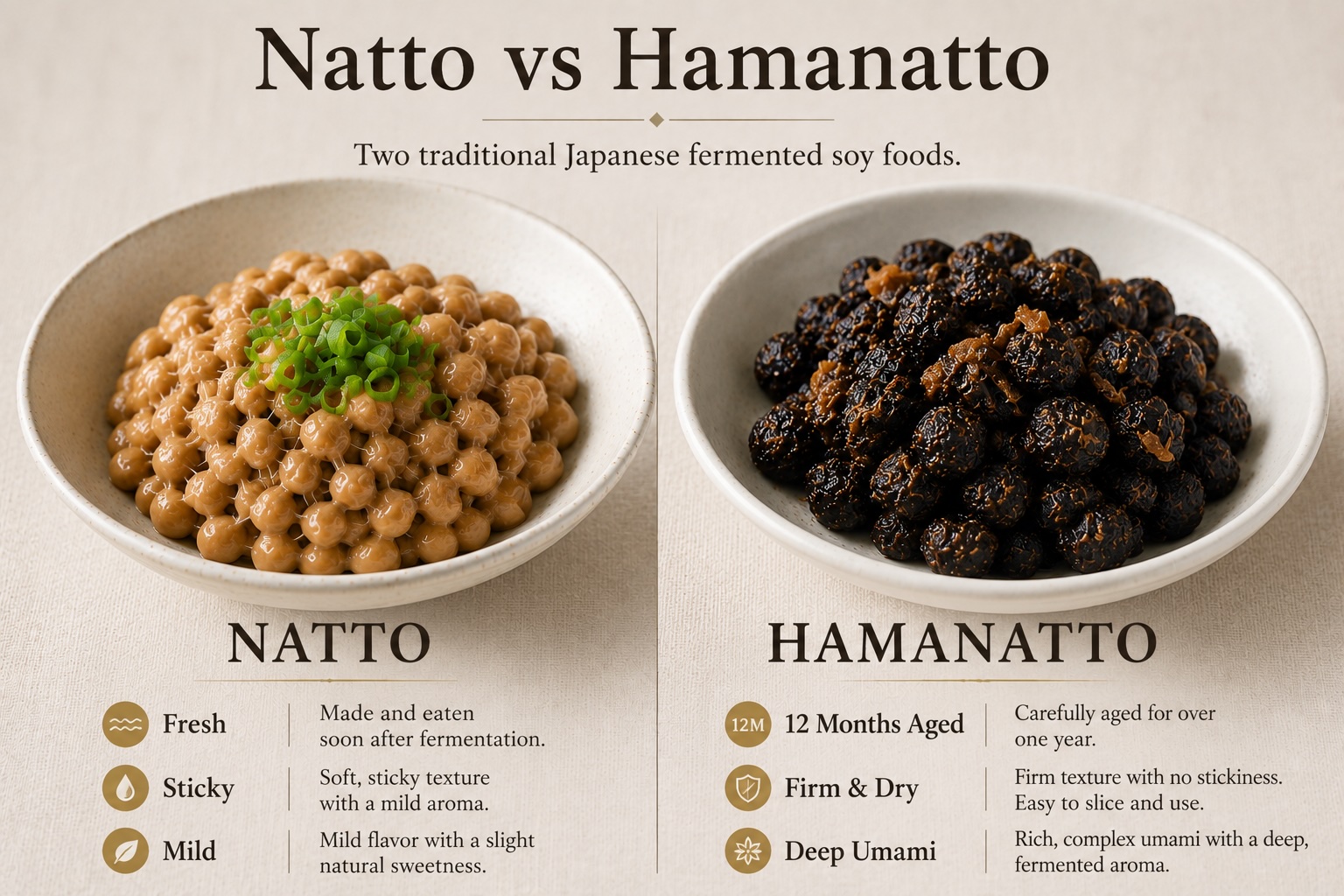
Ordinary natto is soft and famously sticky, with long strands that appear when the beans are stirred.
Hamanatto is much firmer.
The beans remain relatively intact, and the texture is dense rather than creamy or sticky.
The flavor is also different.
Natto has a fresh fermented character, while Hamanatto has a more concentrated savory profile with saltiness and mature fermented aromas.
For many people, this makes Hamanatto feel closer to a seasoning or aged ingredient than to a breakfast food.
Two Very Different Eating Experiences
Natto is often eaten as a complete dish, commonly with rice.
Hamanatto is more naturally suited to being used in small amounts.
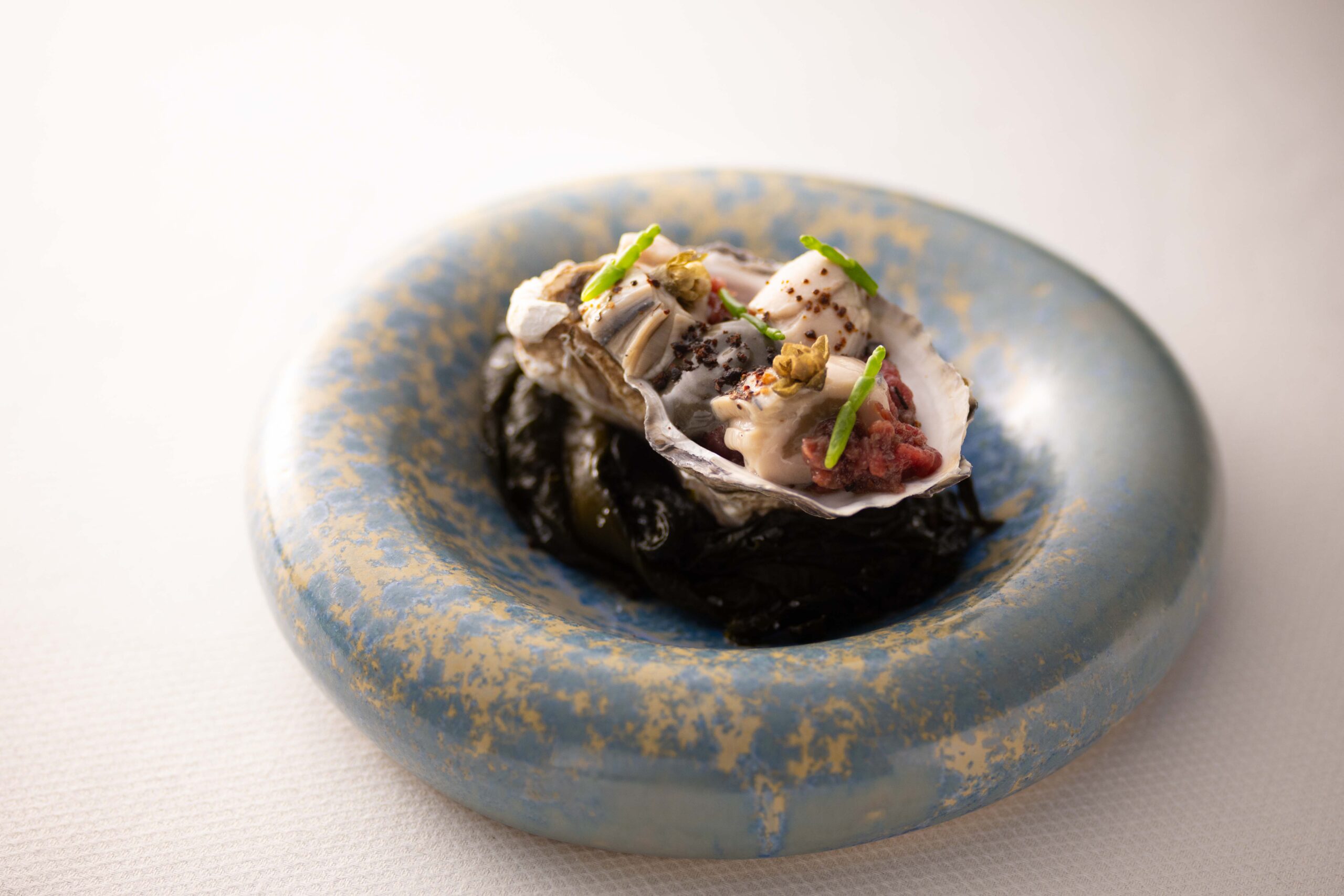
A chef might chop it, crush it, or use it as a finishing ingredient to add depth to another dish.
【画像①】
Hamanatto vs Miso
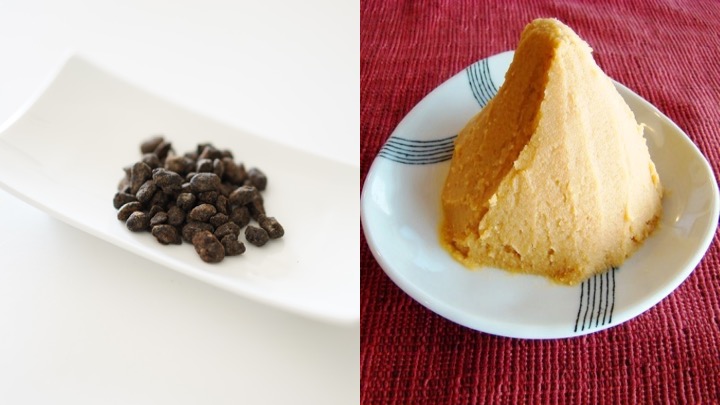
Miso is one of Japan’s best-known fermented soybean foods.
Unlike Hamanatto, miso is usually consumed as a paste.
This creates a major difference in how the two ingredients behave in cooking.
Miso can be dissolved into soups, sauces, marinades, and dressings.
Hamanatto retains the physical character of the soybean.
This makes it possible to experience its texture as well as its flavor.
Paste vs Whole Bean
Miso is highly versatile because its smooth texture allows it to disappear into a dish.
Hamanatto does the opposite.
Even when finely chopped, it can retain a noticeable presence.
For chefs, this means Hamanatto can provide both concentrated savory flavor and texture.
Hamanatto vs Douchi
Douchi is a traditional Chinese fermented soybean product.
It is particularly interesting to compare with Hamanatto because both are fermented soybean foods associated with long culinary traditions in East Asia.
However, their production methods, regional histories, seasoning styles, and culinary applications differ.
Douchi is widely used in Chinese cooking, particularly in sauces, stir-fries, and dishes where its intense fermented flavor can support other ingredients.
Hamanatto has developed its own regional identity in Japan and is traditionally associated with Japanese cuisine.
Similar Ingredients, Different Culinary Traditions
The comparison shows something important about fermentation.
Similar raw materials can produce very different foods depending on microorganisms, processing, salt, drying, aging, and culinary culture.
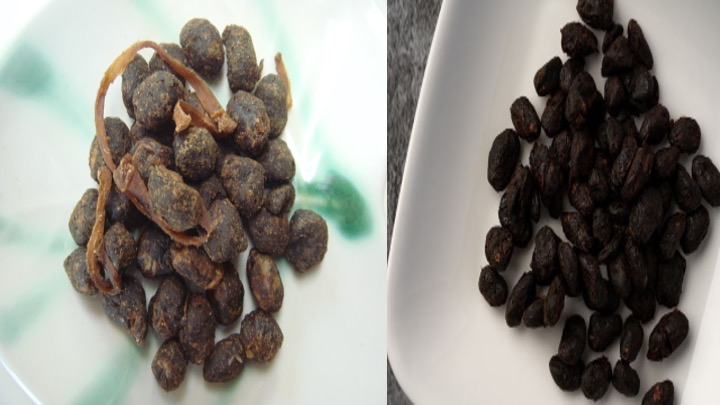
Hamanatto vs Marmite
Marmite is a very different type of fermented food.
It is made from yeast extract and is usually spread thinly on bread or incorporated into recipes.
Like Hamanatto, however, Marmite is valued for its concentrated savory character.
The important difference is texture.
Marmite is smooth and spreadable.
Hamanatto is made from whole soybeans and has a firm, chewy structure.
Concentrated Flavor in Different Forms
Both ingredients can be used in relatively small quantities.
But they express their flavor differently.
Marmite blends easily into a dish.
Hamanatto can remain perceptible as an ingredient.
This makes Hamanatto particularly interesting when texture is part of the intended dish.
What Makes Hamanatto Different?
The most important difference is not simply that Hamanatto is fermented.
Many foods are fermented.
What makes Hamanatto unusual is the combination of:
- Whole soybeans
- Long aging
- Concentrated savory flavor
- Saltiness
- Firm texture
- Mature fermented aroma
- Traditional Japanese culinary use
It sits somewhere between a fermented soybean food, a seasoning, and an aged ingredient.
That combination is difficult to reproduce with another ingredient.
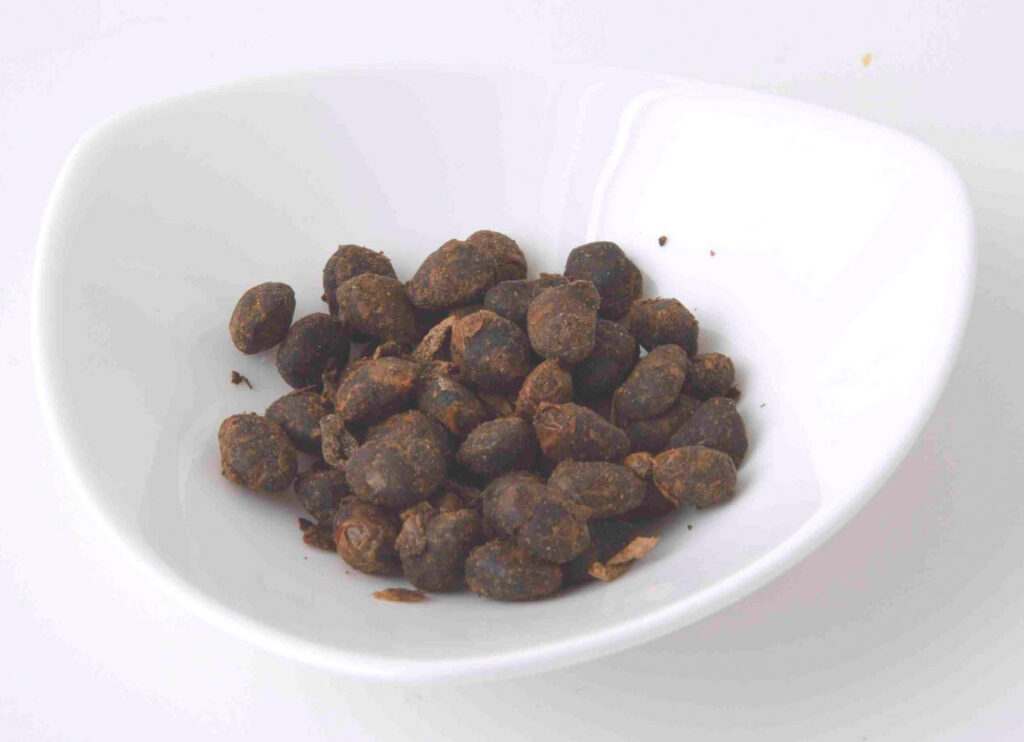
Which One Should a Chef Use?
There is no single winner.
Each fermented ingredient has a different job.
| Ingredient | Texture | Flavor | Best culinary role |
|---|---|---|---|
| Hamanatto | Firm, chewy | Concentrated, savory | Finishing, sauces, vegetables, meat |
| Natto | Soft, sticky | Fresh fermented | Rice, breakfast dishes |
| Miso | Smooth paste | Savory, salty | Soups, sauces, marinades |
| Douchi | Firm, fermented | Intense, savory | Chinese sauces and stir-fries |
| Marmite | Smooth, spreadable | Yeasty, savory | Spreads, sauces, stocks |
For chefs, the most useful question is not:
Which food is better?
It is:
Which fermented ingredient gives the dish the character you need?
Chef’s Verdict
Hamanatto is not simply another type of natto.
Its firm texture, concentrated flavor, and mature aroma give it a very different culinary identity.
For chefs interested in Japanese fermentation, it deserves to be considered on its own terms.
Its greatest strength may be its ability to add depth without requiring a large amount.
Try Authentic Hamanatto
If you want to experience the difference for yourself, start with authentic Hamanatto.
Try a small amount on steamed rice first.
Then experiment with tofu, mushrooms, vegetables, pasta, or grilled meat.
Continue Reading
- What Is Hamanatto?
- The History of Hamanatto
- How Hamanatto Is Made
- What Does Hamanatto Taste Like?
- How Chefs Can Use Hamanatto
Final Thoughts
Fermentation is not one flavor or one technique.
It is a way of transforming ingredients into something new.
Hamanatto shows just how far that transformation can go.
References
- Shizuoka Prefecture — Food Culture / Daifukuji Natto and Hamanatto
- J-STAGE — Research on Hamanatto fermentation and microorganisms