
How Hamanatto Is Made
The Traditional Fermentation Process Behind Japan’s Rarest Umami
Hamanatto is produced through a centuries-old fermentation process that combines koji mold, salt maturation, and careful drying.
- More Than Just Fermented Soybeans
- A Different Kind of Natto
- Step 1 — Preparing the Soybeans
- Step 2 — Growing Koji
- Step 3 — Salt Maturation
- Why Salt Matters
- Step 4 — Drying
- The Microbiology Behind Hamanatto
- Why This Process Creates Extraordinary Umami
- Ancient Craftsmanship in Modern Kitchens
- Why So Few Producers Remain
- A Fermentation Tradition Backed by Science
- More Than a Local Specialty
- Conclusion
- References
- Primary Historical Sources
- Continue Exploring Hamanatto
More Than Just Fermented Soybeans
At first glance, Hamanatto appears to be surprisingly simple.
Soybeans.
Salt.
Koji.
Time.
Yet behind these few ingredients lies one of Japan’s oldest surviving fermentation traditions.
Unlike modern factory-produced foods, authentic Hamanatto cannot be rushed. Every stage depends on carefully controlled microbial activity, environmental conditions, and the accumulated experience of skilled artisans.
Although recipes vary slightly among producers, the fundamental process has remained remarkably consistent for centuries.
Historical records dating back to sixth-century China describe fermentation techniques that closely resemble the principles still used today. Modern microbiological studies have confirmed that the organisms responsible for this transformation continue to play the same essential roles.
The result is not simply preserved soybeans.
It is a naturally fermented ingredient with extraordinary depth of flavor that has been refined over more than 1,500 years.
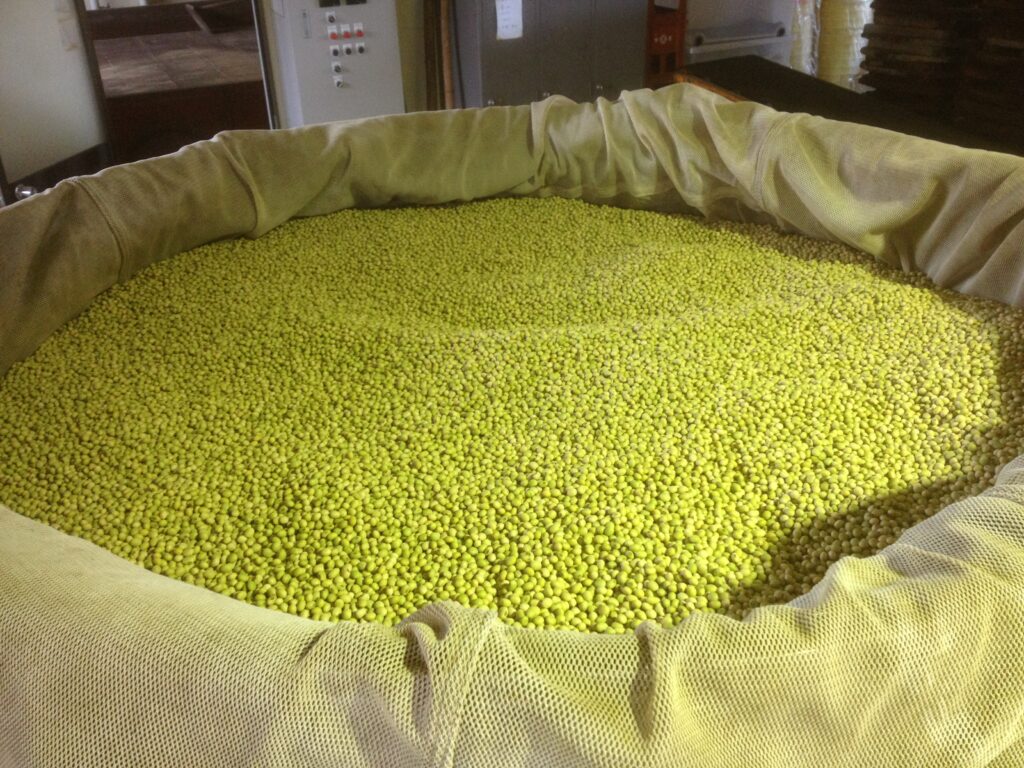
High-quality soybeans form the foundation of every batch of Hamanatto.
A Different Kind of Natto
One of the biggest misconceptions about Hamanatto is that it is simply another version of sticky natto.
In reality, the two foods belong to entirely different fermentation traditions.
Sticky natto is produced using the bacterium Bacillus subtilis, which creates the familiar sticky threads surrounding the beans.
Hamanatto follows a completely different path.
Its fermentation begins with koji mold (Aspergillus oryzae), one of Japan’s most important beneficial microorganisms. Instead of producing sticky strands, koji releases powerful enzymes that gradually break down soybean proteins into peptides and amino acids.
This enzymatic transformation creates the foundation of Hamanatto’s rich umami.
Only after the koji has completed its work do salt, time, and secondary microorganisms continue shaping the flavor.
This combination of mold fermentation and salt maturation places Hamanatto in the traditional category known as Shiokara Natto, rather than among sticky nattos.
Understanding this distinction helps explain why Hamanatto tastes closer to aged soy sauce, miso, or fermented black beans than to ordinary breakfast natto.
Step 1 — Preparing the Soybeans
Everything begins with carefully selected soybeans.
Historical records, including the sixth-century agricultural encyclopedia Qimin Yaoshu, already recognized that mature, well-dried soybeans fermented more consistently than freshly harvested beans.
The soybeans are first cleaned thoroughly to remove dust, damaged beans, and other impurities.
They are then soaked in water so that each bean absorbs sufficient moisture.
This hydration allows heat to penetrate evenly during cooking while creating ideal conditions for the growth of koji mold.
After soaking, the beans are steamed or cooked until they become tender but still retain their shape.
This balance is critical.
Beans that remain too firm cannot be penetrated effectively by the mold.
Beans that become too soft lose their structure and may ferment unevenly.
Even today, experienced producers judge this stage with remarkable precision.
The goal is not simply to cook the soybeans.
It is to prepare them for fermentation.
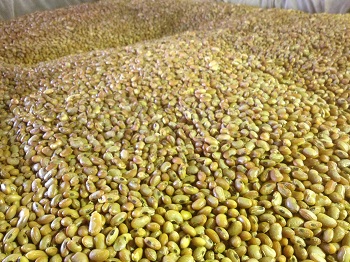
Properly cooked soybeans provide the ideal environment for beneficial microorganisms.
Step 2 — Growing Koji
Once the soybeans have cooled to the appropriate temperature, they are inoculated with koji mold (Aspergillus oryzae).
This marks the beginning of the most important stage of the entire process.
Koji does not simply grow on the surface of the beans.
As it develops, it produces enzymes that begin breaking large soybean proteins into much smaller compounds.
Proteases convert proteins into peptides and amino acids.
Other enzymes gradually act on carbohydrates and additional nutrients within the soybean.
These biochemical changes form the foundation of Hamanatto’s complex flavor.
Historical descriptions from Qimin Yaoshu show that ancient producers already understood how sensitive this stage was.
Rather than measuring temperature with instruments, they judged the fermentation by touch.
The beans were turned repeatedly to maintain an even internal temperature.
If the pile became too warm, undesirable microorganisms could grow.
If it became too cool, fermentation slowed dramatically.
Modern producers use cleaner facilities and more precise environmental control, but the underlying principle remains unchanged.
Healthy koji growth determines the quality of everything that follows.
As the mold spreads across the beans, a pale coating gradually appears before developing into the characteristic yellow-green growth associated with mature koji.
Only after this stage has been completed can the soybeans move on to salt maturation, where their flavor begins its long transformation into authentic Hamanatto.
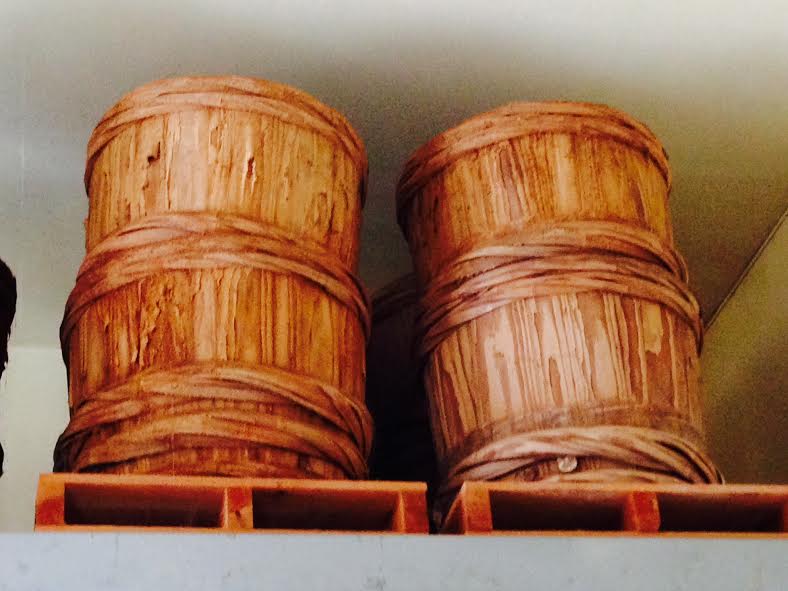
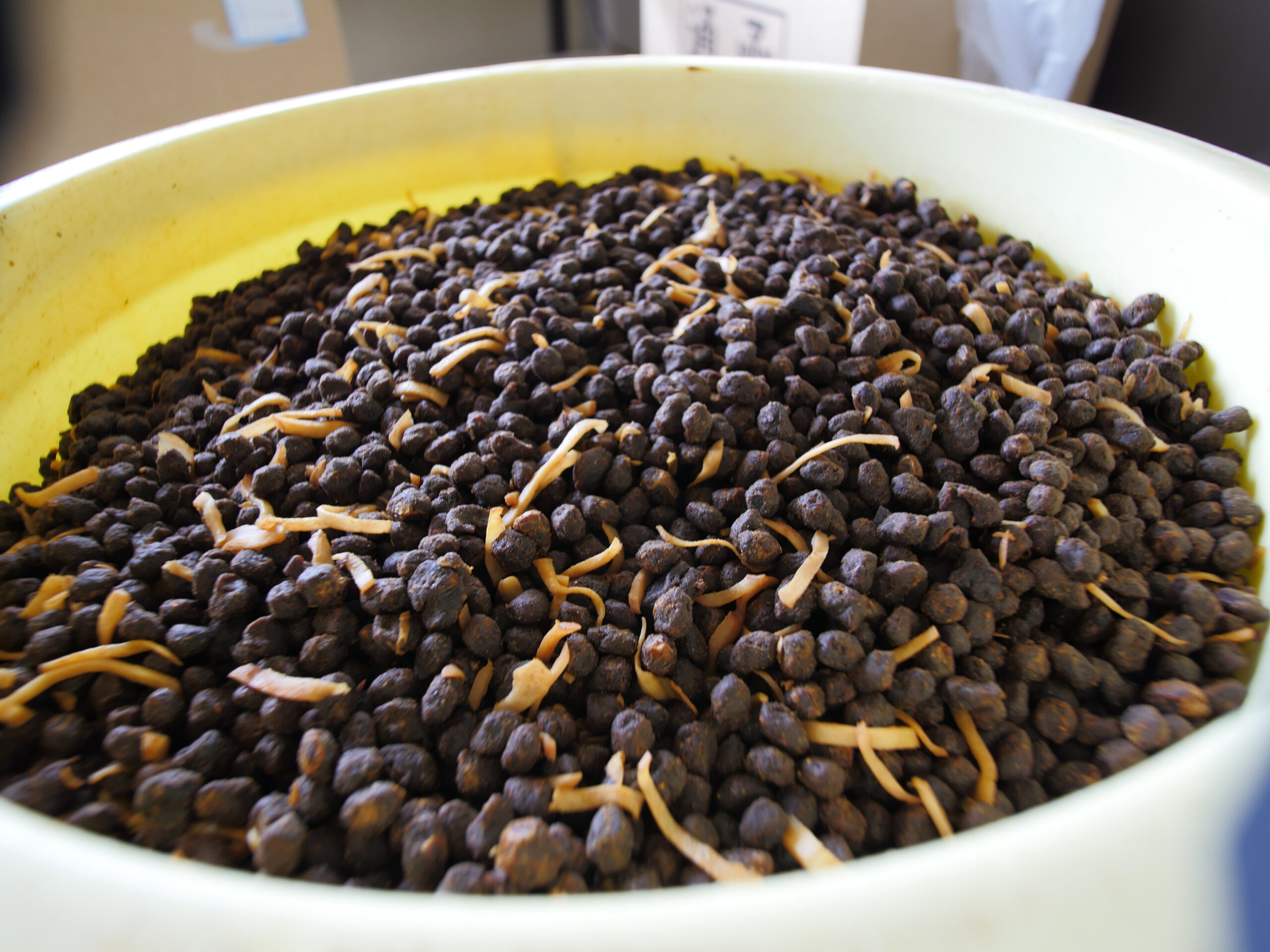
After the koji stage, Hamanatto undergoes a slow salt maturation that gradually develops its characteristic aroma and umami.
Step 3 — Salt Maturation
Once the koji has fully colonized the soybeans, the next transformation begins.
The beans are mixed with salt and transferred into containers for long-term maturation.
This stage separates Hamanatto from many other Japanese fermented soybean foods.
Salt is not added simply for preservation.
It creates an entirely new microbial environment.
The high salt concentration suppresses spoilage organisms while allowing salt-tolerant microorganisms to continue the fermentation safely over an extended period. During this time, proteins continue to break down into smaller peptides and free amino acids, while microorganisms produce organic acids and aromatic compounds that give Hamanatto its deep, rounded flavor.
Unlike rapid fermentations that last only a few days, Hamanatto develops gradually.
The passage of time is one of its most important ingredients.
Historical descriptions recorded in Qimin Yaoshu already describe salted maturation following the koji stage, demonstrating that this basic sequence has remained fundamentally unchanged for nearly fifteen centuries.
Although modern producers have improved sanitation and environmental control, the biological principles remain remarkably similar.
Why Salt Matters
To many people, salt is simply a seasoning.
For fermentation, however, it is a powerful tool that controls which microorganisms survive.
Without sufficient salt, harmful bacteria could multiply and spoil the beans.
With too much salt, even beneficial microorganisms would struggle to function.
Traditional producers therefore balance salt concentration carefully.
This balance allows beneficial microorganisms to continue transforming the soybeans while maintaining food safety.
The result is a fermentation that develops slowly, producing complex flavors impossible to achieve in a short period of time.
This patient maturation is one reason Hamanatto possesses such concentrated umami despite containing only a few simple ingredients.
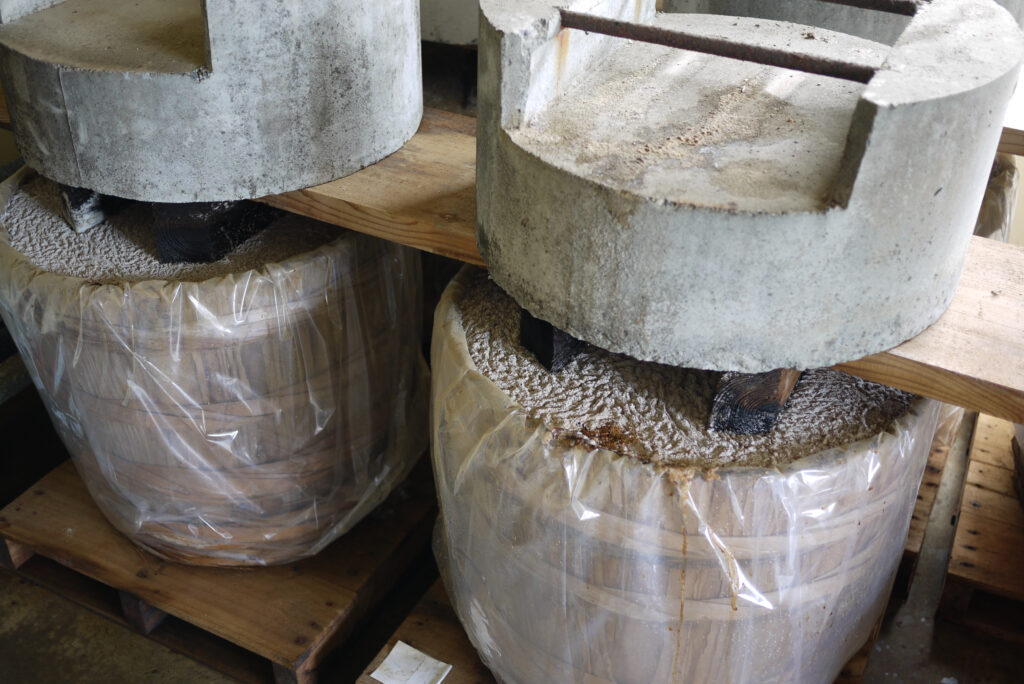
Slow maturation allows enzymes and microorganisms to continue developing flavor long after the initial koji fermentation.
Step 4 — Drying
After maturation, the beans are carefully dried.
Drying is not simply the final step before packaging.
It is an essential part of the fermentation itself.
Reducing moisture slows microbial activity and greatly improves shelf stability.
At the same time, flavors become more concentrated as water gradually leaves the beans.
This is why authentic Hamanatto has a firm texture rather than the soft consistency of sticky natto.
Historical documents describe drying under the sun after maturation, and many traditional producers continue to regard careful drying as one of the defining characteristics of the finished product.
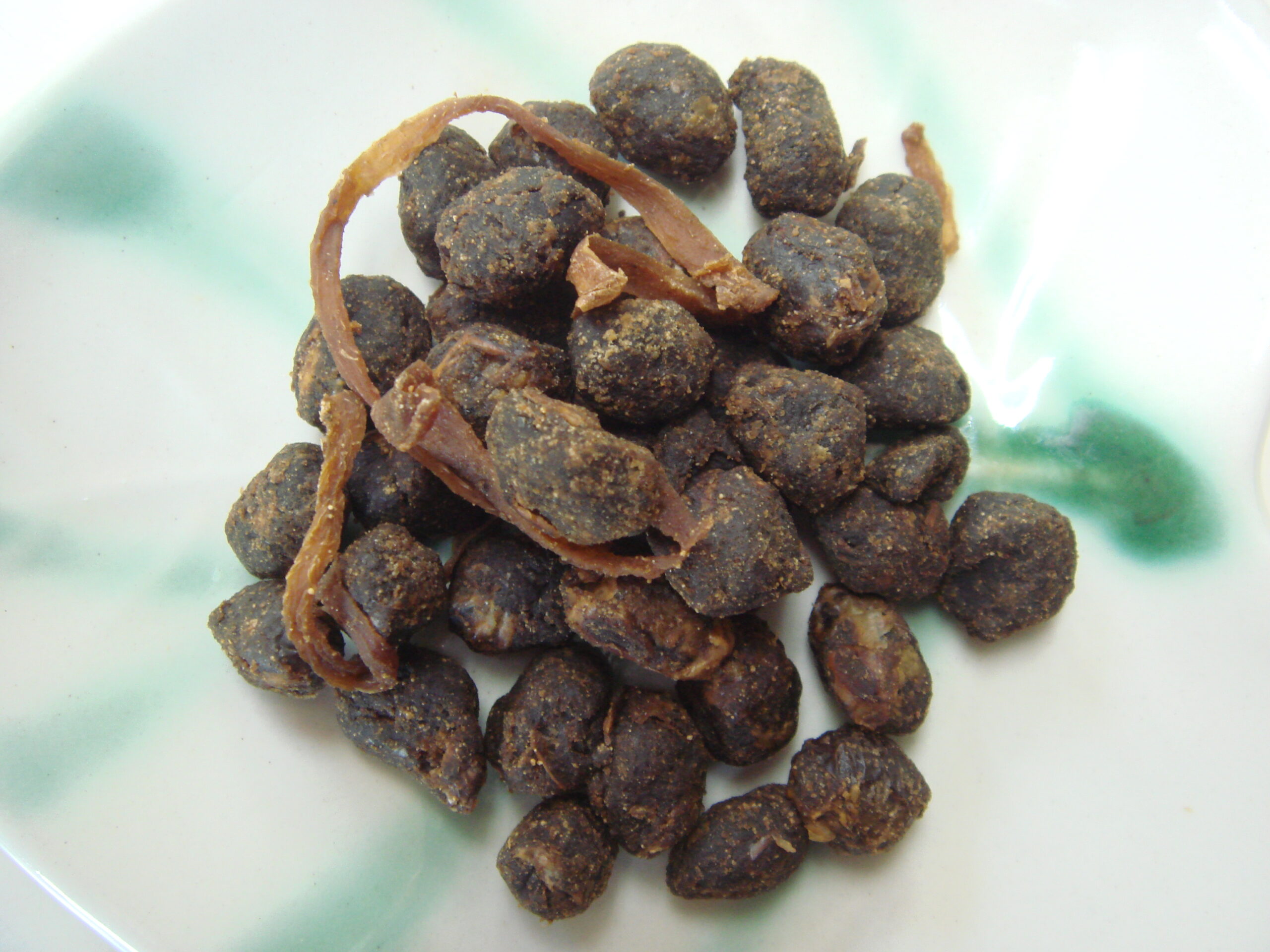
The finished beans are small, dark, and dense.
Their appearance reflects months of gradual biochemical change rather than rapid industrial processing.
The Microbiology Behind Hamanatto
Modern microbiological research helps explain why this traditional method works so well.
The primary microorganism responsible for the initial fermentation is Aspergillus oryzae, commonly known as koji mold.
This mold has been safely used in Japanese food production for more than a thousand years and is often called Japan’s “national microorganism” because of its central role in producing sake, miso, soy sauce, and many other fermented foods.
As the mold grows, it releases several groups of enzymes.
Proteases break soybean proteins into peptides and amino acids.
Amylases digest carbohydrates into simpler sugars that can be used by other microorganisms during later stages of fermentation.
Lipases also contribute by breaking down fats into compounds that influence aroma.
Together, these enzymes transform ordinary soybeans into a food rich in naturally occurring umami.
Research on Hamanatto has also identified additional microorganisms that survive during salt maturation.
Salt-tolerant bacteria and yeasts continue modifying the beans throughout aging, producing subtle aromatic compounds that contribute to the complexity of the finished product.
Rather than depending on a single organism, Hamanatto develops through a carefully balanced microbial community.
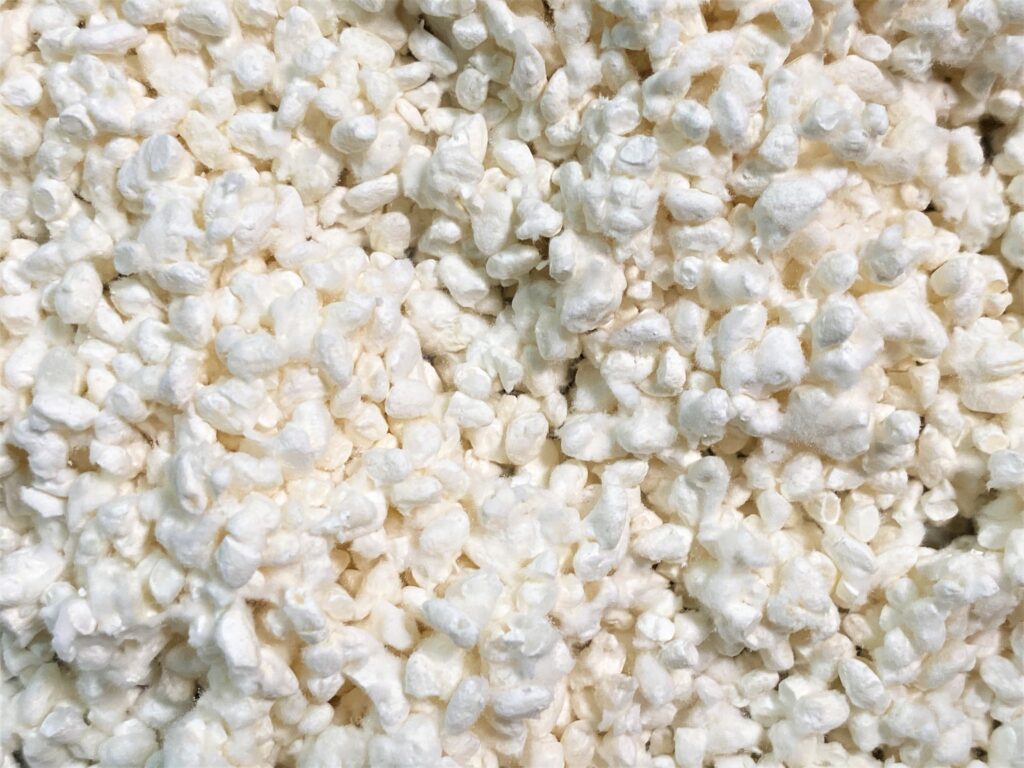
Koji mold releases enzymes that transform soybean proteins into amino acids responsible for umami.
Why This Process Creates Extraordinary Umami
Umami is often described as the fifth basic taste.
In Hamanatto, it develops naturally through fermentation rather than through added flavorings.
As soybean proteins are broken apart, free amino acids accumulate.
Among these, glutamic acid plays a particularly important role.
This amino acid stimulates umami receptors on the human tongue, creating the deep savory sensation associated with fermented foods.
Because fermentation continues slowly over an extended period, the resulting flavor is layered and persistent rather than sharp or overwhelming.
The combination of enzymatic activity, salt maturation, and careful drying creates a product whose flavor continues to evolve long after fermentation has begun.
For chefs, this means Hamanatto functions not merely as a preserved soybean product but as a concentrated seasoning ingredient capable of adding remarkable depth with only a small quantity.

A small amount of Hamanatto can add remarkable depth and complexity to both Japanese and Western dishes.
Ancient Craftsmanship in Modern Kitchens
Although Hamanatto has existed for centuries, its culinary potential is surprisingly modern.
Professional chefs today increasingly seek ingredients that deliver intense flavor without relying on artificial additives. Hamanatto answers that need naturally.
Unlike sauces that add moisture or dominate a dish, Hamanatto contributes concentrated umami in very small quantities. Finely chopped, grated, or blended into a paste, it enhances food while allowing the primary ingredients to remain the focus.
Its rich savory character pairs naturally with both traditional Japanese cuisine and contemporary international cooking.
Some examples include:
- Finishing grilled beef or lamb
- Folding into compound butter
- Stirring into risotto
- Adding depth to mushroom dishes
- Enhancing roasted root vegetables
- Mixing into vinaigrettes
- Incorporating into seafood sauces
- Finishing handmade pasta
Rather than functioning as a side dish, Hamanatto behaves much like an aged seasoning ingredient.
Its culinary role is closer to Parmigiano Reggiano, bottarga, anchovies, or Chinese fermented black beans than to ordinary natto.
Why So Few Producers Remain
One reason Hamanatto remains relatively unknown outside Japan is its rarity.
Traditional production requires patience, careful observation, and considerable manual work.
Every stage—from soybean preparation to koji cultivation, salt maturation, and drying—depends upon experience rather than automation alone.
Unlike industrial condiments that can be produced continuously throughout the year, authentic Hamanatto demands time.
This naturally limits production.
Today, only a small number of producers continue preserving this centuries-old craft.
Their work represents more than food manufacturing.
It represents the continuation of a living cultural tradition.
Each batch carries knowledge passed from one generation to the next.
That continuity is difficult to reproduce once it disappears.
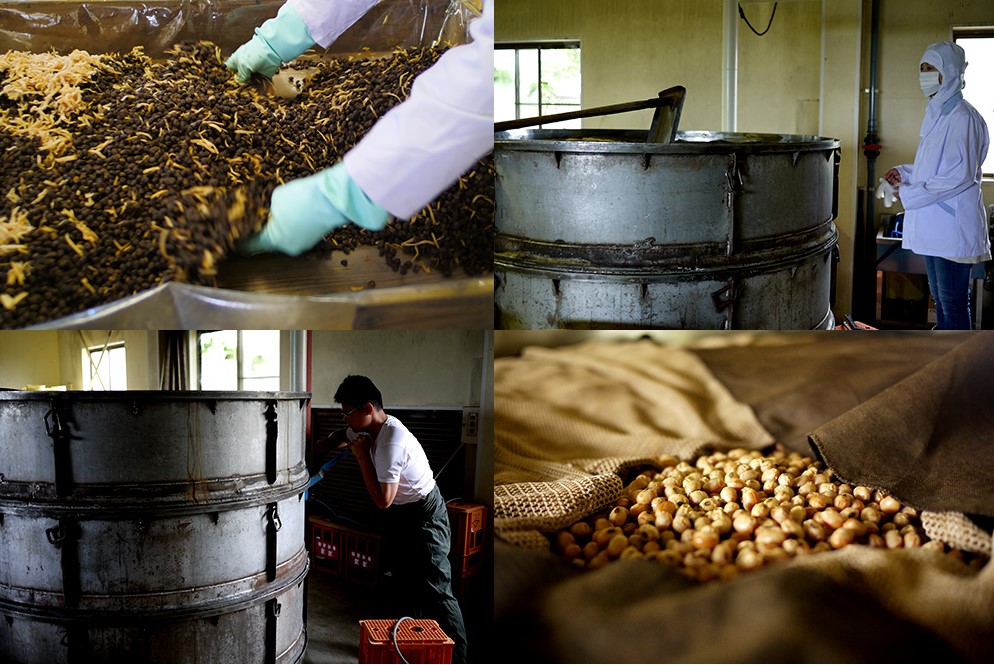
Authentic Hamanatto continues to be produced through techniques preserved across generations.
A Fermentation Tradition Backed by Science
Modern microbiology has helped explain what traditional producers discovered through centuries of experience.
Research has shown that koji mold (Aspergillus oryzae) produces powerful enzymes that break soybean proteins into amino acids responsible for umami.
Additional salt-tolerant microorganisms contribute to the development of aroma and flavor during maturation.
Historical documents describe the process.
Scientific research explains why it works.
Together, they reveal a remarkable continuity between ancient knowledge and modern food science.
Few traditional foods can be supported simultaneously by:
- historical documents spanning more than 1,500 years,
- government publications,
- microbiological research,
- and continued production using fundamentally similar principles.
Hamanatto is one of those rare exceptions.
More Than a Local Specialty
To call Hamanatto simply a regional food from western Japan would overlook its broader significance.
It represents one branch of an ancient East Asian fermentation tradition that has survived almost intact into the twenty-first century.
From the detailed production methods recorded in Qimin Yaoshu during the sixth century, to medieval Japanese historical documents, to modern microbiological studies, the story of Hamanatto reflects an extraordinary continuity of craftsmanship.
Its value lies not only in its flavor.
It lies in demonstrating how traditional knowledge can remain relevant even in an age of advanced food technology.
As chefs around the world continue rediscovering fermentation, Hamanatto offers an opportunity to explore one of Japan’s oldest—and least known—sources of natural umami.
Conclusion
Making Hamanatto requires remarkably few ingredients.
Soybeans.
Koji.
Salt.
Water.
Time.
Yet behind this apparent simplicity lies an intricate collaboration between microorganisms, skilled craftsmanship, and centuries of accumulated knowledge.
Every stage serves a purpose.
Preparing the soybeans creates the ideal environment for fermentation.
Koji mold transforms proteins into flavor.
Salt guides microbial activity while protecting the food.
Drying concentrates aroma and extends preservation.
Together, these steps produce an ingredient unlike any other in Japanese cuisine.
Understanding Hamanatto means understanding that exceptional flavor is rarely created quickly.
It is cultivated through patience, careful observation, and respect for natural processes.
That philosophy has guided Hamanatto makers for generations—and continues to define every authentic batch produced today.
References
Primary Historical Sources
- Qimin Yaoshu (齊民要術), Northern Wei Dynasty, 6th century.
- Kon, M. & Ito, H. Studies on “Hama-Natto” (Part 2): Microflora in Products of Hama-Natto. Journal of Home Economics of Japan, 1974.
- Honchō Shokkan (本朝食鑑), 1697.
Government Publications
- Ministry of Agriculture, Forestry and Fisheries (Japan). Introduction to Japanese Fermented Foods.
- Ministry of Agriculture, Forestry and Fisheries (Japan). Traditional Japanese Fermented Foods.
- Ministry of Education, Culture, Sports, Science and Technology (Japan). Standard Tables of Food Composition in Japan.
Scientific Background
- Research on Aspergillus oryzae and traditional Japanese fermentation.
- Studies on microbial communities in Shiokara Natto and related fermented soybean products.
- Research on enzymatic protein degradation and umami formation in fermented soy foods.
Continue Exploring Hamanatto
If you enjoyed this article, you may also like:
- What Is Hamanatto?
- The Origins of Hamanatto: A 1,500-Year Journey
- Hamanatto vs. Natto: What’s the Difference?
- How Michelin Chefs Can Use Hamanatto
About UmamiSeeker
At UmamiSeeker, our mission is to introduce the world’s most remarkable fermented foods through reliable research, historical sources, and modern food science.
Every article is built on primary documents, academic research, and official publications whenever possible, making this site a trusted resource for chefs, food professionals, researchers, and fermentation enthusiasts around the world.